|
 |
|
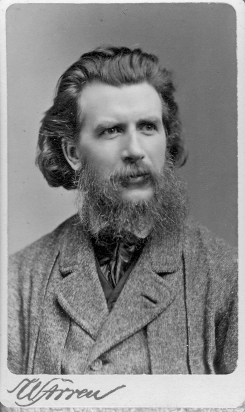
Gerald Massey.
A carte-de-visite
by
Henry Y. Porter & S. B. Heald, Boston, USA. |
|
|
Gold, art thou not a blessèd
thing, a charm above
all
other,
To shut up hearts to Nature's cry, when brother
pleads with brother?
Hast thou a music sweeter than the voice of
loving-kindness?
No! curse thee, thou'rt a mist 'twixt God and men
in
outer blindness.
'Father, come back!' my Children cry; their
voices, once so sweet,
Now pierce and quiver in my heart! I cannot,
dare
not meet
The looks that make the brain go mad, for dear
ones
asking bread—
God of the Wretched, hear my prayer: I would
that
I were dead!
From... A Cry of the
Unemployed |
|
――――♦――――
SHELLEY AND HIS POETRY
attributable to Gerald Massey.
'He was treated as a
Reprobate, cast forth as a Criminal! The cause was, he believed
his Opinions true, and, he loved Truth, with a Martyr's love; this
Sacrifice, was demanded of a Youth 17 years of Age! and he shrank not
from it, but pafs'd the ordeal nobly....'
This article, taken from an 1848 issue of a circulating manuscript
newspaper, The Attempt, is Massey's earliest known writing in
prose. |
|
――――♦――――
Extracts
from the Uxbridge Pioneer
No. 1, February 1849,
both written and attributable to Gerald Massey.
'The
Spirit of Freedom, and Working Man's Vindicator. Conducted by
WORKING MEN. This monthly Penny periodical—formerly
a weekly—printed
at Uxbridge,—is
already widely known among working men. Its editor is Gerald
Massey, a young man of very high poetic talent, and a frequent
contributor to Cooper's Journal. John Rymill of Northampton,
another earnest hearted working-man, is one of its essayists; and the
band of fervent-minded young men, who are thus putting forth their
burning thoughts to the masses, cannot fail to be felt, and to produce
stirring effects in the Future. Periodicals like these are among the
most notable 'Signs of the Times.' There is, surely, hope for
England, while her toiling children are breathing out these
unmistakeable syllables of their aspirations. By every association of
workingmen for mutual instruction this periodical ought to be
purchased.' [From Cooper's Journal, March 2nd, 1850.] |
|
――――♦――――
THE RED REPUBLICAN
&
THE FRIEND OF THE PEOPLE
EQUALITY, LIBERTY, FRATERNITY
EDITED BY G. JULIAN HARNEY.
1850. |
|
――――♦――――
COOPER'S JOURNAL:
OR, UNFETTERED THINKER
AND PLAIN SPEAKER FOR
TRUTH, FREEDOM, AND PROGRESS.
(February 23, 1850)
SIGNS OF PROGRESS
Effusive rhetoric from
the twenty two-year old Massey on 'machinery and capital'
crushing the masses, some half a century before the birth of the British
Labour Party. |
|
――――♦――――
THE CHRISTIAN SOCIALIST.
3 May, 1851.
THE
BROTHERHOOD OF LABOUR
'Thou shouldst be
doing something, for the world, the good and glorious world! For
thee she clothes herself like a bride, in the garniture of spring's
loveliness! and for thee the flowers start up at our feet, smiling into
our eyes as meaningly as though they knew we ought to have happy hearts
and cheerful countenances!'
Young Massey in lyrical mode,
encouraging those who, in truth, were probably far beyond encouragement. |
|
――――♦――――
THE CHRISTIAN SOCIALIST.
August - September 1851.
TENNYSON AND HIS
POETRY
Massey's belief expressed
in this, among his earliest literary essays, is that....'The
Muse of Tennyson is truly a 'dainty Ariel.' She does not startle, or
astound, but like the invisible spirit, waylays, bewilders, and enchants
you. The subtle spirit of her magic melody, and the power of her
exceeding beauty, have permeated you through and through, ere you are
aware, and, scarcely knowing why, you come most naturally to the
conclusion that Tennyson is the greatest, the sweetest, and the
perfectest of our living singers.'
|
|
――――♦――――
THE CHRISTIAN SOCIALIST.
September - November 1851.
TENNYSON'S PRINCESS
'After reading the 'Princess'
again and again, one is surprised at what they missed on reading it the
first time.....Read it again, it was your carelessness and opaqueness,
not the poet's want of light and lustre. It was your blindness,
and deafness, not his lack of divine wisdom, and melody.'
|
|
――――♦――――
THE FRIEND OF THE PEOPLE.
Final editions, published during 1852.
EARLY, SHORT LITERARY ESSAYS, BOOK REVIEWS AND ARTICLES ON
MILTON, WORDSWORTH, TENNYSON, POE AND OTHERS.
'Properly speaking,
there is no life of Milton at all worthy of the name; there have been
many inadequate attempts, principally by his enemies, who have each
flung a stone upon the place where he lies, until it has become a cairn,
and that which was intended to obliterate, has become his
monument......We cannot be Milton, my brothers, but we may strive to
imitate his devotedness, his earnestness, manliness, purity, and
patriotism; and there is none so mean and humble but may do something to
hasten on the time of which we dream, that shall crown long years of
blood, and tears, and misery, and degradation, when the poor man's heart
shall leap for gladness, and the desert of his life shall blossom as the
rose.' |
|
――――♦――――
NORTHERN TRIBUNE
[Vol. I, No. 12, 1854]
MAZZINI AND ITALY
'Mazzini
is one of the few unsuccessful great men that are not used up and killed
out by defeat. It is difficult for the world to see the hero in the
unsuccessful man.
But Mazzini has stamped his impression upon it as indelibly as
the image of a king upon the coinage from his mint....'
|
|
――――♦――――
HOGG'S INSTRUCTOR
[Vol. IV. 1855]
THOMAS HOOD, POET AND PUNSTER
'In the sunshine of spirit which he calls forth, he sets his tears
as very jewels of wit.' |
|
――――♦――――
HOGG'S INSTRUCTOR
[Vol. V. 1855]
THE POETRY OF ALFRED TENNYSON
'.....it is the voice of Tennyson we hear soaring triumphantly above
the long agony of doubt, soothing as that of a sister leading the
bewildered mind out of the burning trance of delirium.'
|
|
――――♦――――
NORTH BRITISH REVIEW
[Vol. 28, February 1858]
POETRY—THE SPASMODISTS
'It appears to us that Robert Browning is, in a sense, one of the
greatest spasmodists, so far as a wilful delight in remote and involved
thinking, abrupt and jerking mental movements, and 'pernickitieness' of
expression, working, in the higher regions of genius, can constitute a
spasmodist.'
|
|
――――♦――――
NORTH BRITISH REVIEW
[Vol. 33, Nov 1860]
AMERICAN
HUMOUR
'One man will be struck with the difference between things as they are,
and as they ought to be, or might be. It fills his spirit with
sadness. Another cannot help laughing at many of their
incongruities. But the man who can laugh as well as weep is most a
man. The greatest humorists have often been also the most serious
seers, and men of most earnest heart. Hence their humour passes
into pathos at their will.'
|
|
――――♦――――
NORTH BRITISH REVIEW
[Vol. 34, May 1861]
THE POEMS AND PLAYS OF
ROBERT
BROWNING
'No other living poet has sounded such depths of human feeling, or
can smite the soul with such a rush of kindling energy. Great and
lofty and deep as Tennyson is, he has no such range.'........'It seems
to us that Mr Browning has narrowly missed being the greatest poet
living. But he has missed it, and Tennyson is crowned instead.
Mr Browning has the wider range, and grasps more, but he brings less
home to us.'
|
|
――――♦――――
NORTH BRITISH REVIEW
[Vol. 35, November 1861]
POETS
AND POETRY OF YOUNG IRELAND
'One would think that
there was also a defect in the Irish mind which incapacitates it for
taking a real possession of the present, and working out of the present
a better future.......It turns to some far past, and its poets sing of
the bygone days, as though they belonged to a race which has a splendid
past, but a hopeless future. Their true possessions appear to
remain in a far-off land that lies near the dawn, and is only visible in
all its glory when looked at across a sea of tears.'
|
|
――――♦――――
NORTH BRITISH REVIEW
[VOL. 36, MAY 1862]
THE POEMS AND
OTHER WORKS OF
MRS BROWNING
'On, on she goes, with great bursts of feeling and
gushes of thought, that follow one
another with a spontaneity that is always surprising, often
startling, and sometimes savage.'.......'One thing we have to
acknowledge, here as elsewhere, is the courage with which
she never hesitates to lift up her voice for
what she considers the right.'
|
|
――――♦――――
QUARTERLY REVIEW
[Vol. 114, April 1863]
LIFE AND
WRITINGS OF THOMAS HOOD.
'It is a very
noticeable feature in Hood's character that, with even worse health than
Pope's, he was of a most sweet temper; and no amount of pain and
buffeting could turn him into one of the wasps of wit.'
|
|
――――♦――――
NORTH BRITISH REVIEW
[Vol. 39, August 1863]
THOMAS DE
QUINCEY—GRAVE AND GAY.
'.....De Quincey knows
the lie that is trying to pass muster for truth. He has an eye
almost Shakspearian for detecting the true features of a man who may
stand afar off, half-hidden under the veil of distance. He has a
sure grasp of reality, and can estimate at their true value the glitter
and graces, the tinsel and powder, and fluttering affectations of the
'teacup times.'''
|
|
――――♦――――
QUARTERLY REVIEW
[Vol. 115, January 1864]
NEW ENGLANDERS
AND THE OLD HOME.
'Most
people have noticed how Nature, at certain whimsical moments, will mould
human faces, features, expressions, so queerly comical and quaintly
absurd that all the attempts of caricature fail to match them.
Leech, Doyle, and Cruikshank are outdone any day in the streets of
London.''
|
|
――――♦――――
QUARTERLY REVIEW
[Vol. 115, April 1864]
SHAKSPEARE AND HIS SONNETS.
'It is demonstrable
that the poet did not contemplate being known to the world as the writer
of these Sonnets. The work was a cherished love-secret on his
part, all the dearer for the privacy. He thought of doing it, and
he believed it would live, and that his friend and all the love between
them should live on in it, but he himself was to steal off
unidentified.' |
|
――――♦――――
THE QUARTERLY REVIEW
[VOLUME 118, July 1865.]
BROWNING'S POEMS.
'Mr. Browning's powers ought to be
better understood than he is, and the discrepancy lessened betwixt what
is known of him by the few, and what is thought of him by the many.
He has qualities such as should be cherished by the age we live in, for
it needs them. His poetry ought to be taken as a tonic. He
grinds no mere hand-organ or music-box of pretty tunes; he does not try
to attract the multitude with the scarlet dazzle of poppies in his corn;
he is not a poet of similes, who continually makes comparisons which are
the mere play of fancy; he has nothing of the ordinary technique of
poetry; he has felt himself driven, somewhat consciously, to the
opposite course of using, as much as possible, the commonest forms of
speech.' |
|
――――♦――――
QUARTERLY REVIEW
[Vol. 122, January 1867]
YANKEE HUMOUR.
'Human nature in America is somewhat like the articles
in a great exhibition, where the largest and loudest things first catch
the eye and usurp the attention....'
'.....there
is among the Americans a stronger backing of sound sense, of
clear seeing, and of right feeling, than we could have gathered any idea
of from their political mouthpieces.' |
|
――――♦――――
FRASER'S MAGAZINE
(May 1867)
CHARLES LAMB
'...a mob of happy
faces crowding up at the pit door of Drury Lane Theatre, just at the
hour of six, gave him ten thousand sincerer pleasures than he could have
received from all the flocks of silly sheep that ever whitened the
plains of Arcadia...'
|
|
――――♦――――
HUMAN NATURE
[Vol. 5, August 1871]
An ADDRESS
.....presented by the Spiritualists of England to MRS.
EMMA HARDINGE
BRITTEN at her Farewell
Conversazione, held in St. George's Hall, London, July 28, 1871.
'....you could not have
won more golden opinions, made more real friendships, left behind more
cherished recollections, or carried away with you more fervent
blessings. Thanks, and Farewell.' |
|
――――♦――――
THE SPIRITUALIST NEWSPAPER
[June 1874]
ETERNAL
PUNISHMENT AND ORTHODOX THEOLOGY
'What is there that men have not
found compatible with mere belief? Have they not cut each other's
throats, believing it to be for the glory of God? Have they not
burned bodies by the thousand, believing it to be the surest way of
saving souls from hell? Why, men have believed that by standing on
one leg for thirty years they would be permitted to hop into heaven at
last.' |
|
――――♦――――
LUCIFER
[Vol. I, November 1887]
BLOOD-COVENANTING
'The truth is that no
bibliolator can be trusted to interpret the past of our race now being
unveiled by evolution. He is born and begotten with the blinkers
on. His mode of interpretation is to get behind us, to lay the
hands upon our eyes in front, and ask us to listen whilst he gives us
his views of the past!' |
|
――――♦――――
NILE GENESIS:
AN
INTRODUCTION TO THE OPUS OF GERALD MASSEY
by
CHARLES
S. FINCH
M.D.
'In contemporary times,
Gerald Massey is primarily remembered for his poetry, literary
criticism, and socialist politics all in the pursuit of which he applied
his boundless energy. But it is in his forays into human
‘typological’ beginnings, framed in the evolutionary perspective of
Darwin and Wallace, and probed through the antiquarian medium of
Egyptology and comparative mythology that Massey’s true genius is
revealed. To this effort – this opus – Massey dedicated the last
36 years of his life, resulting in three Herculean two-volume works
which, as they find a slowly expanding readership, are permanently
changing our perception of ancient history, human origins, and the
primal place of Africa – Massey’s 'Old Dark Land' – in the evolution of
human consciousness from its beginning.'
――――♦――――
THE EGYPTIAN
ORIGINS OF CHRISTIANITY
by
RICHARD
A. SATTLEBERG,
B.A., F.T.S.
'The average Christian
has probably never suspected that the Gospels he cherishes contain many
points of similarity with ancient Egyptian teachings. While it is
true that the Gospels, and the Bible as a whole, has been subjected to
close scrutiny by scholars for some time now, especially during the last
hundred years, most of them have never even suggested that the Gospels
may very well have been based on the Ritual of the 'Egyptian Book of the
Dead'.' |
|
――――♦――――
Gerald Massey's
Lectures
[1887]
'In presenting my readers with some of the data which
show that much of the Christian History was pre-extant as Egyptian
Mythology, I have to ask you to bear in mind that the facts, like other
foundations, have been buried out of sight for thousands of years in a
hieroglyphical language, that was never really read by Greek or Roman,
and could not be read until the lost clue was discovered by Champollion,
almost the other day! In this way the original sources of our Mytholatry
and Christology remained as hidden as those of the Nile, until the
century in which we live. The mystical matter enshrouded in this
language was sacredly entrusted to the keeping of the buried dead, who
have faithfully preserved it as their Book of Life, which was placed
beneath their pillows, or clasped to their bosoms, in their coffins and
their tombs.'
Note: the following
lectures were published privately and sold separately by the author.
Paragraph numbers do not appear in the original editions, but are here
inserted to assist with referencing. |
|
――――♦――――
THE MEDIUM AND DAYBREAK
[April 15, 1887]
Simon of Samaria
'Simon of Samaria is a
Gnostic friend of mine, in whom I feel a particular interest, as one of
those who have suffered (if mind can consciously persist) for eighteen
centuries from the falsehoods and forgeries that helped to establish the
demoralizing delusion of Historic Christianity. If I were a
believer in the re-incarnation of individual personality, I might fancy
that I am one of those same victims come back again consciously to aid
in avenging the great wrongs we have sorely suffered for so long, like
men made dumb through being buried alive.' |
|
――――♦――――
THE MEDIUM AND DAYBREAK
[July 22, 1887]
Mr. Gerald Massey's reply to
Dr. A. R. Wallace
'It would be a serious error for
any man of science even to use the language of ignorance concerning
miracles, which the vulgar sense imply a supernatural interference with
natural law. But Mr. Wallace does more than that, in vouching for
the biblical miracles being actual facts.' |
|
――――♦――――
LUCIFER
[October, 1887]
Are the Teachings Ascribed to Jesus
Contradictory?
'. . . if the Christian scheme of damnation be
true, as assigned to the teaching of Jesus, no humane person should want
to know that there is any hereafter.'
|
|
――――♦――――
THE AGNOSTIC ANNUAL
[1888]
The
Name and Nature of The Christ.
'Having stated in my
lecture on 'The
Historical Jesus and the Mythical Christ' that the Egyptian
hieroglyphics were never read by the Greeks or Romans, I have been
challenged to show how the Mythos, which was shrouded in a dead
language, could, in its astronomical and mystical phases, have been
reproduced in Greece and Rome if, as I have asserted, the Greeks and
Romans did not read the hieroglyphics.......' |
|
――――♦――――
The Secret Drama of
Shakspeare's Sonnets
(1888 edition.)
'It must be borne in
mind that we are endeavouring to decipher a secret history of an
unexampled kind. We can get little help except from the written
words themselves. We must rely implicitly on that inner light of
the Sonnets, left like a lamp in a tomb of old, which will lead us with
the greater certainty to the precise spot where we shall touch the
secret spring and make clear the mystery. We must ponder any the
least minutiæ of thought, feeling, or expression, and not pass over one
mote of meaning because we do not easily see its significance.
Some little thing that we cannot make fit with the old reading may be
the key to the right interpretation.'
Shakespeare in Domestic Life
Ostensibly a review of 'Shakespeare’s
Sonnets, never before Interpreted; His Private Friends Identified:
together with a Recovered Likeness of Himself' (1866). While
the reviewer has comparatively little to say about Massey's first
published volume of conjectures on the circumstances surrounding the
Sonnets, the article provides an interesting Victorian view of
Shakespeare's life and times.
A Short Critique of Gerald Massey’s work on Shakespeare's
Sonnets
by Ernie
Wingeatt
(December, 2008).
'. . . . what Massey’s
research lacks is complete intellectual honesty and rigour. This is
emphasised when considering what Akrigg has to say at the end of his
study of Shakespeare and Southampton where he touches precisely on the
problems that a modern academic faces in achieving a truly objective
account of what took place historically. He notes the need for caution
by observing: “all those warning uses of ‘probably’, ‘apparently’,
‘might’ and ‘may’ which scholarly conscience requires” are what he as a
scholar for a moment suspends in order to summarize the probable in
terms of the relationship between the two men.
What should matter about Massey and his ideas on Shakespeare is that
they be studied more for the worth of the understanding it gives to us
of the age in which he [Massey] lived, its view of the world and how he
[Massey] fits into that age, rather than for the work alone. There
is a rich seam of material here for the student of Victorian mores, the
growth of English Literature as a subject for academic study and the
working man’s part in those things. . . .' |
|
――――♦――――
NATIONAL REVIEW
(October, 1888)
Myth and Totemism
as Primitive Modes of Representation.
together with
An Introduction
by Rey Bowen
reproduced with the author's kind permission.
Note: paragraph numbers did not appear in Massey's
original essay.
They are here inserted to assist with referencing.
|
|
――――♦――――
My Lyrical Life: Explanatory
Poems Old and New
BY
GERALD MASSEY
London: 1889
'....I
saw
myself described the other day as being the most
unpublished of Living Authors.
There were reasons for this. It happens that I
have not hitherto had a Publisher...' |
|



