|
DOES
the reader believe in the truth of the doctrine promulgated by Dr Gall,
that the brain is the seat of the mind, and that it may be mapped out
into divisions and organs fur our manipulation? For myself, I am
perfectly convinced of the general truth of phrenology, although I may
doubt the particular truth of many phrenologists. And it seems to
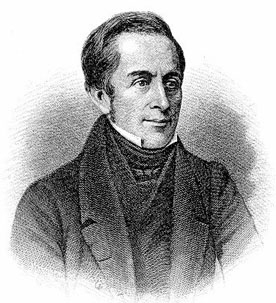
me that in this bust of Hood published with his poems, and said to be
correct, one can account for his peculiarities and define his genius.
Nature has written out all great characters and
strong individualities in unmistakeable relief against the smooth
surface of her nonentities. She throws them into relief, so to
speak, for manipulation, like letters cut to be read for the blind.
What every man is, is traced on this map of thought, and whatsoever he
does in the heart, is proclaimed on the house-top. Mr Tennyson
went incog., with a friend, to a phrenologist. He was
unknown to him, and kept silent. The phrenologist was not a man of
great attainments, but it did not take him long to write out Mr
Tennyson's head as one of the finest he had ever seen, and of the
grandest poetic type. Even so may we read those Greek and Roman
heads at the Crystal Palace where the casts are correct, for the Greek
artists were exquisite phrenologists—not that they knew anything of
brain-theories, but because they copied nature so closely, and because
the characters they represent are absolutely striking in the
manifestation of their qualities. The anatomy of modern art does
not include conformation of brain, hence we see the most ludicrous
things:— bloodthirsty warriors with not destructiveness enough to kill a
mouse; affection without benevolence; saints without veneration; and
heads of children only made to be exhibited for monstrosities. A
smattering of physiognomy sufficeth them.
But let us look over the head of Thomas Hood, and see
whence Poesy leapt, followed by many merry-dancing, wicked-witted
sprites, playful quips, and oddities. The first thing that strikes
us in this noble round-head, is the diaphanous look of the face, and the
smallness of the regions devoted to the sense of life and gusto of
enjoyment. There is no revel in physical health which overflow s
in what we term humour; for humour is as much the outcome of a healthy
animalism and a strong ruddy nature, as it is of peculiar conformation
of brain. In this sense Hood has the mind but lacks the body of
humour.
But there is another ingredient of humour of which
Hood has little—it is hope. His hope is small. This would
sadden his nature, continually check its buoyancy, and for ever prevent
it reaching the reckless joviality and swimming in those floods of
unctuous mirth which characterise other humorists. His humour is
not so much a rich feeling, as a dry thought. He is like those who
may not feel the pleasures of life, and so they think them. He is
also restricted in the imaginative region: his sense of sublimity
(wonder) is a not large; his ideality is immense. Here, again, he
gains in thought and loses in feeling. Thus is he shut out of the
broader fields that we reckon the domain of humour, and confined to the
narrower range of wit—that is, wit as understood in our day. Here
he reigns supreme. He is the most ethereal of wits. He
cannot be coarse, and savage, and disgusting, like Swift, because his
impulses are so moral and so noble, his nature is so full of poetry.
He cannot be cruelly sarcastic because his secretiveness and
destructiveness are so small. In the midst of the most fleering
ridicule, there is a smile of goodness and a twinkle of kindness.
It's a tender soul and a loving face behind the mocking mask.
Though his mind be swayed this way and that, like the flower in the
stream, with tricksy tendencies, it always has a deep strong rootage of
earnestness, and anchors fast in humanity. He might have been
hail-fellow-well-met with those rare fellows at the Mermaid Tavern,
because of his brilliant parts, but the welcome over, he would have
quietly shrunk into a corner. But the little quiet man in black,
lighting up at times, would have given them many delightsome surprises,
and called forth their thunders of merriment with the lightning-flashes
of his odd quips, humours subtle and grotesque, and sparkling repartee.
In his head the organs of wit, comparison, and casuality are very full;
language is also large. And they indicate precisely the prominent
features of Hood's wit. He is the greatest word-twister in the
world. He detects analogies in words and ideas with the rapidity
of intuition. He produces his most startling effects by
antithesis—the sudden contrast and explosion of opposites. And by
virtue of his organisation he is just the personification of
antithesis:—large wit and small hope—that means laughter next-door to
tears; mirth with a mournful ring to it; merry fancies holding the pall
of laughter, or letting its coffin gently into the grave; light
gracefully fringing the skirts of darkness; life deftly masking the
hiding place of death.
A nature like his, even in moments of solemn agony,
will often break out into bewildering freaks of farce, and make such
genuine merriment, that the lookers-on may fail to see that the heart is
breaking down in the tragic depths that lie below the sparkling surface.
Women at such times, not being able to possess their souls to the same
stretch and strain, will burst into hysterical laughter, when they want
to be weeping bitter tears. Hood always appears to me to have so
deep a sense, such a painful sense of the terrible earnestness of
existence, that it would be unbearable if he could not get some humour
out of it, and
phantasie some light and merry moods of mind. His wit is
often set to this tune, but so perfect is his representation, that you
do not see how thin is the partition which divides your laughter from
his sorrows, and that is making fun of his own troubles, some of which
are deep as death. In the sunshine of spirit which he calls forth,
he sets his tears as very jewels of wit. Like Garrick, he can
laugh on one side of the face and cry on the other; and some of his
touches of mirth surprise you into tears. In his 'Ode
to Melancholy,' he sings—
|
Even so the dark and bright will kiss—
The sunniest things throw sternest shade;
And there is even a happiness
That makes the heart afraid!
There is no music in the life
That sounds to idiot-laughter solely;
There's not a string attuned to mirth,
But has its chord in melancholy. |
I have remarked
that he produces his greatest effects by antithesis (indeed, that word
is the sum of human life—the law of the universe —the history of file
world. God and the Devil—Good and Evil—Truth and Error—Man and
Woman—Attraction and Repulsion, these are our sublimest illustrations
(if antithesis); here are a few examples. In the 'Song
of the Shirt,' he tells us that the singer sat
|
Sewing at once with a double thread,
A shroud as well as a shirt: |
And she cries,
|
Oh, God! that bread should be so dear,
And flesh and blood so cheap! |
What handwriting on the wall is
this—
|
A wall so blank, my shadow I thank
For sometimes falling there. |
In the 'Dream
of Eugene Aram,' he makes the murderer say of his victim—
|
A dozen times I groan'd. The dead
Had never groan'd but twice: |
And, speaking of the dead body,
|
There was a manhood in his look
That murder could not kill. |
But, turning to a more cheerful
subject, we shall find this antithesis come to a climax in the 'Parental
Ode to my Son', three years and five months old.' Here we have
the prose and poetry of Childhood written in parallel lines, and
startling but truthful contrast. Unless the reader is accustomed
to have to write against time, and the brightest strains of thought
jangled by a child, or children, boisterously appealing to the parental
anxiety, it will be difficult to reach the full fruition of this
delicious ode. But it's worth going through the necessary process,
to reap its full enjoyment:—
|
Thou happy, happy elf!
(But stop—first let me kiss away that tear)
Thou
tiny image of myself!
(My love, he's poking peas into his ear!)
Thou
merry, laughing sprite!
With
spirits feather-light,
Untouch'd by sorrow, and unsoil'd by sin,
(Good heavens! the child is swallowing a
pin!)—
Thou
little tricksy Puck!
With antic toys so funnily bestuck,
Light as the singing-bird that wings the
air!
(The door! the door! he'll tumble down
the stair!)
Thou
darling of thy sire!
(Why, Jane, he'll set his pinafore afire!)
Thou
imp of mirth and joy!
In Love's dear chain so strong and bright a
link,
Thou idol of thy parents (Drat the boy!
There
goes my ink!)—
Thou
cherub—but of earth;
Fit playfellow for Fays by moonlight pale,
In
harmless sport and mirth,
(That dog will bite him if he pulls its tail!)
Thou human humming-bee, extracting
honey
From every blossom in the world that
blows,
Singing in youth's Elysium ever sunny
(Another tumble—that's his precious
nose!)—
Thy
father's pride and hope!
(He'll break the mirror with that skipping-
rope!)
With pure heart newly stamp'd from
nature's mint
(Where did he learn that squint?),
Thou
young domestic dove!
(He'll have that jug off with another shove!)
Dear
nursling of the hymeneal nest!
(Are
those torn clothes his best?)
Little epitome of man!
(He'll climb upon the table, that's his plan!)
Touch'd with the beauteous tints of dawn-
ing life
(He's
got a knife!)
Thou
enviable being!
No storms, no clouds, in thy blue sky fore-
seeing,
Play
on, play on,
My
elfin John!
Toss the light ball, bestride the stick
(I knew so many cakes would make him
sick!)
With fancies buoyant as the thistle-down,
Prompting the face grotesque, and antic
brisk,
With
many a lamb-like frisk.
(He's got the scissors snipping at your
gown!)
Thou
pretty opening rose!
(Go to your mother, child, and wipe your
nose!)
Balmy and breathing music like the south;
(He really brings my heart into my mouth!)
Fresh as the morn, and brilliant as its star;
(I wish that window had an iron bar!)
Bold as the hawk, yet gentle as the dove!
(I'll
tell you what, my love,
I cannot write, unless he's sent above!) |
Bacon has remarked, that there is no exquisite beauty that has not some
strangeness in its proportions. Hood is a master of this unexpectedness,
whether it startles with its laughter in his rich grotesquerie, or
surprises with its rapid and crushing lyrical energy in thunder-strokes
of thought. He said his epitaph should be—'Here lies the man who
spat more blood and made more puns than any other.' He was
indeed a marvellous punster—monarch of Pun-land. All great
humorists and wits have been fond of this wit of words.
Shakspere was always making them, and Douglas Jerrold will speak a
bookful per day, when in the mood.
But it has always been considered the lowest Species
of wit; and it took the genius of Hood to legitimatise it, and render it
respectable. It was a great pity that he should have been
compelled to break up his fire from heaven into such small sparks and
brilliant scintillations. He had to pick up his living at the
point of his pen, and puns sold better than poetry. He could turn
any and everything to punning account, and scattered them by mouthfuls
wherever he went.
In him it was tolerable, because he was also a poet,
and so frequently graced it with the presence of poetry. But,
since he set the example, it has been followed by many who have rendered
the maker of puns a being to be avoided all earnest men, because nothing
is sacred to his touch, no sanctuary safe from his grinning irreverence.
Hood's lowest wit has a delicate aroma, while that of these fellows
stinks of smoke and stale beer. Every one who can make a pun now
sets up for a wit. It is the age of punning, and penman almost
signifies punman. Poor dear Tom Hood and Laman Blanchard have
something to answer for in all this broad-grin pasquinado. If they
could see what their flashing mirth, rollicking humour and sparkling wit
have ended in—what barnacles have stuck on to the bulk of their fame to
swim with them, they might well wish to forswear their claim to the
foundership of what is called the 'Punch School.' Not a word
against 'Punch' itself. Having the spirit of Jerrold and Editorial
Lemon, it requires a little water; or how could it be Punch? Only,
sometimes we could wish for a little less of the third ingredient.
But around this 'Punch' there do congregate a company of conceited
puppies, who have grown into sad dogs. They return the fumes of
punch in the most vapid effusions. Mr Punch—to change our
illustration—draws the crowd together, and these literary mountebanks
perform their antics, and pick up their halfpence at the outskirts.
This would not be so bad if confined to the public street, but when the
day is done, and the outdoor exhibition is ended, they disband, and
individually inflict their ancient jokes and sorry sleight-of-hand on
many unprotected circles of society. This ambition to say smart
things, and be thought funny, is working fatally in the literature of
the day, and is sapping the very root of all earnestness. A man
will soon have to be ashamed of all serious earnestness in the presence
of these modern Samsons, who wear such long hair, and slay with the
jawbone of an ass. Nor can we tolerate all the senseless levity
that in certain quarters is fast eating out the sturdy spirit of our
glorious Saxon language, or, without protest, permit these eunuchs of
thought to replace the lofty English of Shakspeare, and Milton, and the
great divines, with the slang of the cider-cellars, and the cantology of
puppydom. We have had all too much of this irreverence and losel levity.
Life is too real, too earnest, too solemn a thing, to be spent in
producing or in reading such
light literature. We want something more of the Ironside
earnestness in individual character, in our books, and in the national
life. Earnestness is the root of greatness and heroism. 'They were
in earnest,' and not 'They were only joking,' is the epitaph which
history has inscribed in letters of light, or of blood, on the tombs of
her illustrious—the heroes, martyrs, and teachers.
Hood has been charged with being irreligious, because
he was unmerciful to the 'unco gude' in their own conceit—those who make
long prayers in the market-place, and pull long faces in the
vestry—those who wear their religion like a Sunday cloak, which is
brushed up once a-week, and put on when the apron of trade is cast
aside; the pile of which cloak he would occasionally stroke backwards,
and ruffle its equanimity. He ridiculed pretence; he hated humbug;
he exposed all lying abominations, all Pharisaical cant—but religion!
never. Take the ode to 'Rae
Wilson,' which we consider one of the finest defences of genuine
religion ever made. Remember that a man is building for truth when
he destroys that which is false; and that is just what Hood does in this
ode. The wolf's clothing, the mask of hypocrisy, and the suit of
sanctimony, are here stripped off the quacks and pretenders, and
consumed to ashes in the fires of his scorn and wit. I quote a bit
of his mind and creed; and if the reader think him wrong and blind, who,
as he himself says—
|
Who would rush at a benighted man,
And give him two black eyes for being
blind?
I do confess that I abhor and shrink
From schemes, with a religious willy-willy,
That frown upon St Giles's sins, but blink
The peccadilloes of all Piccadilly.
My soul revolts at all such base hypocrisy,
And will not, dare not, fancy in accord
The Lord of Hosts with an exclusive lord
Of this world's aristocracy.
It will not own a notion so unholy,
As thinking that the rich by easy trips
May go to heaven, whereas the poor and
lowly
Must work their passage as they do in
ships.
*
*
*
*
*
*
My heart ferments not with the bigot's
leaven;
All creeds I view with toleration thorough;
And have a horror of regarding heaven
As anybody's rotten borough.
I do not hash the gospel in my books,
And thus upon the public mind intrude it:
As if I thought like Otaheitan cooks,
No food was fit to eat till I had chew'd it.
A man may cry, "Church! Church!" at
every word,
With no more piety than other people:
A daw's not reckon'd a religious bird,
Because it keeps a-cawing from a steeple.
I honestly confess, that I would hinder
The Scottish member's legislative rigs,
That spiritual Pindar
Who looks on erring souls as straying pigs,
That must be lash'd by law wherever
found,
And driven to church as to the parish
pound.
On such a vital topic, sure 'tis odd,
How much a man may differ from his
neighbour:
One wishes worship freely given to God;
Another wants to make it statute-labour—
The broad distinction in a line to draw,
As means to lead its to the skies above,
You say—Sir—, and his love of law,
And I—the Saviour, with his law of love. |
Such a picture as the
following is scarcely likely to be in favour with
|
The hypocrites that ope heaven's door
Obsequious to the man of riches,
But put the wicked, barelegg'd poor
In parish stocks instead of breeches. |
But who shall deny that it
has many life-likenesses, and why should it not be thus framed?—
|
Behold yon servitor of God and Mammon,
Who, binding up his Bible with his ledger,
Blends gospel texts with trading gammon,
A blackleg saint, a spiritual hedger,
Who backs his rigid Sabbath, so to speak,
Against the wicked remnant of the week;
A saving bet against his sinful bias.
"Rogue that I am," he whispers to himself,
"I lie, I cheat—do anything for pelf;
But who on earth can say I am not pious?" |
Many golden
nuggets of wit and wisdom might be picked out of the poem of 'Miss
Kilmanseg and her precious leg'—that splendid satire on the love and
worship of wealth, bowing down to the golden calf, so prevalent in the
time of Hood, but which is happily unknown to the world in which we live
at present. It is supposed that 'Miss Kilmanseg' and Jerrold's
'Man Made of Money' gave the death-blow to that vice which was wont to
turn so many of those human beings into two-legged guinea-pigs, who
preferred that transformation to the more hirsute one accorded by Circe
to the devotees that besieged her shrine. The father of Miss
Kilmanseg is thus finely sketched:—
|
And Sir Jacob the father strutted and
bow'd,
And smiled to himself, and laugh'd aloud,
To think of his heiress and daughter;
And then in his pockets he made a grope,
And then, in the fulness of joy and hope,
Seem'd washing his hands with invisible
soap,
In imperceptible water.
He had roll'd in money like pigs in mud,
Till it seem'd to have enter'd into his
blood
By some occult projection;
And his checks, instead of a healthy hue,
As yellow as any guinea grew,
Making the common phrase seem true,
About a rich complexion. |
It is time we
turn from Hood the Punster, to Hood the Poet. The punster has partially
taken the shine out of the poet, on account of his brilliancy. And
so great was his wit, so excellent his fooling, that many are apt to
forget how richly he was otherwise endowed—how rare was his ethereal
fancy—how deep the faculty divine—how clear the poet's vision. But
he lived by literature, and he made puns when he should have been
writing immortal poems. As a specimen of his serious sweetness and
delicate fancy, take the 'Death-Bed.'
|
We watch'd her breathing through the
night,
Her breathing soft and low,
As in her breast the wave of life
Kept heaving to and fro.
So silently we seem'd to speak,
So slowly moved about,
As we had lent her half our powers
To eke her living out.
Our very hopes belied our fears,
Our fears our hopes belied—
We thought her dying when she slept,
And sleeping when she died.
For when the morn came dim sad
And chill with early showers,
Her quiet eyelids closed—she had
Another morn than ours. |
As a companion
piece, we quote two remarkable stanzas, to note, in addition to their
calm chaste beauty, the allusion to the smell of earth coming and as
health ebbed and returned. A near relation of mine, three days
before death, begged for a sod of earth, and she hugged it, smelling it
as though it had been a bunch of flowers, continually praising its
fragrance until she died.
|
Farewell, Life! my senses swim,
And the world is growing dim;
Thronging shadows cloud the light,
Like the advent of the night—
Colder, colder, colder still.
Upward steals a vapour chill;
Strong the earthy odour grows—
I smell the mould above the rose!
Welcome, Life! the spirit strives:
Strength returns, and hope revives;
Cloudy fears and shapes forlorn
Fly like shadows at the morn—
O'er the earth there comes a bloom:
Sunny light for sullen gloom,
Warm perfume for vapour cold—
I smell the rose above the mould! |
Hood's longer poems possess evidence that he could
rise into the region of pure imagination. The 'Haunted
House' is a true outcome of the creative faculty. 'Hero and
Leander' is also a very lovely poem; perhaps too full of fond conceits
and quaint turns of thought, but the subject shines out bravely in the
jewels that it wins from the poet's dalliance. I should like to
see the picture of the mermaid, so lovingly fondling the dead body of
Leander at the bottom of the sea, realised by the painter's brush—if
that be possible.
|
Here thou shalt live, beneath this secret
dome,
An ocean-bower; defended by the shade
Of quiet waters, a cool emerald gloom
To lap thee all about. Nay, be not fray'd.
Those are but shady fishes that sail by,
Like antic clouds across my liquid sky!
Look how the sunbeam burns upon their their
scales,
And shows rich glimpses of their Tyrian
skins;
They flash small lightnings from their vigorous
tails,
And winking stars are kindled at their
fins.
Now, lay thine ear against this golden sand,
And thou shalt hear the music of the sea,
Those hollow tunes it plays against the land,
Is't not a rich and wondrous melody?
I have lain hours, and fancied in its tone
I heard the languages of ages gone.
With that she stoops above his brow, and bids
Her busy hands forsake his tangled hair,
And tenderly lift up those coffer-lids,
That she may gaze upon the jewels there—
Like babes that pluck an early bud apart,
To know the dainty colour of its heart. |
This poem is as
wealthy in poetic thought as that same sea is of gems, and it has heart
home-thrusts of pathos unexcelled. In the 'Plea
of the Midsummer Fairies,' there is a bloom of poetry freshly caught
from fairyland, as it existed in the dewy morning of imagination.
We have looked upon Hood in various phases of his manifold character,
and now come to the grandest and most enduring —the poet of the poor.
The life of the poor! how full it is of peculiar
poetry. What a poet he will be who shall one day burst upon the
wondering world, and tell the tearful story—tearful for joy and for
sorrow! Tell the heroic histories there inscribed on poverty's
prison walls, to hear which, alone, life were worth living for.
Write the unwritten poetry, chronicle the unknown greatness and the
wasted bravery, the love strong as death, the sacrifice deep as the
grave, the lonely wrestlings with the devil, the burnings of precious
life-furniture, just to make a blaze wherewith to scare away the wolf
hunger that was howling at the door, and glaring in at the window, for
some beloved's sake! The temptation, the struggle, the fall, and
the victory, on hidden stages of human life. What a picture to
weep exulting tears over, is that in 'Alton Locke' (copied from life),
where the poor seamstress, though starving, rejoices that she is ugly
and deformed, and, therefore, unmarketable among those who purchase the
defiled name of Love! and many such an iris of loveliness has been
painted on the dark background of poverty, many such a moral glory has
gilded the shining ones of the damp cellar and foodless garret.
Hood has but snatched a leaf from the great book of
poetry that has been buried in this hiding-place, where it was little
imagined to be concealed; and the world will applaud the effort for
ever. Who would have thought that a poor outcast girl, friendless
and homeless, pelted by the pitiless wind and rain, pointed at by the
finger of scorn, hounded out of society, till she madly plunged off
Waterloo Bridge, and hid her frenzied eyes in the cold but welcoming
hands of death, would have called forth a strain of poetry that should
thrill to the heart of universal humanity, and melt the hard stern world
into tears? The thing had occurred many a time and oft, and the
announcement had been made at a million breakfast-tables, without any
lifting of eyes or eyebrows. The callous Levite Society had seen a
hundred such wrecks—a hundred such suicides, who had taken the leap, in
the dark midnight, from the fatal Bridge of Sighs, and it had passed on
its way with mirth arid music, sinning and suffering, glorying and
rejoicing, but all unheeding of the victims and the wreckages that were
strewn by the wayside. But the poet—the good Samaritan—comes by,
and the wounded are soothed by his healing hand, and the dead have
decent burial, with the unction of melodious tears. The dark, the
mean, the abject, are instantly radiated, and the dead past lifts a
radiant brow, in the light of his loving countenance. It is the
blessed and Christlike privilege of poetry to take to her bosom
whatsoever the world hath cast out. In her large heart is room for
what the sects are too narrow for. She will take the maimed, the
halt, the blind, and the leprous, and restore them to the human fold.
She will discover a soul of good in things evil, and penetrate to the
fountainhead of the waters of love, in the nature where it is choked up
with weeds and dust. She will seek to win back the fallen and
degraded, and set the spirit once again upon the throne it has lost.
And thus, from the death of a poor forsaken suicide, does the poet Hood
draw lessons of charity, and pleads with such a tender pity, as though
it were the voice of a loving sister, till the hardest heart is touched,
and tears stand in the eyes of those who seldom weep.
|
Take her up tenderly,
Lift her with care;
Fashion'd so slenderly,
Young, and so fair!
Touch her not scornfully;
Think of her mournfully,
Gentle and humanly—
Not of the stains of her,
All that remains of her
Now, is pure womanly!
Make no deep scrutiny
Into her mutiny,
Rash and undutiful:
Past all dishonour,
Death has left on her
Only the beautiful.
Still, for all slips of hers,
One of Eve's family—
Wipe those, poor lips of hers
Oozing so clammily.
Perishing gloomily,
Spurr'd by contumely,
Cold inhumanity,
Burning insanity,
Into her rest.
Cross her blinds humbly,
As if praying, dumbly,
Over her breast!
Atoning her weakness,
Her evil behaviour,
And leaving with meekness
Her sins to her Saviour. |
With what a
shudder the prayer went through startled society, pure and pleading, as
the sound of vespers breaking on the saturnalia of Bacchanals.
Hood was little known to the world as a poet, until it recognised him
one morning chanting this thrilling strain on the 'Bridge
of Sighs.' Then came that terrible 'Song
of the Shirt' straight home to men's business and bosoms, fastening
shirt-like close to naked nature. It was a lightning-flash of
revelation, rifting the dark of a long and dismal night, which was made
up of ignorance above, and misery below. In the middle of that
grim night did that fearful glare and piercing cry wake up the wealthy
and the great from their luxurious beds and 'lazy purples,' and, as they
looked down from their high windows, the poet showed them the human
lives they were wearing out—the blood of little children wrung out to
dye their costly crimson—the human hearts that were daily breaking—the
thousands of humanity's sons and daughters that were born to be used up,
starved, and transported annually, as surely as corn is grown to be
eaten—how their path through the world, and the pavement of their palace
fronts, were strewn with the wrecks of trampled human-kind—how the track
of their chariot-wheels was followed with groans, and curses, and tears
of blood—how it was their brethren who were for ever broken on the wheel
of their car of progress—their sisters who stitched their lives into
their work for 4.½d. per day, and were driven into the midnight streets
and lanes to sell the sweet name of Love for bread, in order that they
might eke out their means of subsistence. From their lofty windows
they stared aghast; some, indeed, cursed the voice of the poet that had
so rudely broken their voluptuous dream, and they slunk back to their
silken pillows. But the rest stared on, and could not turn away.
The 'Song of the Shirt' was the first summons of the army of the poor
which had besieged the citadel of wealth. The very music of it was
like the march of ten thousand men, who come with dogged step, set
teeth, and flashing eyes, to demand redress for their long sufferings
and wrongs. It had an ominous sound. Men looked at one
another, and, for every poor one pale with want, there was a rich one
white with fear. The wealthy had not known, or did not care to
know, what want and wretchedness existed around them, and how small a
space they were from the gnashings of hunger, the effluvia of disease,
and the seething fires of revolution. They saw not, or shut their
eyes to, the scenes in which the bravest human heart might well despair,
go mad, curse God, and die—where the children of labour, born in tears,
are dragged up in misery, often sapped of their nature's finer feelings,
or hurried by them into sin and crime, in the spring of life, robbed of
their manhood, and left to toil on, starving, and starving still toil
on, till they end their life's dark destiny in the pauper's grave, or
the convict cemetery. None but the poor know what the poor endure.
But this song led England to see that there were, in London alone,
33,500 poor women, working for from 2.½d. to 5d. per day.
That the splendid fabrics of her manufacture were
partly composed of human life—that England's hands were red with the
blood of her martyred children, that her throne was built on broken
hearts, and the root of her greatness drew its sustenance from rotting
humanity—it rang through England like the trumpet that calls to
judgment, or like the voice of the prophet of old, seeking for the ten
righteous men to save the doomed city, and it was successful in finding
them in time to avert the coming destruction. It touched the
truest and tenderest string in the heart of aristocracy. Society
began to investigate the appalling truth. It went down into the
dens of poverty and saw what a real hell was there. It discovered,
that side by side with our boasted magnificence was the most hideous
squalor, and the most alarming misery. Sympathy for starved
seamstresses, and tailors sweated down to starvation-point, was roused,
and speedily became active in bettering the condition of the poor.
Hood took the 'shirt' from the hands of that poor woman who sat in
unwomanly rags, and turned it into a very Nessus shirt on the back of
England. The 'Song of the Shirt' called forth a tide of feeling so
strong and impetuous, that it threw down and overleaped many an ancient
barrier that had so long divided the rich from the poor. It was an
equivalent for the horrible poor-law system, which severed the last
human link between them—a link that existed even in feudal times, when
the lord and the serf did meet sometimes at the hall or castle-door, and
charity and gratitude shook hands.
Who can compute the influence that these songs
exerted for good, or how powerfully they contributed to bring about the
many benevolent and noble schemes put forth and adopted, to alleviate
the distress that existed? That it was great, we know—how great,
we can never know. This was the waking at midnight; and society
caught a glimpse, by the light of the poet's lamp, of that great morning
that has yet to break upon us, when we shall look upon the face of each
other, and see them in a new light; and know that we are
brothers—brothers who have been tearing each other in the hand-to-throat
strife, with the gloom hanging so thick and heavy about us, and the
infernal din ringing so loudly in our ears—brothers who, having drifted
into this Maelstrom of competition, like the brothers in Poe's tale, are
struggling in a death-struggle for the last spar of safety, endeavouring
to rise up on the floating wreck of each other's fortunes. What a
fearful waking for many that will be! And it will come, although
the world, having some thought of what awaits it, still wraps itself
round as comfortably as it can, slouches the hat over the eyes to shut
out as much as possible, sticks cotton in its ears, sets a million
wheels in motion, to stifle the moans and the cries, and hurries on its
whirlwind way, 'arm-in-arm with the flesh and the devil.' In
these, and some other songs, Hood is the poet of the poor; he uttered
that which had never before found utterance. The poor owe him their
hearts' best thanks. He had an eye to see into their secret
sorrows, and a heart keenly alive to their wrongs and silent sufferings.
His own life was a hard, up-hill struggle. Arthur Hallam has
recorded that 'pain is the deepest thing we have in our nature, and
union through pain has always seemed more real and holy than any other;'
and such was the nature of Hood's relationship to the poor. He had
drank of the cup of bitterness, drank to the dregs of the sorrow of
existence. He had run the gauntlet of a file of adverse circumstances,
buffeting and casting him down on either hand. His life was beaten
out by blows, and the armour that he put on as warrior in the cause of
humanity was thus welded stronger than iron. He was a brave,
earnest, manful man, and it was a noble heart on which he rested his
lever to move the world. His life has never been written, but we
think it easy to divine what manner of man he was. We can put out
our hand through the dark that lies between us, and tell the very
beating of his living pulse. He was heroic enough to fold his robe
round him, and smile, while pain and want were tearing his entrails.
He was all too sensitive and shy to let the world know how it went with
hint. Unfortunately, whenever there is a man to be rescued, and
one who is worth rescuing, there is no one particular person to do it.
After he is dead and gone, many would have done it, and wonder why it
was not done. What is everybody's business, is no one's. The
aggregate body of the world is slow and unwieldy, and, like the English
Cabinet, it is always too late. 'Tis a brave, thankful world in
the end, but it seldom discerns the true thing wanted at the right time.
In conclusion, let us look for a moment behind the
curtain of our poet, when he played Mr Merryman, who in the pages of
'Punch,' and in his public and private whims and oddities, created more
laughter in his time than any other ten men put together, and we find
that his mirth and merriment were often like that of the poor clown who
had to make merry on the stage while his child lay dead at home, and
make the sides of his audience shake with laughter, while his own inside
was trembling with weakness. Necessity, the stern, imperious taskmaster,
stood over poor Hood, and made him laugh for his living, like a master
draper whom, we once knew in a house that we lived in, who, having taken
a dislike to the serious look of one of the young men, said to him,
'Come, sir, I don't allow any one to look black or frown in my shop.
Now, sir, let me instantly see a smile on your face.' This was
done for very wantonness, in his love of being tyrannical. Instead
of knocking him down, the poor fellow burst into tears.
Looking from Hood, with his best face on, and
broadest grin, before the public, to Hood in his own study, is very like
a realisation of that anecdote told of Liston, the great farce actor,
whose face was so droll and provocative of risibility that you could not
look upon it seriously, who was the nightly delight of uproarious
thousands, and whom people went to see, if they wanted to get rid of the
blue devils and shake the cobwebs out of their internals. Liston,
off the stage, was often a poor hypochondriac, sunk into a state of
deadly despondency. On one occasion, being lower, darker, sadder
than usual, he went to consult old Dr Abernethy. The doctor saw
that it was extreme lowness of spirits, and knew that he wanted medicine
for the mind, and not for the stomach. He did not know who his
patient was, and so he said to hint, 'You only want cheering up; a good
hearty laugh would do you good. I'll tell you what'll cure
you.'—'What?' said Liston. 'Go and see Liston!' said the old
doctor; 'he'll settle you.' I daresay the actor took his advice,
without deriving much benefit from the prescription. Hood was
similarly circumstanced; and that which was medicine to thousands
beside, had no healing power for him. He always turned the sunny
side of his life to the world, while he himself sat in darkness.
When very frail and feeble, and in the illness from which he never
recovered, he thus gives us a bit of his cheerful philosophy. In
the preface to 'Hood's Own' inimitable collection of prose and verse,
and grotesque etchings, he says:—
'In the absence of a certain thin "blue-and-yellow"
visage and attenuated figure—whose effigy may one day be affixed to this
work—you will not be prepared to learn that some of the merriest
effusions in the forthcoming numbers have been the relaxations of a
gentleman literally enjoying bad health—the carnival, so to speak, of a
personified Jour Maigre. The very fingers so aristocratically
slender, that now hold the pen, hint plainly of the "ills that
flesh, is heir to;" my coats have become greatcoats; my pantaloons
are turned into trousers; and, by a worse bargain than Peter
Schlemihl's, I seem to have retained my shadow, and sold my substance.
In short, as happens to prematurely-old port wine, I am of a bad colour,
with very little body. But what then? That emaciated hand
still lends a hand to embody in words and sketches the creations or
recreations of a merry fancy; those gaunt sides yet shake heartily as
ever at the grotesques, and arabesques, and droll picturesques that my
good genius (a Pantagruelian Familiar) charitably conjures up, to divert
me from more sombre realities. How else could I have converted a
serious illness into a comic wellness? By what other agency could
I have transported myself, as a Cockney would say, from
Dullage to Grinnage? It was far from a practical
joke to be laid up in ordinary in a foreign land, under the care of
physicians quite as much abroad as myself with the case; indeed, the
shades of the gloaming were stealing over my prospect; but I resolved
that, like the sun, so long as my day lasted, I would look upon the
bright side of everything. The raven croaked, but I persuaded
myself that it was the nightingale; there was the smell of the mould,
but I remembered that it nourished the violets. However my body
might cry craven, my mind luckily had no mind to give in. My
physician tells me that anatomically my heart is hung lower than usual;
but what of that? The more need to keep it up. . .Gentle
reader, how do you like my laughing philosophy? The joyous cheers
you have just heard come from a crazy vessel that has clawed by miracle
off a lee-shore, and I, the skipper, am sitting down to my grog, and
recounting to you the tale of past danger, with the manoeuvres that were
used to escape the perilous point.'
And thus he bore up and held on, cheerfully and
bravely to the last, under many a terrible circumstance. Though
the vessel of his life was frail and weather-worn, he would not desert
it cowardly, but steered it right on into the harbour, which, we trust,
was that haven of promise where the storms never rage, and sorrows come
not, and there is no more pain, but the storm-tossed spirit folds its
weary wings, and the toil-worn mariner of life's sea finds rest upon the
bosom of eternal peace.
GERALD MASSEY. |