|
The Secret Drama of Shakspeare's
Sonnets
by
GERALD MASSEY.
ONE HUNDRED COPIES OF THIS EDITION FOR SUBSCRIBERS ONLY
1888
- I -
THE MAN SHAKSPEARE AND HIS
PRIVATE FRIENDS ...
A BRIEF PRELIMINARY ACCOUNT OF
THE SONNETS.
______________ |
|
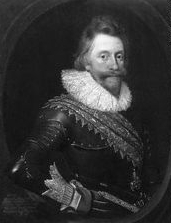 |
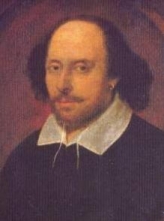 |
|
Henry
Wriothesley
3RD Earl of
Southampton
1573-1624 |
William
Shakspeare
1564-1616
(portrait apocryphal) |
|
ONLY Twice does Shakspeare speak
to us in prose outside of his Plays.
The first time is when he dedicates the poem of
Venus and Adonis, as the First heir of his Invention, to
Henry Wriothesley, Earl of Southampton, and says, "If your Honour
seem but pleased I account myself highly praised, and vow to take
advantage of all idle hours till I have honoured you with some graver
labour." In the year following this promise was fulfilled.
To the same friend the Poet offered the fruit of his "graver labour" in
the poem of Lucrece. In the second dedication he again
looks forward and speaks of literary work to be done in the future.
"What I have done is yours," he says. "What I have to do is
yours,—being part in all I have devoted yours." "What I have to do
is yours" implies future work; all future work will be a continuation of
all past work, and both are included in the inclusive "all I have
devoted yours," i. e. all which I have devoted to you.
Now, whether the work thus spoken of had been done in
the past, or is being done in the present, or is to be done in the
future according to an agreement or understanding, Shakspeare himself
here tells us that such past, present, and future work was wholly and
solely devoted to his young friend, the Earl of Southampton. So stands
the record in Shakspeare's own writing when he makes another promise
more emphatic than the one he had just fulfilled, and again pledges
himself by another reference to work in hand, more express in meaning
than was his primary dedication. From this personal record we
learn that he has work in hand which is pre-dedicated at the time of
writing to the same friend. This second and more serious
promise given publicly had no fulfilment, unless the work devoted to
Southampton was the Sonnets of Shakspeare, known four years later
to be circulating amongst the poet's "Private Friends." But, as
Mrs. Cowden Clarke observed in a letter addressed to me (July 25, 1866),
"Shakespeare was not the man to write lightly and
meaninglessly such words as 'The love I dedicate to your lordship is
without end,' and 'what I have done is yours; what I have to do is
yours; being part in all I have devoted yours!' Shakespeare was
not the man to write thus to his friend Southampton overtly, and to
write to his friend of the Sonnets as he there does, unless they were
one and the same person."
The earliest notice we have of Shakspeare's Sonnets yet
identified by name is from the pen of Francis
Meres, Master of Arts of both Universities, in his work entitled 'Palladis
Tamia; Wit's Treasury, being the second part of Wit's Commonwealth,'
which was published in the year 1598. Meres at that date
recognizes Shakspeare as the foremost writer, the most all-round poet,
of the Elizabethan age, and proclaims him to be one of the very best in
Comedy, in Tragedy, and in Lyrical Poetry. The writer shows that
he was up to date in his familiarity with Shakspeare's writings, for he
quotes an expression used by Falstaff in the first part of Henry IV.,
II. iv.[1]—a play which had only
been entered on the Stationers' Register Feb. 25th, 1597-98. Meres
was also greatly impressed with the English glory of Shakspeare's
language. "As Epius Stolo said that the Muses would speak with
Plautus' tongue if they would speak Latin, so I say that the Muses would
speak with Shakspeare's fine, filèd phrase, if they would speak
English." And of the Poems and Sonnets Meres remarks that "As
the soul of Euphorbus was thought to live in Pythagoras, so the sweet
witty soul of Ovid lives in mellifluous and honey-tongued Shakspeare;
witness his 'Venus and Adonis,' his 'Lucrece,' his sugred Sonnets among
his Private Friends." This mention of the Sonnets supplies us
with an important link of connection. We learn from Meres that in
the year 1598 the Sonnets of Shakspeare were known and somewhat renowned
in MS. for him to proclaim their sweetness as Love-Poetry, and they were
also numerous enough to be classed and concisely reviewed by him among
the Poet's other Works. Meres was a Warwickshire man. He is
characterized by Heywood in his Apology for Actors as "an
approved good Scholar whose work was learnedly done." Thus,
according to Francis Meres, in 1598, Shakspeare had made his "Private
Friends," for whom he had written the Sonnets; and if the Sonnets be the
same, the private friendship publicly recognized by the Critic must of
course have included that which is celebrated by the Poet in his first
126 Sonnets.
The Title to Thorpe's Collection,
printed in 1609, reads with an echo to the words of Meres—Shakspeare's
Sonnets, never before Imprinted, though so often spoken of, and so
long known to exist in MS.
An understanding on the subject is implied in the
familiarity of phrase. The inscriber appears to say, "You have
heard a great deal about the 'Sugred Sonnets,' mentioned by the critic,
as circulating amongst the poet's private friends; I have the honour to
set them forth for the public."
The Sonnets were published in 1609, with this
inscription:— |
|
TO . THE . ONLIE . BEGETTER . OF .
THESE . INSVING. SONNETS .
Mr . W . H . ALL .
HAPPINESSE .
AND . THAT . ETERNITIE .
PROMISED .
BY .
OVR . EVER-LIVING . POET .
WISHETH .
THE . WELL-WISHING .
ADVENTVRER . IN .
SETTING .
FORTH . T. T. |
|
The book is
inscribed by Thomas Thorpe, a well-known publisher of the time who was
himself a dabbler in literature. He edited a posthumous work of
Marlowe's, and was the publisher of plays by Marston, Jonson, Chapman,
and others. Shakspeare makes no sign of assent to the publication;
whereas he prefaced his Venus and Adonis with dedication and
motto; the
Lucrece with dedication and argument.
After the Sonnets were printed by Thorpe in 1609, we hear no
more of them for thirty-one years. In 1640 a new edition appeared
with an arrangement totally different from the original one. This
was published as 'Poems written by Wil. Shakspeare, Gent. Printed at
London by Tho. Cotes, and are to be sold by John
Benson.' In this arrangement we find some of the pieces
printed in the Passionate Pilgrim mixed up with the Sonnets, and
the whole of them have titles which are chiefly given to little groups.
Sonnets 18, 19, 43, 56, 75, 76, 96, 126 are missing from the second
edition. This publication of the Sonnets as Poems on distinct
subjects shows, to some extent, how they were looked upon by the readers
of the time. The arranger, in supplying his titles, would be
following a feeling and answering a want. Any personal application
of them was very far from his thoughts. Sonnets 88, 89, 90, and 91 are
entitled A Request to his Scornful Love. 109 and 110
are called A Lover's excuse for his long Absence. Sonnet 122,
Upon the Receipt of a Table Book front his Mistress; and 125, An
Entreaty for her Acceptance. The greater part of the titles
however are general, and only attempt to characterize the sentiment.
The most remarkable feature of this publication is Benson's
address, to which sufficient attention has never been directed.
"TO THE READER.
"I here presume, under favour, to present to your view some excellent
and sweetly composed poems of Master William Shakespeare, which in
themselves appear of the same purity the author himself, then living,
avouched! They had not the fortune, by reason of their infancy in
his death, to have the due accommodation of proportionable glory with
the rest of his ever-living works. Yet the lines will afford you a
more authentic approbation than my assurance any way can to invite your
allowance; in your perusal, you shall find them, serene, clear, and
elegantly plain,—such gentle strains as shall recreate and not perplex
your brain. No intricate or cloudy stuff to puzzle intellect, but
perfect, eloquence, such as will raise your admiration to his praise.
This assurance will not differ from your acknowledgments, and certain I
am my opinion will be seconded by the sufficiency of these ensuing
lines. I have been somewhat solicitous to bring this forth to the
perfect view of all men, and in so doing glad to he serviceable for the
continuance of glory to the deserved author in these his poems."
At first sight one might fancy that Benson referred to the
purity of Shakspeare's life as avouching for the purity of the Sonnets.
But after long questioning the conclusion is forced upon me that
Shakspeare had himself defended them against some such
"exsufflicate and blown surmises" or conjectures of his day as we find
extant in ours. Benson emphatically states that the author
himself when living avouched their purity!
To avouch is to affirm or testify, and therefore the plain
English of this must be that Shakspeare, in his life-time, gave his own
personal testimony to the purity of his Sonnets. This vindication
would not have been made unless some contrary charge had been brought
against them. Benson having heard of this looked into the Sonnets
for himself, and found they justified the claim that Shakspeare had made
on their behalf. Therefore he says, "I have been somewhat
solicitous to bring this forth to the view of all men," with intent
to do justice to the Sonnets and their Author.
In the editions that followed the first two, sometimes the
one order prevailed, sometimes the other. Lintot's, published in
1709, adhered to the arrangement of Thorpe's Collection. Curll's,
in 1710, follows that of Cotes. Gildon gave it as his opinion,
that the Sonnets were all of them written in praise of Shakspeare's
mistress. Dr. Sewell edited them in 1728, and he tells us, by way
of illustrating Gildon's idea, that "a young Muse must have a
Mistress to play off the beginnings of fancy; nothing being so apt to
elevate the soul to a pitch of poetry, as the passion of love." This
opinion, that the Sonnets were addressed to a mistress, appears to have
obtained, until disputed by
Malone and
Steevens. In 1780, the last-named critic published his
Supplement to the Edition of Shakspeare's Plays (1778), and the notes
to the Sonnets include his own conjectures and conclusions, together
with those of Dr. Farmer, Tyrwhitt, and Steevens. These four
generally concur in the belief that 128 of the Sonnets are addressed to
a man; the remaining 28 to a lady. Malone considered the Sonnets
to be those spoken of by Meres. Dr. Farmer thought that William
Harte, Shakspeare's nephew, might be the person addressed under the
initials "W. H." However, the Stratford Register soon put a stop
to William Harte's candidature, for it showed that he was not baptized
until August 28, 1600. Tyrwhitt was struck with the peculiar
lettering of a line in the 20th Sonnet,—
A man in
Hew all Hews in his controlling,
and fancied
that the Poet had written it on the colourable pretext of hinting at the
"only begetter's" name, which the critic conjectured might be William
Hughes.
The Sonnets were Steevens' pet abhorrence. At first he
did not reprint them. He says, "We have not reprinted the Sonnets,
&c. of Shakspeare because the strongest Act of Parliament that could be
framed would fail to compel readers into their service, notwithstanding
these miscellaneous poems have derived every possible advantage from the
literature and judgment of their only intelligent editor, Mr. Malone,
whose implements of criticism, like the ivory rake and golden spade in
Prudentius, are, on this occasion, disgraced by the objects of their
culture. Had Shakspeare produced no other works than these, his name
would have reached us with as little celebrity as time has conferred on
that of Thomas Watson, an older and much more elegant sonneteer."
Afterwards he broke out continually in abuse of them. The eruption
of his ill-humour occurs in foot-notes, that disfigure the pages of
Malone's edition of Shakspeare's poems. He held that they were
composed in the "highest strain of affectation, pedantry,
circumlocution, and nonsense." "Such laboured perplexities of
language," he says, "and such studied deformities of style prevail
throughout these Sonnets, that the reader (after our best endeavours at
explanation!) will frequently find reason to exclaim with Imogen—
|
"I see before me, man,—nor here, nor here,
Nor what ensues, but have a fog in them
That I cannot look through." |
"This purblind
and obscure stuff," he calls their poetry. And in a note to Sonnet
54 he asks with a sneer, "but what has truth or nature to do with
sonnets?" Steevens however was not altogether without warrant for
his condemnation if he read the Sonnets as utterances entirely personal
to the Poet.
Boswell, second son of Dr. Johnson's biographer, in editing a
later edition of the work in which Steevens' notes are printed, had the
good sense to defend the Sonnets against that censor's bitterness of
contempt, and the good taste to perceive that they are all aglow with
the "orient hues" of Shakspeare's youthful imagination. He
ventures to assert that Steevens has not "made a convert of a single
reader who had any pretensions to poetical taste in the course of forty
years," which had then gone by since the splenetic critic first
described the Sonnets as worthless. Boswell also remarks anent the
personal interpretation that the fondling expressions which perpetually
occur would have been better suited to a "cockered silken wanton" than
to "one of the most gallant noblemen that adorned the chivalrous age in
which he lived."
In 1797 Chalmers had endeavoured to show that the Sonnets
were addressed to Queen Elizabeth, although Her Majesty must have been
close upon sixty years of age when the Sonnets were first commenced.
He argues that Shakspeare, knowing the voracity of Elizabeth for praise,
thought he would fool her to the top of her bent; aware of her patience
when listening to panegyric, he determined, with the resolution of his
own Dogberry, to bestow his whole tediousness upon her.
Dr. Drake, in his Shakspeare and his Times (18I7), was
the first to conjecture that Henry Wriothesley, Earl of Southampton, was
the youthful friend of Shakspeare who was addressed so affectionately in
the Sonnets, as well as inscribed to so lovingly in the dedications of
his poems. He thought the unity of feeling in both identified the
same person, and maintained that a little attention to the language of
the times in which Thorpe's inscription was written, would lead us to
infer that Mr. W. H. had sufficient influence to "obtain the manuscript
from the Poet, and that he lodged it in Thorpe's hands for the Purpose
of publication, a favour which the bookseller returned by wishing him
all happiness and that eternity which had been promised by the bard
in such glowing colours to another, namely, to one of the immediate
subjects of his Sonnets." Drake contended, logically enough, that
as a number of the Sonnets were most certainly addressed to a female, it
must be evident that "W. H." could not be the "only begetter" of them in
the sense which is primarily suggested. He therefore agreed with
Chalmers and Boswell that Mr. W. H. was the obtainer of the
Sonnets for Thorpe, and he remarks that the dedication was read in that
light by some of the earlier editors. Having fixed on Southampton
as the subject of the first 126 Sonnets' Drake is at a loss to prove it.
He never goes deep enough, and only snatches a waif or two of evidence
floating on the surface. When he comes to the latter Sonnets he
expresses the most entire conviction that they were never directed to a
real object. "Credulity itself, we think, cannot suppose otherwise, and,
at the same time, believe that the Poet was privy to their publication."
About the year 1818 Mr. Bright was the first to make out that
the "Mr. H." of Thorpe's inscription was
William Herbert, afterwards Earl of
Pembroke. It is said he laboured for many years in collecting
evidence, brooded his cherished idea secretly, talked of it publicly,
and was then anticipated in announcing it by Mr. Boaden in 1832.
Mr. Boaden argued shallowly, that the Earl of Southampton could not be
the man addressed by Shakspeare, and assumed desperately that William
Herbert was! He held him to be the "only begetter," or Inspirer.
Thus Mr. Bright escaped the infamy of persistently trying to tarnish the
character of Shakspeare for the sake of a pet theory; that is, if his
discovery included the personal interpretation elaborated later by
Charles Armitage Brown, which will be dealt with in my next chapter.
Wordsworth, in his Essay supplementary to the famous preface,
printed with the Lyrical Ballads, has administered a rebuke to Steevens,
and reprehended his flippant impertinence. He says, "There is extant a
small volume of miscellaneous poems, in which Shakspeare expresses his
own feelings in his own person. It is not difficult to conceive
that the editor, George Steevens, should have been insensible to the
beauties of one portion of that volume, the Sonnets; though in no part
of the writings of this Poet is found in an equal compass a greater
number of exquisite feelings felicitously expressed. But from a
regard to the critic's own credit he would not have ventured to talk of
an Act of Parliament not being strong enough to compel the perusal of
these little pieces, if he had not known that the people of England were
ignorant of the treasures contained in them; and if he had not,
moreover, shared the too common propensity of human nature to exult over
a supposed fall into the mire of a genius whom he had been compelled to
regard with admiration, as an inmate of the celestial regions, 'there
sitting where he durst not soar.' "
This was written by Wordsworth in 1815; he had read the
Sonnets for their poetry, independently of their object, but held that "with
this key Shakspeare unlocked his heart," which has become the one
Article in the Credo of some readers of the Sonnets. About the
same time Coleridge lectured on Shakspeare at the Royal Institution, and
publicly rebuked the obtuse sense and shallow expressions of Steevens.
Coleridge thought that the person addressed by Shakspeare was
a woman. He fancied the 20th Sonnet might have been introduced as
a blind. He felt that in so many of the Sonnets the spirit was
essentially feminine, whatever the outward figure might be, sufficiently
so to warrant our thinking that where the address is to a man it was
only a disguise; for, whilst the expression would indicate one sex, the
feeling altogether belied it, and secretly wooed or worshipped the
other. Poet-like, he perceived that there were such fragrant gusts
of passion in them, such "subtle-shining secrecies" of meaning in their
darkness, as only a woman could have called forth; and so many of the
Sonnets have the suggestive sweetness of the lover's passionate words,
the ecstatic sparkle of a lover's eyes, the tender, ineffable touch of a
lover's hands, that in them it must be a man speaking to a woman.[2]
Charles Knight maintained that certain of the Sonnets, such
as Nos. 56, 57, and 58, and also the perfect love-poem contained in
Sonnets 97, 98, and 99, were addressed to a female, because the
comparisons are so clearly, so exquisitely the symbol of womanly beauty,
so exclusively the poetic representatives of feminine graces in the
world of flowers, and because, in the Sonnets where Shakspeare directly
addresses his male friend, it is manly beauty which he extols. He
says nothing to lead us to think that he would seek to compliment his
friend on the delicate whiteness of his hand, the surpassing sweetness
of his breath. Mr. Knight has found the perplexities of the
personal theory so insurmountable, that he has not followed in the steps
of those who have jauntily overleaped the difficulties that meet us
everywhere, and which ought, until fairly conquered, to have surrounded
and protected the Poet's personal character as with a
chevaux-de-frise. He wisely hesitated rather than rashly
joined in making a wanton charge of immorality and egregious folly
against Shakspeare. He considered that many of the Sonnets must be
dramatic in sentiment, and as a printer found plenty of proofs that they
were not printed in the written order, nor overlooked by the author.
He likewise considered it impossible that William Herbert, afterwards
Earl of Pembroke, could have been the "only begetter" of the Sonnets.[3]
Hallam inclined to the personal theory of the Sonnets, and
evidently thought we might assume that William Herbert was the youth of
high rank, as well as personal beauty, accomplishment and licentious
life, whom Shakspeare so often addressed as his dear friend. He
remarks that, "There is a weakness and folly in all excessive and
misplaced affection, which is not redeemed by the touches of nobler
sentiments that abound in this long series of Sonnets." "No one,"
he says, "ever entered more fully than Shakspeare into the character of
this species of poetry, which admits of no expletive imagery—no merely
ornamental line." But, so strange, so powerful is the Poet's
humiliation in addressing this youth as "a being before whose feet he
crouched, whose frown he feared, whose injuries—and those of the most
insulting kind, the seduction of the mistress to whom we have alluded—he
felt and bewailed without resenting;" that on the whole, "it is
impossible not to wish the Sonnets of Shakspeare had never been
written."
Mr. Dyce, in 1864, rested in
the conclusions which he had reached thirty years before. He then
said, "For my own part, repeated perusals of the Sonnets have well-nigh
convinced me that most of them were composed in an assumed character, on
different subjects, and at different times, for the amusement—if not at
the suggestion—of the author's intimate associates (hence described by
Meres as 'his sugred Sonnets among his private friends'); and though I
would not deny that one or two of them reflect his genuine feelings, I
contend that allusions scattered through the whole series are not to be
hastily referred to the personal circumstances of Shakspeare." He
left the problem where he found it, and made no attempt to make it
double.
Mr. Bolton Corney, who presented me with a copy of the
pamphlet he printed for private circulation, has recorded his conviction
that the Earl of Southampton was the "Begetter" of the Sonnets; that
they were written in fulfilment of a promise made to the Earl in 1594;
that the Sonnets mentioned by Meres in 1598 formed the work which was
promised in 1594 and reached the press in 1609, but that they are, with
slight exceptions, mere poetical exercises. He protests against
the theory that they relate to transactions between the Poet and his
Patron:—1.
Because as an abstract question the promise to write a poem cannot imply
any such object. 2. Because in the instance of
Lucrece
no such object could have been designed. 3. Because, in the
absence of evidence, it is incredible that the man of whom divers of
worship had reported his uprightness of dealing should have lavished
so much wit in order to proclaim the grievous errors of his patron—and
of himself. He denounces the vaunted discovery of Mr. Brown as a
most unjustifiable theory, a mischievous fallacy. He accepts
M. Chasles' reading of Thorpe's
inscription, and thinks a Frenchman has solved the Shakspeare problem
which has resisted all the efforts of our "homely wits." Believing
that the Earl of Southampton was really the "only begetter" of the
Sonnets, and that the inscription addresses the "only begetter" as the
objective creator of them, Mr. Corney feels compelled to accept M.
Chasles' interpretation; he thinks that William Herbert dedicates the
Sonnets to the Earl of Southampton, and that Thorpe merely adds his
wishes for the success of the publication. He assumes that the
initials "W. H." denote William Lord Herbert. Thus, he holds that
the sense of the inscription is:—To the only begetter (the Earl of
Southampton) of these ensuing Sonnets, Mr. W. H. (William Herbert)
wishes all happiness, and that eternity promised (to him) by our
ever-living Poet. This was the private inscription, in imitation
of the lapidary style, written on the private copy which had been
executed for the purpose of presenting to the Earl; and Thorpe, in
making the Sonnets public, let this dedication stand, merely adding that
the "well-wishing adventurer in setting forth" was "T. T."
There have been various minor and incidental notices of the
Sonnets, which show that the tendency in our time is to look on them as
Autobiographic. Mr. Henry Taylor, in his Notes from Books,
speaks of those Sonnets in which Shakspeare "reproaches Fortune and
himself, in a strain which shows how painfully conscious he was that he
had lived unworthily of his doubly immortal spirit." Mr. Masson [4]
states resolutely, that the Sonnets are, and can possibly be, nothing
else than a record of the Poet's own feelings and experience during a
certain period of his London life; that they are distinctly, intensely,
painfully autobiographic. He thinks they express our Poet in his
most intimate and private relations to man and nature as having been
"William the Melancholy," rather than "William the Calm," or "William
the Cheerful." Mr. Masson once wrote a work on the Sonnets which
has not been published.
The Sonnets seem to have placed Ulrici in that difficult
position which the Americans describe as "facing North by South."
To him the fact that Shakspeare passed his life in so modest a way and
left so little report, is evidence of the calmness with which the
majestic stream of his mental development flowed on, and of the clear
pure atmosphere which breathed about his soul. Yet, we may see in
the Sonnets many traces of the painful struggles it cost him to maintain
his moral empire. His mind was a fountain of free fresh energy,
yet the Sonnets show how he fell into the deeps of painful despondency,
and felt utterly wretched. They tell us that he had a calm
consciousness of his own greatness, and also that he held fame and
applause to be empty, mean, and worthless. This is Ulrici's
cross-eyed view. He reads the Sonnets as personal confessions, and
he concludes that Shakspeare must have been so sincere a Christian, that
being also a mortal man, and open to temptation, he, having fallen and
risen up a conqueror over himself, to prove that he was not ashamed of
anything, set the matter forth as a warning to the world, and offered
himself up as a sacrifice for the good of others, most especially for
the behoof of the young Earl of Pembroke, for, according to Ulrici, he
alone can be the person addressed.
Gervinus, in his Commentaries on Shakspeare, is of opinion
that the Sonnets were not originally intended for publication, and that
126 of them are addressed to a friend; the last 28 bespeaking a relation
with some light-minded woman. It is quite clear to him that they
are addressed to one and the same youth, as even the last 28, from their
purport, relate to the one connection between Shakspeare and his young
friend. Gervinus considers that these should properly be
arranged with Sonnets 40-42. He maintains that the real name
of the "only begetter was not designated by the publisher, the initials
W. H. were only meant to mislead; that this "Begetter" is the same man
whom the 38th Sonnet calls in a similar sense the "Tenth Muse," and whom
the 78th Sonnet enjoins to be "most proud" of the Poet's works, because
their influence is his, and born of him. He does not believe that
the Earl of Pembroke could be the person addressed, the age of the Earl
and the period at which the Sonnets were written making it an
impossibility. He thinks the Earl of Southampton is the person, he
being early a patron of the drama, and a nobleman so much looked up to
by the poets and writers of the time, that they vied with each other in
dedicating their works to him. Gervinus also thinks that a portion
of Sonnet 53 directly alludes to the poems which the Poet had inscribed
to the Earl, and that he points out how much his friend's English beauty
transcends that old Greek beauty of person, which the Poet had attempted
to describe, and set forth newly attired in his Venus and Adonis.
This foreign critic wonders why in England the identity of the object of
these Sonnets with the Earl of Southampton should have been so much
opposed. To him it is simply incomprehensible, for, if ever a
supposition bordered on certainty, he holds it to be this.
When writing my article on Shakspeare and his Sonnets, which
appeared in the Quarterly
Review
for April 1864, I was not aware of, or should have mentioned, the fact
that Mrs. Jameson had already suggested a portion of my hypothesis
independently attained. Mrs. Jameson says of the Sonnets, "It
appears that some of them are addressed to his amiable friend Lord
Southampton; and others I think are addressed in Southampton's name to
that beautiful Elizabeth Vernon to whom the Earl was so long and so
ardently attached."
According to Herr Bernstorff [5]
the Sonnets do not speak to beings of flesh and blood, no Earls of
Southampton or Pembroke, no Queen Elizabeth or Elizabeth Vernon, no
corporeal being, in short, nobody whatever, but Shakspeare's own soul,
or his genius or his art. This author considers that the Sonnets
are a vast allegory, in which Shakspeare has mashed his own face; he has
here kept a diary of his inner self, not in a plain autobiographic way,
but by addressing and playing a kind of bo-peep with his döpple-ganger.
It is Shakspeare who in the 1st Sonnet is the "only herald to
the blooming spring" of modern literature, and the world's fresh
ornament. The "beast that bears" the speaker in Sonnet 51 is
the Poet's animal nature. The "sweet roses that do not fade" in
Sonnet 54 are his dramas. The praises so often repeated are but
the Poet's enthusiasm for his inner self. All this is proved by
the dedication, which inscribes the Sonnets to their "only begetter," W.
H.—William Himself. The critic has freed the Shakspearian
Psyche from her Sonnet film, and finds that she has shaken off every
particle of the concrete to soar on beautiful wings, with all her inborn
loveliness unfolded, into the empyrean of pure abstraction! There
sits the Poet sublimely "pinnacled, dim in the intense inane," at the
highest altitude of self-consciousness, singing his song of
self-worship; contemplating the heights, and depths, and proportions of
the great vast of himself, and as he looks over centuries on centuries
of years he sees and prophesies that the time will yet come when the
world will gaze on his genius with as much awe as he feels for it now.
"Is this vanity and self-conceit?" the critic asks, and he answers, "Not
a whit, simple truthful self-perception!" Into this region has he
followed Shakspeare, where "human mortals" could not possibly breathe.
He keeps up pretty well, self-inflated, for some time, but at length,
before the flight is quite finished, our critic gives one gasp, showing
that he is mortal after all, and down he drops dead-beaten in the middle
of the latter Sonnets.
Mr. Heraud says [6]—"After
a careful reperusal, I have come to the conclusion that there is not a
single Sonnet which is addressed to any individual at all." He
maintains that the "Two Loves" of Sonnet 144 are "the Celibate
Church on the one hand, and the Reformed Church on the other!" And
in the latter Sonnets, our Poet is reading his Bible—"Has the very Book
open before him, he is in fact reading the Canticles; and there he finds
the Bride, who is 'black
but comely'—at once the bride of his CELESTIAL
FRIEND and his own." This is too good
to omit, although I can only make a note of it; good enough surely, if
boundless folly can reach so far, to tickle Shakspeare in eternity and
make him feel a carnal gash of the old human jollity!
But, it may be asked, why recognize such rootless and
literally groundless imaginings as these? Wherefore notice such
vain shadows at all in the presence of realities firm and fast as the
centre? What says Delius in Randolph's Muses' Looking-Glass
when he has been censured for his fear of Shadows? "Who knows
but they come leering after us to steal away the substance!"
Every red herring trailed across the true scent will be sure
to mislead some deluded followers. But the Sonnets are no more
allegorical than they are autobiographical; neither were they intended
to set forth that system of philosophy which Mr. Richard Simpson sought
for in them. The editor of the "Gem edition "at one time accepted
the personal theory, and according to his own admission could make but
little way with it. [7] Although
each Sonnet "is an autobiographic confession," he remarks, "we are
completely foiled in getting at Shakspeare himself," and these
"revelations of the Poet's innermost nature" appear to "teach us less of
the man" than the tone of mind which we trace or seem to trace in his
dramas. The "strange imagery of passion which passes over the
magic mirror has no tangible existence before or behind it." And
yet these Sonnets are autobiographic. It is Shakspeare showing
himself to us, they say (with M. Chasles), not only in person, for they
insist that he has sounded the depths of his heart in "a drama more
tragic than the madness of Lear or the agonies of Othello."
According to this view our great Poet has written an autobiography that
is impersonal, a subjective revelation which reveals nothing definite,
and he has also mixed up the sexes in a confusion that is unparalleled
in poetry. But this was the greatest master of expression, the one
man whose art of uttering just what he meant to say and suggest was
incomparable, supremely potent, and of infinite felicity!
According to Mr. Henry Brown, "nothing at all satisfactory
had appeared in elucidation of the Sonnets" previous to the publication
of his queerly-called book. [8]
From this we learn that the Sonnets are an "intentional burlesque," an
"allegorical parody," from beginning to end. The "entire Sonnets
are a satire upon the reigning custom of Mistress-Sonneting," although
no one but him has "observed that the drift of the Poet is parody." In
his loftiest moods and Most solemn music the singer has no other object
than to "ape the bombast of the Sonneteers" and at the same time
out-bombast them. It was Shakspeare's crowning or rather
fool's-capping conceit to marry his young friend to his own immortal
muse, seeing that he would not get married himself! This friend is
held to be Master Will Herbert, who is the actual Adonis of the poem
which Shakspeare dedicated to Southampton when Herbert was in his
thirteenth year! Mr. Brown's adoption of Stella as the "dark lady"
of the Latter Sonnets without one word of explanation has in it all the
Elizabethan audacity of unacknowledged borrowing, whilst his Holywell
Street title of "Lady Rich's illicit amours revealed" made me shrink,
ashamed of having introduced her name into the Sonnet controversy.
In 1872 the first 126 Sonnets were translated into German by
Herr Fritz Krauss and called Shakespeare's Southampton-Sonette, [9]
my theory of their nature and significance being frankly adopted and
sustained in the author's commentary. Since then Herr Krauss (now
deceased) has written an original work in Support of my contention that
Lady Rich was the subject of the Latter Sonnets suggested to the Poet by
William Herbert, but this book, a posthumous publication, I have not
seen.
In his History of the English People [10]
Mr. J. R. Green has some remarks on the Sonnets: Speaking of Shakspeare
he says, "His supposed self-revelation in the Sonnets is so obscure that
only a few outlines can be traced even by the boldest conjecture.
In spite of the ingenuity of commentators, it is difficult and even
impossible to derive any knowledge of Shakspeare's inner history from
the Sonnets. If we take the language as a record of his personal
feelings, his new profession as an actor stirred in him only the
bitterness of self-contempt. He chides with Fortune 'that did not
better for my life provide than Public means which public manners
breed.' 'Thence comes it,' he adds, 'that my name receives a
brand, and almost thence my nature is subdued to that it works in.'
But the application of the words is more than a doubtful one. The
works of Mr. Armitage Brown and Mr. Gerald Massey contain the latest
theories as to the Sonnets."
Some persons seem possessed with an esthetic passion for
unrealizing and de-vitalizing the Sonnets. There have been recent
editors who deliberately set themselves to evaporate the actual facts
into the mistiest forms of fancy by affixing their own misleading
subject-titles to send them off into the "intense Inane" delightedly as
children blowing bubbles.
Professor Dowden is of opinion that Shakspeare wrote whole
series of Sonnets upon such abstract themes as Time, Beauty, Goodness,
and Verse; that he takes these ideas as topics; that "Love as love is
the one eternal thing," and, as shown by the last of the first
series (125), "that is the end of the whole matter." In vain does
Shakspeare protest that it is not so; that he did not write about ideas;
that he detested the feigning of idealists like Drayton as much as he
did false hair and face-painting. His protest is even passionate
|
"So is it
not with me as with that Muse
Stirred by a painted beauty to his
verse." |
He did not
dally with the shadows of ideas, but wrote of persons, especially of one
and about one—"To one, of one, still such and ever so." And for
one, one only, as he tells his friend Southampton. However,
Professor Dowden thinks otherwise, and so, as he remarks, "that is the
end of the matter!" [11]
Shakspeare was dramatic-minded above all other men, and the least
immured in himself. He wrote of persons, events, circumstances,
and the affairs of others, not about his own; and the subjective mind of
the Brownites cannot see that the same man wrote the same way at times
in his Sonnets.
One of the latest deliverances on the subject is by Mr.
Furnivall in his introduction to the Leopold Shakspeare, who says that "the
Sonnets are in one sense Shakspeare's Psalms. Spiritual struggles
underlie both poets' work. For myself I'd rather accept any number
of 'slips in sensual mire' on Shakspeare's part to have the 'bursts of
(loving) heart' given us in the Sonnets." "He tells me,"
says Mr. Furnivall, "what his false swarthy mistress was," and
also "of the weakness of his own nature." Mr. Furnivall,
holding on to the coat-tails of Armitage Brown, also holds that the
disreputable experience attributed by him to Shakspeare was the Poet's
"best preparation" for the "Unhappy Third Period" in which our great
dramatist wrote his greatest plays. Mr. Furnivall treats
Shakspeare as if he were a recent hysterical convert of the Salvation
Army—the greater sinner the purer saint—or as if he had prepared himself
for his devotions on Sunday by a prolonged and profound debauch on
Saturday night. Mr. Furnivall does not argue or listen to
evidence; he only issues his fiat. "The Book on the Sonnets
has yet to be written; and I hope Professor Dowden'll do it. The
best book yet written is Armitage Brown's." [12]
There is but one reading possible for him, that is the autobiographic.
"Were it not for the fact," he tells us, "that many critics
worthy of the name of Shakspeare Students and not Shakspeare fools have
held the Sonnets to be merely dramatic, I could not have conceived that
poems so intensely and evidently autobiographic and self-revealing;
poems so one with the spirit and inner meaning of Shakspeare's growth
and life, could ever have been conceived to be other than what they are,
the records of his own loves and fears." So the man in
Punch did not know whether the Claimant was the rightful heir or
not, but he could not bear to see a fellow done out of his own!
Mr. Furnivall continues, "I know that Mr. Browning is against this
view, and holds that if Shakspeare DID
'unlock his heart in Sonnets,' the less Shakspeare he." As I am
personally responsible for the first effort made to substantiate a
dramatic theory of the Sonnets, I may be allowed to say here that no
writer known to me has ever maintained the opinion that they are
merely
dramatic. My contention is at present, as it was before, that the
Sonnets are both, Personal and Dramatic; Personal when
spoken by Shakspeare, and Dramatic when spoken by his friends. The
problem is to identify and distinguish the different speakers and to
present the proof by means of the internal evidence and historic
data. Mr. Furnivall quotes from some rhapsody sopped in
sentiment—"Honour again to the singers of brief poems, to the Lyrists
and Sonneteers! O Shakspeare! let thy name rest gently among them,
perfuming the place. We swear that these Sonnets and Songs do
verily breathe 'not of themselves but thee;' and we recognize and bless
them as short sighs from thy large and poetic heart, burdened with
diviner inspiration." This, says Mr. Furnivall, in italics, "this
is the teaching that such of our modern poets as are not mere tinkling
cymbals, but have souls, need, and that the students of Shakspeare's
Sonnets must recollect." He belongs to that subjective brood
of mind which can read not only David's Psalms but also Mrs. Barrett
Browning's Sonnets or Tennyson's In Memoriam into Shakspeare's
Sonnets, and then try to interpret the one by the other, oblivious of
the fact that the objective dramatic mind of Shakspeare was antipodal to
that of Tennyson and Mrs. Browning. The folly of inferring that
Shakspeare's Sonnets are autobiographic because those of Mrs. Barrett
Browning are so, or on account of In Memoriam
being entirely personal to the writer, could not be surpassed. Mr.
Furnivall and those for whom he speaks assert that "no one can
understand Shakspeare who does not hold that the Sonnets are
autobiographical." But they present no evidence for their
belief, which is really as baseless as the Baconian theory; and they
suppress or ignore the facts that are fatal to their faith. My
contention is that no one can understand Shakspeare who does look on
them as autobiobraphical, and it is my business now to demonstrate that
the Sonnets are partly personal and partly dramatic. A view which
ought to recommend itself to our national love of a compromise,
independently of all that has to be urged on behalf of its likelihood
and verity.
The latest contribution to the Sonnet literature in England
is by Mr. Thomas Tyler. [13]
He supports the theory that the Sonnets are autobiographical, and that
William Herbert was the young friend who is addressed in them by
Shakspeare. Mr. Tyler considers the Sonnets were written during
the years 1598-1601. The chief interest of his communication lies
in the introduction of a new claimant, one Mary Fytton, as that Dark
Lady of the latter Sonnets, who they say was mistress in common to
Shakspeare and the Earl of Pembroke. Mistress Fytton was one of
the Ladies of Honour, who was fully in the Queen's favour in the year
1600, as is shown by her dancing with Elizabeth at a masque and playing
the leading part. Mr. Tyler vouches for her being "on specially
intimate terms with the Queen." He establishes Herbert's
connection with Mrs. Fytton by means of a document in the Record Office,
which may be dated approximately October 1602. This paper
states:—"One Mrs. Martin, who dwelt at Chopinge
Knife near Ludgate, told me that she had seen priests marry gentlewomen
at the Court in the time when that Mrs. Fitton was in great favour, and
one of her Majesty's Maids of Honour, and during the time that the Earl
of Pembroke favoured her she would put off her head tire, and tuck up
her clothes, and take a large white cloak, and march as though she had
been a man to meet the said Earl out of the Court."
Mr. Tyler connects this with another letter. He says,
"On January 19, 1601, William Herbert became, through the death of his
father, Earl of Pembroke. There is in the Record Office a letter
from Tobie Matthew to Dudley Carleton, written two months later
(March 25), containing a statement which probably has an important
relation to our present subject. 'The Earl of Pembroke is
committed to the Fleet: his Cause is delivered of a boy who is
dead.' The words 'his Cause' must mean the woman who had been the
cause of Lord Pembroke's getting into trouble." The link between
the nameless "Cause" and Mrs. Fytton has to be inferred or forged.
Mr. Tyler presents no proof, although he alleges that when Pembroke "had
been committed to the Fleet, Mistress Fytton was his Cause."
If it was Mary Fytton, and she was the character portrayed in the Latter
Sonnets, one can hardly see why the child should have been fathered on
Herbert. Why should it not have been Shakspeare's or anybody's?
The sole ground, however, for supposing that Mistress Fytton
was Shakspeare's paramour is that she was Herbert's Light o' love, or
one of them, and Herbert was one of Shakspeare's "Private Friends."
Still, Mr. Tyler does not think that Mistress Fytton, who was a Maid of
Honour in especial favour with the Queen in 1600, could have lodged with
Shakspeare, because in line 12 of Sonnet 144 the speaker says,
"I guess one Angel in Another's Hell."
This being the
Hell where Mary Fytton lodged; the place no doubt where Shakspeare (or
another speaker) spent his "Hell of time" (Sonnet 120), and for which he
tells us that he was "paying too much rent" (Sonnet 125). Further
comment is here reserved, with the exception of one observation.
There is at present an insuperable difficulty in the way of accepting
Mistress Fytton as the lady of the Latter Sonnets, inasmuch as Fytton
was her maiden name.
Mr. Tyler adduces no evidence to show that she was a married
woman at the time the Earl of Pembroke favoured her. The
imprisonment of Pembroke for such a cause would imply the seduction of
an unmarried woman who was a Maid of Honour. The Dark Lady of the
Sonnets is a married woman notorious for her faithlessness. "In
act thy bed-vow broke" proves the marriage state; and it must be shown
that Mistress Fytton was a married woman at the time that Sonnet 152 was
written, before any other claims can be admitted on her behalf,
notwithstanding the punning appropriateness of her maiden name.
This difficulty should have been fully faced at once. But it seems
that the Herbertists can shut their eyes to everything that is against
their view, and take in or be taken in by anything that appears to be in
their favour. They will strain at the least little gnat, and
swallow camels by the dozen. They remind me of those Africans who
cannot face a dead fly in their drink, but who will hunt each other's
heads for live delicacies. Mr. Tyler somewhat impotently suggests
that Mrs. Fytton may have been married and "re-assumed her maiden
name of Fytton." What! and been allowed by Elizabeth to masquerade
at Court as an impostor as well as a prostitute! i.e. as the
mistress of Herbert and Shakspeare?
The Latter Sonnets were extant in 1599 as proved by the
Passionate Pilgrim, therefore the Dark Lady was then a married woman
of the vilest reputation—so bad that she was in the "refuse of her deeds
"—so common as to be the wide world's common-place" and "the bay where
all men ride" as early as 1599! Consequently this cannot be Mary
Fytton, who still bore her maiden name as an honourable Lady at Court,
even if she were seduced by Herbert in 1600, and found out in 1601.
Thus far Mr. Tyler's hypothesis rests mainly on three supports afforded
by the words "If," "Probable," and "May-be," which have to do duty in
place of verifiable facts and conclusive criteria, and at present he has
but led his followers into an IMPASSE. |
|
____________________________ |
|
- II -
THE LUES BROWNIANA. |
|
ADMITTING as we all do that Shakspeare wrote his
Sonnets, there are but two ways of reading them. Either the Poet
is the Speaker throughout, or else some of them are spoken by other
persons, for whom they were written; e.g. the "Private Friends"
among whom the Sonnets circulated during many years—as we learn from
Meres in 1598, and from other evidence now adduced. This latter
interpretation is mine, in opposition to the personal theory of Charles
Armitage Brown.
One editor of the Sonnets, the late Robert Bell, writing in
the Fortnightly Review, was constrained to admit that—"Whatever
may be the ultimate reception of Mr. Massey's interpretation of the
Sonnets, nobody can deny that it is the most elaborate and
circumstantial that has been yet attempted. Mr. Armitage Brown's essay,
close, subtle, and ingenious as it is, recedes into utter insignificance
before the bolder outlines, the richer colouring, and the more daring
flights of Mr. Massey. What was dim and shapeless before, here
grows distinct and tangible; broken gleams of light here become massed,
and pour upon us in a flood; mere speculation, timid and uncertain
hitherto, here becomes loud and confident, and assumes the air of
ascertained history. A conflict of hypotheses had been raised by
previous annotators respecting the facts and persons supposed to be
referred to in the Sonnets, and the names of Southampton, Herbert, and
Elizabeth Vernon flitted hazily through the discussion. It has
been reserved for Mr. Massey to build up a complete narrative out of
materials which furnished others with nothing more than bald hints, and
bits and scraps of suggestions."
In his Notes to A Treasury of English Sonnets Mr.
David M. Main remarks on the subject of Shakspeare's Sonnets and their
interpreters, "The reader must pursue (this) for himself in the
elaborate works devoted to the subject, especially those of Mr. Charles
Armitage Brown, and Mr. Gerald Massey, the protagonists of the two great
opposite theories of the Sonnets as, according to the former,
autobiographic, personal; and, according to the latter, dramatic
(vicarious) or impersonal. Whichever of these works may ultimately
determine his faith—I cannot doubt that it will be Mr. Massey's masterly
and luminous exposition." [14] Mr. Main,
however, did not point out that my contention is for both
Dramatic and Personal Sonnets. When my work was first published, that
happened which a writer has most reason to deprecate, whose object it is
to set the facts in battle-array and fight it out. No sustained
attempt was ever made to grapple with my arguments or to rebut my
evidence; and cross-examination has been declined for more than twenty
years. There was some distant biting of thumbs at my theory, and
doubtless considerable back-biting, but no acceptance of the challenge
which was then made, and is now repeated.
In trying to present a rational rendering of Shakspeare's
Sonnets I had from the outset to argue with or rather against an
established mania from which some readers have suffered and others still
suffer acutely. They dare not discuss the evidence, they cannot
present any valid arguments for their fanatical faith, they will not
face the facts; but they speak virulently, and at times rave rabidly
against any one who questions the personal nature of the Sonnets; or
else they assume the position of "I am Sir Oracle" and deliver an
adverse verdict without any show of right or reason. When
Alexander was counselled to give battle at Arbela and attack the enemy
by night, he declined, saying he would not steal the victory. But
this is what the supporters of the Brownite theory are always trying to
do with readers who are entirely in the dark concerning the facts that
are fatal to their assumptions. They want to filch the victory
without fighting the battle. Still worse if possible are those who
pose as judicious doubters of any and every solution that may be
proposed. Such people never make a discovery themselves and never
recognize one when it is made. They "venture to doubt" whether the
mystery ever will be penetrated, the friend identified, the Rival Poet
named, the Dark Lady recognized, the problem solved. Enough for them to
raise a subjective mist and call it Shakspeare's mystery, which they
deem inscrutable. Such judicial-minded doubters are as obstinate
as mules, and equally sterile. Their reputation for wisdom is not
derived from their natural insight, but from the wise way they have of
looking at people through their spectacles. They can ensconce
themselves in their own conceit and smile as if it were indeed a
something to be proud of. Difficulties that are insuperable to
them are pronounced insoluble by others, and they are the staunchest of
conservatives in defence of their own narrow limits. For their
part they are content to repose in their own incompetence.
But we have now to do with the Autobiographic theory of
Charles Armitage Brown. Bright and Boaden put forth their suggestions,
but Brown made the theory his own. Those who have followed him,
like Mr. Furnivall,[15] are but irresponsible echoes.
Nothing has been done during fifty years to make good the hasty
generalization. Not a single fact has been adduced to prove the
theory true. Brown put forth the fiction; his followers are only
believers in it. Fingunt simul creduntque. And this still
remains a fiction to which they have only added their faith. The
Autobiographic theory has passed into the stage of belief and become the
sacred fetish of a little cult, although no sustained attempt has ever
been made in defence of the faith. It is founded upon the
assumption that the Sonnets are entirely personal to Shakspeare himself,
and that he is the sole speaker in them from first to last; also that
the "Mr. W. H." of Thorpe's Inscription was William Herbert, afterwards
Earl of Pembroke, who was born in 1580, and who first came to live in
London in the year 1598—the year in which Meres proclaimed the Sonnets
to be then extant among Shakspeare's "Private Friends."
According to Brown's reading the Sonnets are not Sonnets
merely, but consist of groups that form six poems in the Sonnet-stanza.
He tells his readers that if the printers in 1609 had received efficient
directions the order and manner of these six poems would have run thus:—
First Poem.
Stanzas 1 to 26. To his friend, persuading him to marry.
Second Poem. Stanzas 27 to 55. To his friend, who had
robbed him of his mistress, forgiving him.
Third Poem. Stanzas 56 to 77. To his friend,
complaining of his coldness, and warning him of life's decay.
Fourth Poem. Stanzas 78 to 101. To his friend,
complaining that he prefers another poet's praises, and reproving him
for faults that may injure his character.
Fifth Poem. Stanzas 102 to 126. To his friend, excusing
himself for having been some time silent, and disclaiming the charge of
inconstancy.
Sixth Poem. Stanzas 127 to 152. To his mistress, on her
infidelity? [16]
Brown considered that Sonnets 135, 136, and 143, containing puns on the
name of "Will," were quite out of keeping with the rest on account of
their playful character. He seems not to have known that Sonnet 57
was another of these; possibly he never saw the original Quarto.
The last two Sonnets he left out. The 145th stanza was rejected on
account of its metre, and the 146th Sonnet was to be deleted because of
its religious nature; this being too solemn as the others were too
trivial. Without adducing anything like evidence from within the
Sonnets, and in defiance of all the testimony that can be collected from
without, Mr. Brown was proudly satisfied in assuming that Shakspeare was
not only a self-debaser, but was also a self-defamer of a species that
had no previous type and has produced no after-copy. The theory is
that Shakspeare discovered a particular species of the forbidden fruit
and tried to keep the Tree all to himself. But his young friend
Will Herbert found it out and ate of it in the same stealthy manner as
he himself had done. Sooner or later the "two thieves kissing" the
same mistress found each other out, and they had a "hell of time."
Mr. Brown says "we can scarcely imagine Shakspeare in a fit of rage;
such, however, was the fact. He was stung to the quick, and his
resentment, though we are ignorant of the manner in which it was shown,
appears to have been ungovernable!" (p. 63).
After the Fall which followed his eating of the forbidden
fruit Shakspeare sat down to carve his cherry-stones into pretty
likenesses of the facts, or in other words, to make a record of his sins
and sufferings in Sonnets as an offering of his everlasting love thus
dedicated to the man who had perfidiously partaken of his paramour!
No one knows better than myself that ridicule is not the test of truth,
but my case is not going to rest on ridicule if I do laugh a little at
what I look upon as madly ridiculous. It is true that Mr. Brown
most charitably forgives Shakspeare for doing what he has gratuitously
charged him with doing, i.e. "keeping a mistress." He says
piously enough, "May no person be inclined on this account to condemn
him with a bitterness equal to their own virtue. For myself,
I confess I have not the heart to blame him at all—purely because he so
keenly reproaches himself for his own sin and folly" (p. 98).
One is thankful to find that Mr. Furnivall also forgives him freely and
offers him absolution with extreme unction. He appears to hold
that these wantonly imputed sins of blood and slips in sensual mire have
conferred on our poet a character quite Biblical. Thus he compares
Shakspeare with David and looks upon the Sonnets as his Psalms.
There never were any authentic grounds for making such a charge or for
placing Shakspeare in such disreputable company, or beslavering him with
the unction of cant; nothing whatever to go upon except those poetic
appearances and shadows of some kind or other of facts which have played
the fool with the Brownites, who have falsified them in their malodorous
rendering of the Sonnets.
Mr. Furnivall supposes that we fight against the
Autobiographic theory of the Sonnets to save Shakspeare from the charge
of adultery. Not at all. Give us the facts and we will face
them frankly. I do not fear facts nor war against them. My
battle is set in array against fictions, fallacies, forgeries, and
groundless assumptions, not against facts. But we deny that you
have ever made out any case of Adultery. We deny your possession
of the facts. We deny that you, who are too subjective-minded to
get out of your own conceited selves, have taken the measure of our
great Dramatist, whose power of going out of himself and assuming other
forms of personality was Protean and humanly unparalleled whether he
wrote Plays or Sonnets. We deny that you have ever plumbed or
penetrated deep enough, or ever given sufficient proofs of profound
insight in reading the Sonnets. We deny the accuracy of your gauge
and the truth of your interpretation. We reject your version of
the circumstantial data concealed in the Sonnets as calumnious,
incredible, and impossible; and we charge you with taking advantage of
the obscurity, like others that come by night, to vilify the man
Shakspeare and vitiate his work. We see and say that you have
never known the man to whose acquaintanceship you pretend. When we
ask for proof you smoke a sooty figure on the ceiling and call that
a likeness of Shakspeare. You have made the Flower-Garden of the
Southampton Sonnets common as a place that is haunted with the ghost of
dead drink and the foul breath of bad tobacco. They will need to
be disinfected for a while, so that clean people can freely breathe
their natural sweetness.
What we repudiate from the first is the puerility of
supposing that if our Poet had been an adulterer he would have written
Sonnets on the subject to perpetuate his personal and
for-ever-to-be-reflected shame, when (as he tells us) the subjects were
suggested by this friend, and the Sonnets were written to be the living
record of his friendship, his loving memorial in life, his "gentle
monument" in death; were intended to contain the Poet's "better part,"
"the very part was consecrate to thee" (Sonnet 74, written after the
supposed "adultery"). I look upon this imputation as an utterly
unwarranted attempt to make us think ignobly of the man, and a most
unique specimen of dilettante devilry. It is not as if Mr. Brown
had been inspired by the passion for essential truth, and made blind
with earnestness on Shakspeare's behalf! Neither he nor his
imitators had or have any such excuse. Their foolish conceit is
that in some surreptitious way they can get at the "inner workings" of
the Poet's nature, having caught him this time without the mask, and
found him out. But Shakspeare is not to be "found out" by the
one-eyed people. He was all eyes himself, and each eye had as many
facets for conduct, guidance, and self-protection as those of the fly.
As a matter of course any casual reader might assume at first sight that
Shakspeare's Sonnets would be personal to Shakspeare. As the true
saying is, "any fool can do that." Therefore it is not surprising
that this revelation of Shakspeare's guilt came upon Mr. Brown at a
flash. Most of us at first sight have fancied the Sonnets were
wholly personal to the writer of them. That is, we took it for
granted they were personal to Shakspeare. But those who take
things for granted, or who adopt a false view and act upon it, may do as
Othello did, and as others have done, who murdered by mistake.
Such was the position of an old Shakspearian who says in a letter to me—
"Six years ago I wrote and read a paper on the Sonnets
declaring at that time for the Personal Theory. I still remember
how greatly the difficulties presented by that theory dissatisfied and
depressed me, and how I was forced to the conclusion that those,
difficulties never could be surmounted. I have now read and
re-read your exhaustive work again and again, and I can only say that
you have made a blind man see. Whereas I groped in the dark before, I
now walk under a strong light, and can read with apprehension and
delight those beautiful poems that I used to read with a feeling of
impatience and vexation. I feel greatly indebted and grateful to
you for having relieved me from the burden of an immense difficulty."
Another old Shakspearian wrote to me as follows—
"Having just finished your very interesting book on
Shakspeare's Sonnets, I cannot deny myself the pleasure of thanking you
for your eloquent vindication of Shakspeare's personal character, and
for the new and clear light by which you enable the world to read and
comprehend those exquisite pieces of poetry.
"As one of the many admirers of these Sonnets, I have always
been perplexed by their import, regarding them as autobiographical; but
now that I can view them as having been written to and for others, their
beauty and intensity appear to me to be wonderfully enhanced by the
glowing spirit of love and devotedness which gives them a double life.
Let me congratulate you on the completeness and fulness of your noble
task; for which all lovers of Shakspeare must be grateful to you."
But it cost me three years of intense thought and patient
labour to free myself entirely from this delusion. At length I
found that the path attempted by Mr. Brown was of no more avail for
making way through the maze than that of the drunken man whose wooden
leg stuck so fast in the earth that he stumped round and round it all
night without getting any forwarder, but believing all the while that he
was on his way home. That picture or parable, if grotesque, is by
no means an unfair or extravagant representative of the personal theory!
I found that the difficulties all lay in the details which Brown had
avoided and never attempted to cope with, nor even pretended to
understand. Just where the Sonnets are the fullest of arresting
matter, and the surface is most craggy with obstructive facts, which
Brown could not get over or explain away, he had to shirk the difficulty
by suggesting that the Sonnets were no doubt intended to be left
vague (p. 63). Although there is nothing indefinite in his
indictment of Shakspeare and his young friend!
Those readers who will insist on the Sonnets being solely
Autobiographical are seeking to cross the sea by dry land. They
keep on making the attempt like those migratory Norwegian rats of which
we read, who never do succeed, but who at least have the excuse that
there was a land-passage once where the water drowns them to-day.
The chief contents of the Sonnets never have been and never can be made
personal to Shakspeare. The long fight against an adverse fate, the
spite of fortune, and the tyranny of time; the banishment and wanderings
abroad, the public disgrace and vulgar scandal, the unfaithfulness in
friendship, the frailties of sportive blood, the sins and sufferings,
the cries of repentance, the confessions of his blenches, the defiance
in thinking good what others think bad, the pitifully false excuses and
abject servility, all belong to a speaker who is NOT
Shakspeare. These things can no more be made personal to our Poet
by any racking of ingenuity or reach of an emasculate imagination than
the sea can be taken on board the ship. With the Autobiographical
theory all is discord and dissonance; whereas the semi-dramatic
rendering serves to bring harmony out of a chaos of sights and sounds;
and as Bacon tells us, it is the harmony which of itself giveth light
and credence. For this semi-dramatic interpretation in its final
form I now ask an attentive hearing.
It was in consequence of mistaking the confessions of the
Sonnets as Autobiographical that Hallam wished they had never been
written. Schlegel read them in the same way, as wailings over a
wasted youth; the Poet's Book of Lamentations. Writers like
Carlyle and Emerson, who could recognize the great self-sufficing
strength and almost imperturbable tranquillity of this placid, joyous
nature; who accredit him with the calm of an unfathomable depth as
mirror to the world around, can also sigh over the sad secrets of a
darkly troubled spirit divulged in the Sonnets. "It has to be
admitted after all," said Emerson, that "this man of men, who gave to
the science of mind a new and larger subject than had ever existed, and
planted the standard of humanity some furlongs forward into chaos—that
he should not be wise for himself—it must even go into the world's
history that the best Poet led an obscure and profane life." And
solely because the Sonnets have been misrepresented by loquacious
libellers, and wise men have been foolish enough to echo their
babblings, instead of questioning their credentials. When truly
understood the Sonnets will reflect the same man as do the Plays.
The same writer was one in both. But when the mirror has been
fractured by the stone-thrower it can but give back an image of the man
shockingly distorted and hideously disfigured. Surely it is high
time that all this scandal-mongering concerning Shakspeare's Sonnets and
his "Swarthy Siren" was brought to book, and the hypothesis of that "Worshipful
fraternity of the Sireniacal Gentlemen" confuted once for all.
Shakspeare's fair fame is at root the property of the nation, not to be
fly-blown or infected by the suspicions of pretended experts who keep on
sending forth their smuts that stick where they fall on the youthful
mind like "blacks" upon the skin of the face.
To the genuine lovers of the man it ought to be a matter of
prime importance that this Sonnet-question should be fairly met and
finally settled. We must be ignorant hypocrites to continue
talking as we do on the subject of our great Poet's character, and
believe what we do of his virtues, his moral qualities, his manly
bearing, if these Sonnets are personal confessions, having the character
ascribed to them by the autobiographobist. And if they be
not, then all lovers of Shakspeare will be glad to get rid of the
uncomfortable suspicions, see the "skeleton" taken to pieces, and have
the ghost of the Poet's guilt laid at once and for ever; so that wise
heads need no longer be shaken at "those Sonnets," and fools may
not wag the finger with comforting reflections upon the littleness of
great men.
Where is the use of trying to gauge the Art and Mind or take
the measure of the man Shakspeare, or to get his writings correctly
classified, whether by the two-feet-and-eleven-fingered or any other
kind of rules, if we are all the while be-darkening the truth with the
shadow of a lie, by adopting the wrong reading of his Sonnets as to the
times when they were written and the personal characters of the speakers
self-portrayed? All that has been said by Mr. Furnivall about
Shakspeare's "Unhappy third period" is as false as the foundations are
unsound; and the falsehood of his misleading inference is solely based
upon the fundamental fallacy of the Autobiographic theory of the
Sonnets. No biography of our Poet can be safely built with this
shifting sand of the Sonnets at the foundations.
One notices that in later writings upon Shakspeare's life and
character there has been a growing diffidence on the subject, if not an
actual desire to leave the Sonnets alone. Men who have attained
their mental maturity begin to shake their wiser heads (as did the late
Mr. Spedding) at this juvenile invention of Armitage Brown's and its
unfortunate aberrant effect on the mind of his follower, Mr. Furnivall.
If we have been deceived by a manufactured mystery, and imposed upon by
a got-up ghost of Shakspeare's guilt, which only needs facing to be
found out, the sooner we know the real truth the better. The
primary question is not whether Shakspeare ever did keep a mistress who
was "swarthy, fickle, and serpent-like," as Mr. Furnivall avouches; nor
is it whether he entered into irregular relationships with a male friend
and a female fiend, nor whether this trinity in unity fell out when the
peer and poet quarrelled and the firm of Shakspeare and Co. dissolved
partnership—it has not come to that because no evidence has ever been
presented—not one jot—for a case to be called in court or a hearing to
be granted. The first question is whether the Sonnets say and
substantiate these things that have been surmised and asserted by Brown
and the feeble chatterers who echo him. This I deny. This I shall
disprove.
Professor Dowden appears to think that I look upon the
Brownite and Autobiographobist view as the result of "intellectual
obliquity." That is a mistake. The obliquity is manifest
enough, but it is non-intellectual.
As we see, no one ever left a cleaner record than
Shakspeare's. The total testimony of his time tells of a character that
was beyond reproach. Those who knew him best did not perceive the
flaws and frailties, the stains of his sins of blood and slips in
sensual mire. Ben Jonson says with underlined emphasis, "He was
indeed honest." "He sowed honestly," says John Davies. "Besides,"
says Chettle, "divers of worship have reported his uprightness of
dealing, which argues his honesty." Publishers and players vie
with each other in testifying to his uprightness and manly worth.
No doubt the Elizabethans had as keen a scent for scandal as the
Victorians may have, and liked their game to be as high; such things as
our Poet has been supposed to charge himself with could not have
escaped, unnoticed and unknown. In this world it is easy enough at
any period of history, and in any station of life, for some of the
personal virtues to be overlooked by whole "troops of unrecording
friends." These may nestle and make sweet some small
breathing-space of life, and pass away without being remembered in gilt
letters. But the Vices! That is quite a different matter.
And such vices too in such a man as Shakspeare, who was watched by so
many jealous looks on the part of those who used the pen and could
sharply prick in the record with it. His vices could not have
nestled out of sight quite so cleverly if he himself had taken pains to
endorse them publicly. When once the Sonnets were in print, if
they had told anything, as in a glass darkly, against the fair fame of
Shakspeare—if there had been such a story as modern ingenuity has
discovered, we may be sure there were eyes keen enough amongst the
Poet's contemporaries to have spied it out and made the most of it.
His friendship with Southampton was known. His Sonnets were read
with interest. Meres had called attention to them. He
himself had publicly proclaimed that Southampton was part in all that
he had devoted to him! Yet there is not a whisper against him.
And why but because it was understood that they were Sonnets, not
personal confessions, but Sonnets on subjects chosen or given? It
was not strange in 1609 that a great dramatic poet should write
dramatically in his Sonnets. And there was nothing suspicious in
the Poet's life or personal bearing to cause the lynx-eyed to pry, no
summons issued for a feast of the vultures; neither when the book of
Sonnets was printed, nor when the writer himself was dead and his grave
had become the fair mark for a foul bird. No one rakes there for
rottenness; no one ventures to deposit dirt there. Moreover, as Benson
alleges, the enigmatical nature of the Sonnets did not pass
unquestioned! They had excited suspicion enough for Shakspeare to
vindicate their purity—if he did not explain the secret drama of the
Private Friendship. And in vouching for the purity of his Sonnets,
as Benson declares he did, Shakspeare would be giving the lie personally
to the Autobiographic rendering of the dark Story in the Southampton
Sonnets, and to the personal application of the Latter Sonnets.
Doubtless that is what is meant by his testifying to their
purity. He could never contend that the Dark Lady was a woman of pure
character, but he would defend himself against the false inference that
she was his mistress, and insist that such Sonnets were written
dramatically on subjects supplied or suggested by the "Private Friends."
He was not the only "Will" in the world. Anyway, with his own name
written by himself in connection with the Circe of the Latter Sonnets,
there is not an ill-breath breathed against the moral reputation of our
Poet, either from rival dramatist or chronicler of scandal, in all the
letters of the time. Now character is evidence in any properly
constituted court of justice. Not as against facts, but as an
element in the right interpretation of them. Here, however, there
are no facts to array against the character, only inferences, whereas
the character stands irremovably fixed, with all the facts for
buttresses around it.
No one like Shakspeare in all literature has ever mirrored so
magically the tenderness and purity of womanly love. No man like
him has ever nestled in the innermost holy of belies of the most purely
perfect of female natures as the very spirit of daintiest purity; pure
as the dewdrop in the fragrant heart of a flower. Think of Imogen,
Miranda, Cordelia, and Desdemona, as nurslings of Shakspeare's purity in
love.[17]
He left the statue of a life as clean and white as Carrara
marble. For more than two centuries no hand was raised to throw
mud at it, no dirty dog ever ventured to defile it. For purity's
sake all women ought to stop their ears against this calumny of the
would-be polluters of his purity, and all men who have listened to these
scandal-mongers should turn sick of them, cast out the poison, and
slough off the Lues Browniana. As representative of all
humanity the nature of Shakspeare was one-half woman. And to that
fresh force of morality, of spirituality, of conscience, of divine
instinct now being introduced as a new literary and political factor
contributed by cultured womankind, we must make appeal in this matter on
Shakepeare's behalf. The proper jury to be empanelled for the Dark
Story of the Sonnets will contain one-half of either sex, with the
doubled likelihood of justice being done.
So far from being a lecher, Shakspeare shows no toleration
for adultery, but is hard and stern as steel in reflecting the evil
features of the vice they charge him with, as in the character of
Antony! He is the very evangelist of marriage and of purity in
wedded life; as such he began the writing of his Sonnets.
He who had to be reproached and reproved for his "sin of silence" by the
friend who was so fond of being written of would be the last man in the
world to become a self-defaming blabber on the subject of an illicit
love. He, the one writer of his age who showed the supremest, most
judicious reticence concerning himself, was not the man to make known in
Sonnets that were to live and give life to the facts enshrined in them
"so long as men can breathe or eyes can see," that he had been
co-partner in keeping a courtesan.
It may be remarked in passing that the scandal-mongers who
accept the Autobiographic theory, and its supposed revelations of
illicit love, also maintain the present order of the Sonnets. "Repeated
perusals," says Professor Dowden, "have convinced me that the Sonnets
stand in the right order." [18] Very well
then—if the story of Shakspeare being false to himself, to his wife, and
his own good reputation, and of his friend being treacherous to him, had
been true, the circumstances must have occurred previous to the writing
of the 70th Sonnet, in which Shakspeare says to this same false friend
who had been seduced by the Poet's own siren, or who had filched her
from Shakspeare—
|
(A KEY-SONNET.)
"That thou art blamed shall not be thy defect,
For Slander's mark was ever yet the fair;
The ornament of beauty is suspect,
A Crow that flies in Heaven's sweetest air!
So thou be good, Slander doth but approve
Thy worth the greater, being wooed of Time;
For canker Vice the sweetest buds doth love,
And thou present'st a pure unstainèd prime:
Thou hast passed by the ambush of young days,
Either not assailed, or victor being charged;
Yet this thy praise cannot be so thy praise,
To tie up Envy evermore enlarged:
If some suspect of ill masked not thy show
Then thou alone kingdoms of hearts should'st owe."
|
You cannot have it both ways, nor win by playing fast and loose.
This is a key-sonnet, and one of the most precious of the whole series.
The anchorage of personality in it is assured. It is in reality
Shakspeare's own personal reply to the false charges brought against him
by Brown, which were derived from preceding Sonnets. It gives the
lie point-blank to the assertion that the friend had robbed the Poet of
his mistress in the earlier time. Even if he had been charged
with doing so, this Sonnet would obviously reduce it to a case of
false suspicion and consequent slander. For if this had
teen the fact he could not have been the "victor being charged"—at least
not in the sense implied.
And as Shakspeare is able to congratulate his friend
in this way, that fully disproves Mr. Brown's reading of the story.
Something had occurred; the Earl had been blamed for his conduct;
slander had been at work. Shakspeare takes part with his friend,
and says, the blame of others is not necessarily a defect in him.
The mark of slander has always been "the fair," just as the cankers love
the sweetest buds. Suspicion attaches to beauty, and sets it
off;—it is the black crow flying against the sweet blue heaven. It
is in the natural order of things, that one in the position of the Earl,
and having his gifts and graces, should be slandered. But, "so
thou be good," he says, "Slander only proves thy worth the greater,
being wooed of Time." Slander, in talking of him without
warrant, will but serve to call attention to his patient suffering
and heroic bearing under this trial and tyranny of Time. So
Shakspeare did think the Earl was slandered, and he accounts for
it on grounds the most natural.
He then offers his testimony as to character—
|
"And then present'st a pure unstained prime!
Thou hast past by the ambush of young days,
Either not assailed, or victor being charged." |
A singular
thing to say, if Mr. Brown's version of the earlier Sonnets were true.
Very singular, and so Mr. Brown has omitted it! Further, the
Sonnet is a striking illustration of the mutual relationship of poet and
peer—a most remarkable thing that Shakspeare should congratulate the
Earl for his Joseph-like conduct, and call him a "victor." Very
few young noblemen of the time, we think, would have considered that a
victory, or cared to have had it celebrated. Yet this fact, which
Shakspeare says is to the Earl's praise, will not be sufficient to tie
up Envy,—nor, he might have added, shut up Folly.
We have still further personal testimony, in Sonnet 105. When
that was written Shakspeare had been false to his wife, his friend had
been false to him and stolen his mistress; and, as the story goes, the
Poet had commemorated the inconstancy of both in Sonnets that were to
live for ever. To all such charges this is Shakspeare's unconscious but
conclusive reply—
|
"Let not my love be call'd idolatry,
Nor my beloved as an idol show,
Since all alike my songs and praises be,
To one, of one, still such and ever so:
Kind is my love to-day, to-morrow kind,
Still constant in a wondrous excellence;
Therefore my verse, to constancy confined,
One thing expressing, leaves out difference:
Fair, kind, and true, is all my argument,
Fair, kind, and true, varying to other words;
And in this change is my invention spent,
Three themes in one, which wondrous scope affords:
Fair, kind, and true, have often lived alone,
Which three, till now, never kept seat in one."
Sonnet 105.
|
When those two
Sonnets were written the "sins" and "crimes" had been committed which
are afterwards admitted and lamented; the lapses and "frailties" had
been found out; the treachery discovered; the "hell of time" suffered;
the speaker's name had been "branded" publicly and his brow stamped with
"vulgar scandal." Also, the Sonnets supposed to record the "facts"
referred to had been composed and sent to the friend, and treasured up
by him with all their prophecies and promises of everlasting fame (or
infamy). But as these things were not personal to Shakspeare, it
follows that the Sonnets which are personal to himself recognize nothing
of all this unfaithfulness in love that is so pitifully confessed in
others where he is NOT the speaker and his is
NOT the character portrayed, because such Sonnets
are not personal to himself.
But to conclude the argument—we will step in yet a little
closer.
After the supposed Dark Story has been told in the Sonnets,
which they assure us have no meaning if they do not proclaim the young
friend's inconstancy in love and unfaithfulness in friendship, as the
deceiver who has inflicted a public disgrace on the speaker of Sonnet
34; who has been a base betrayer of all trust in Sonnet 35; a thief and
a robber in Sonnet 40; the breaker of "twofold truth" in Sonnet 41; the
same person, the thief, traitor, deceiver, betrayer, injurer, and living
effigy of falsehood and inconstancy, is idiotically supposed to be told
by Shakspeare in a neighbouring Sonnet (53) that there is "None, none,
like you, for constant heart!" Thus his false perfidious
friend is extolled as the express image of unswerving faithfulness!
In Sonnet 54 he is assured that truthfulness is the crown jewel
of his character, the "sweet ornament" of his beauty, and that the
object of the Poet's verse is to distil his truth! The
personal Sonnets deny that the inconstancy, the unfaithfulness, the
betrayal of trust, and all the rest of a lover's sins and crimes were
committed in relation to the writer of the Sonnets, and necessarily
point to an explanation in some other way.
Here it will be necessary to consider the feeble and entirely
ineffectual exegesis by which the unsavoury surmise was sought to be
substantiated. Mr. Brown's mode of dispersing the mystery is by
furnishing his own facts, and getting rid of those recorded by
Shakspeare in the Sonnets. He makes no application of the
comparative method, without which nothing final can ever be established.
Without testing his assumption by means of Shakspeare's use and wont and
way of working in the dramas, he dogmatically asserts that the first 125
Sonnets are all addressed to a male friend.
Here, for example, are a few of the expressions assumed
without comparison or question to have been addressed to a man by
the most natural of all poets: |
|
I tell the day to please him, thou art bright,
And dost him grace when clouds do blot
the heaven;
So flatter I the swart-complexioned night.
Sonnet 28.
Lascivious Grace, in whom all ill well shows,
Kill me with spites; yet, we must not be
foes.
Sonnet 40.
Being your slave, what should I do but tend
Upon the hours and times of your desire?
I have no precious time at all to spend,
Nor services to do, till you require:
Nor dare I chide the world-without-end
hour,
Whilst I, my Sovereign, watch the clock for
you,
Nor think the bitterness of absence sour,
When you have bid your Servant once
adieu.
Sonnet 57.
Is it thy spirit that thou send'st from thee
So far from home, into my deeds to pry;
To find out shames and idle hours in me,
The scope and tenor of thy jealousy?
. .
. .
. .
. .
For thee watch I whilst thou dost wake
elsewhere,
From me far off, with others all too near.
Sonnet 61. |
Now proud as an enjoyer, and anon
Doubting the filching age will steal his
treasure.
Sonnet 75.
Thus have I had thee, as a dream doth
flatter,
In sleep a king, but, waking, no such
matter.
Sonnet 87.
And prove thee virtuous though thou art
forsworn.
Sonnet 88.
But what's so blessed fair that fears no blot?
Thou may'st be false, and yet I know it not.
Sonnet 92.
How like Eve's apple doth thy beauty grow,
If thy sweet virtue answer not thy show.
Sonnet 93.
For nothing this wide universe I call,
Save thou, my Rose! in it thou art my all.
Sonnet 109.
Mine appetite I never more will grind
On newer proof to try an older friend.
Sonnet 110.
Such Cherubins as your sweet self.—
Sonnet 114.
For why should others' false adulterate
eyes
Give salutation to my sportive blood?
Sonnet 121. |
|
Here the Autobiographic Theory demands, and it is consequently assumed,
that Shakspeare, the peerless Psychologist, the poet whose observance of
natural law was infallible, whose writings contain the ultimate of all
that is natural in poetry, should have sinned grossly in this way
against nature, in a matter so primary as the illustration of sex!
All such imagery is feminine, and has been held so by all
poets that ever wrote in our language; and I consider his instinct in
such a matter to be so natural that he could not thus violate the sex of
his images. That there are certain warranted exceptions is true;
that there are moods in which the expression demanded rises above sex is
also true. Shakspeare makes a woman a "god" in love, in her power
to re-create the lover. In such wise he has a man-muse, a
man-fish, a man-mistress, a mankind witch, a mankind woman, as well as a
woman of the God-kind. In fact, he dare do anything on occasion,
only there must be the occasion. But his ordinary practice is to
do as other poets have done.
Those who cannot or will not see the impossibility of these
expressions being addressed to a man by the manliest of men, but will
continue to babble blasphemy against Shakspeare in their blindness,
deserve to be hissed off the stage. Rather than think that
Shakspeare had so mistaken the nature of sex as to amorously reverse its
imagery in his Sonnets, one would sooner suspect that there had been
some congenital confusion in the nature of their own. Messrs.
Brown and Furnivall have the confidence to assure us that Shakspeare,
whose instinct in poetry was as unerringly true to nature as is the
power of breathing in sleep, offered those and many other kindred
delicates to a man, and thus violated the sex in its own images.
But would he, could he, did he sin in this way against the natural law
of sex in poetry? The closer we study Shakspeare's work the more
we find that his dramatic instinct must be true to sex, not only in the
spirit and essence, but also in the outward appareling of imagery.
There are certain natural illustrations which he never applied to man,
but keeps sacred to woman; certain phrases used, which prove or imply
that the opposite sex is addressed. It needs no special
discernment: the commonest native instinct is guide enough to show that
he would not talk of his appetite
for a man, or speak of personifying desire in getting back to him,
or allude to the filching age stealing his male friend—this being
opposed to the law of kind and very liable to the Petronian
interpretation.
By the aid of the comparative method we are able to do that
which the Brownites have never done, and gloss the Sonnets by means of
the Plays, so that Shakspeare may tell us bit by bit what he did mean
when he wrote. The Personal Reading assumes that the three lovely
flower-sonnets, 97, 98, 99, were addressed to a man; but not only is the
whole of their imagery sacred to the sex, as I call it; not only is it
so used by Shakspeare all through his work; not only did Spenser address
his lady-love in exactly the same strain, in his Sonnets 35 and 64,
likening her features to flowers, saying—
|
"Such fragrant flowers do give most odorous smell,
But her sweet odour did them all excel; |
and—
|
"All this world's glory seemeth vain to me,
And all their shows but shadows, saving she!" |
Not only so,
but the images had been previously applied seriatim by Constable
in his Diana (1584). Let me draw out a few parallels.
|
"The roses fearfully on thorns did stand,
One blushing shame, another white despair. "—SHAKSPEARE.
"My lady's presence makes the roses red,
Because to see her lips they blush for shame."—CONSTABLE.
"The lily I condemnèd for thy hand. "—SHAKSPEARE.
"The lilies' leaves for envy pale became,
And her white hands in them this envy bred. "—CONSTABLE. |
The violet in
Shakspeare's Sonnet is said to have its purple pride of complexion
because—
"In my love's veins thou hast too grossly dyed."
In Constable's
the lover says—
|
"The violet of purple colour came,
Dyed with the blood she made my heart to shed."
"More flowers I noted, yet I none could see,
But sweet or colour it had stolen from thee."—SHAKSPEARE.
"In brief, all flowers from her their virtue take,
From her sweet breath their sweet smells do proceed."—CONSTABLE. |
Here the likeness is all lady, according to the custom of the Poets.
One man, and that man Shakspeare, is supposed to call another
man "Next my Heaven the best." This has no warrant from his
usage in the Plays. But Katharine, speaking of the King, says she
had "loved him next heaven," and Antipholus in the Comedy of
Errors calls Luciana
"My sole earth's heaven and my heaven's claim."
Shakspeare, it
is assumed, tells his male friend that everything is summed up between
the two in a "Mutual render, only Me for Thee." But this is the
very language in which Posthumus addresses his wife:—
|
"Sweetest, fairest,
As I my poor self did exchange for you." |
Prospero says of the two lovers Ferdinand and Miranda:—
"At the first sight they have changed eyes."
And Claudio
says to Hero:—
|
"Lady, as you are mine, I am yours;
I give away myself for you,
And dote upon the exchange." |
In Sonnet 109
the speaker calls the person addressed "My Rose!" Readers will remember
that it was a courtly fashion of Shakspeare's day for the young nobles
to wear a rose in the ear for ornament as an image of gallantry.
But the Poet could hardly compliment his male friend by representing him
as symbolically dangling at his ear. His own words in the mouth of
the "Bastard" would almost preclude such a possibility.
|
"In mine ear I durst not stick a rose,
Lest men should say, 'Look where three-farthings goes.'"—King John, I,
i. |
We shall see
how appropriate it was when addressed to a lady by the lover who had
plucked the rose, and pricked his fingers too, but had not yet worn her
as he wished—for his life's chief ornament. Having made the most
thorough examination of Shakspeare's wont and habit, I mean to prove it
in this and other instances from his dramas. I doubt if there be
an instance in Shakspeare of man addressing man as "my rose," and should
as soon expect to find "my tulip." The Queen of Richard the Second
speaks of her fair rose withering, and Ophelia of Hamlet as the "rose of
the State." But even here it is one sex describing the other.
For the rest, the "rose" is the woman-symbol. "Women are as
roses," says the Duke in Twelfth Night. Fair ladies masked,
according to Boyet, are "roses in the bud"; and Helena, in All's Well,
speaks of "our rose." "You shall see a rose indeed," is said of
Marina. "O, rose of May," Laertes calls Ophelia; Cleopatra, is
likened to the "blown rose"; a married woman is the "rose distilled,"
the unmarried "one that withers on the virgin thorn."
In Sonnet 114 the person apostrophized is likened to a
"Cherubin"—"such Cherubins as your sweet self." And Prospero
exclaims to Miranda: "O, a Cherubin thou wast that did preserve me."
"For all her cherubin look," says Timon of Phryne. In Othello
we have, "Patience, thou young and rose-lipped Cherubin;" in the
Merchant of Venice, "young-eyed Cherubins"; but no man is called a
Cherubin by Shakspeare.
The speaker in Sonnet 110 designates the person addressed as
"a God in love to whom I am confined." At first sight it
may seem that a God implies the male nature. But it is not
necessarily so. Helena says, "We, Hermia, like two artificial gods,
created
both one flower." Miranda says, "Had I been any god of power."
But the sexual parallel to the god in love of Sonnet 110 is only to be
found in Iago's description of Desdemona's power over Othello. The
speaker of the Sonnet exclaims:—
|
"Mine appetite I never more will grind
On newer proof, to try an older friend,
A god in love, to whom I am confined." |
And Iago says
of Othello and his infatuation for Desdemona:—
|
"His soul is so enfettered to her love,
That she may make, unmake, do what she list,
Even as her appetite shall play the god
With his weak function." |
Again, as an
illustration of the testimony of sex to the truer reading of the
Sonnets, take the image in Sonnet 93:—
|
"How like Eve's apple doth thy beauty grow,
If thy sweet virtue answer not thy show!" |
How could this
be so if man were addressing man? How should the beauty of a man
grow like the apple which tempted Eve? But the person addressed being a
woman, the image becomes singularly felicitous. Then we for the
first time see that Eve's apple means the apple with which she tempted
Adam!
It is a matter of natural and therefore of Shakspearian
necessity that such a Sonnet as No. 48 can only be spoken to a woman by
a man. Shakspeare was the manliest of men; not the most effeminate
of poets. In his Plays, men do not call each other their "best of
dearest," most "worthy comfort," or "only care." Shakspeare could
not have called the friend his "only care," he had a wife and family to
care for, and a lively sense of that responsibility, as well as a most
acute perception of the ludicrous. In the Plays, the only
expressions equal to these in depth of tenderness are such as those
spoken by Posthumus to Imogen—"Thou the dearest of creatures."
"Rest of comfort" Cæsar calls his sister; "Thou dearest Perdita" is
Florizel's phrase; and the Duke of France, speaking of Cordelia to King
Lear, says: "She that even but now was your best object, balm of your
age, most best, most dearest;" and Cordelia was the offspring of our
Poet's most fatherly tenderness. Stella is Sydney's "only dear."
In All's Well
the mother of Bertram calls her absent son her "greatest grief."
Thus these expressions are sacred to the use of mother, father, lover,
brother, and husband. Here, as elsewhere, nothing satisfactory
could be determined without the most rigorous application of the
comparative process which Armitage Brown forgot to apply to the Plays
and Sonnets, as do his over-faithful followers. The suggestion
that all this confusion of the sexes in the Sonnets arises from
Shakspeare's own inadvertence and oversight, or from the overweening
womanly half of him, comes from imbecility itself. The question
that arises here is this—are we to place our trust in Messrs.
Brown and Furnivall, or other autobiographobists, any further, or
henceforth rely upon Shakspeare and his truth to nature?
Mr. Brown presents his readers with a paraphrastic rendering
of the Sonnets, and puts forward the claim that the "task of
interpreting their sense has been effected carefully and honestly" (p.
93). Let us see how this was done. In each instance he gives
us all that he could make personal to Shakspeare as speaker in the
Sonnet summarized. |
|
SONNET 107.
Not mine own fears, nor the prophetic soul,
Of the wide world, dreaming on things to come,
Can yet the lease of my true love control,
Supposed as forfeit to a confined doom.
The mortal Moon hath her eclipse endured,
And the sad Augurs mock their own presage,
Uncertainties now crown themselves assured,
And Peace proclaims olives of endless age.
Now with the drops of this most balmy time,
My love looks fresh, and death to me subscribes,
Since spite of him I'll live in this poor rhyme,
While he insults o'er dull and speechless tribes:
And thou in this shalt find thy monument,
When Tyrants' crests and tombs of brass are spent. |
|
|
"No consideration can control my true friendship. In spite
of death itself, I shall live in this verse, and it shall be your
enduring monument."
|
|
|
SONNET 109.
O never say that I was false of heart,
Though absence seemed my flame to qualify;
As easy might I from myself depart,
As from my soul which in thy breast doth lie;
That is my home of love; if I have ranged,
Like him that travels I return again,
Just to the time, not with the time exchanged,
So that myself bring water for my stain.
Never believe though in my nature reigned
All frailties that besiege all kinds of blood,
That it could so preposterously be stained,
To leave for nothing all thy sum of good:
For nothing this wide Universe I call,
Save thou, my Rose; in it thou art my all. |
|
|
"O never say that absence made me fickle. I return unchanged.
Never believe anything against me so preposterous."
|
|
|
SONNET 117.
Accuse me thus, that I have scanted all,
Wherein I should your great deserts repay,
Forgot upon your dearest love to call,
Where-to all bonds do tie me day by day;
That I have frequent been with unknown minds,
And given to time your own dear-purchased right,
That I have hoisted sail to all the winds
Which should transport me farthest from your
sight;
Book both my wilfulness and errors down,
And on just proof surmise accumulate,
Bring me within the level of your frown,
But shoot not at me in your wakened hate:
Since my appeal says I did strive to prove
The constancy and virtue of your love. |
|
|
"Accuse me of having been remiss in my duty by not calling on
you, say I have frequented others' company instead of yours, record
my wilfulness and errors, and add surmise to proof; but hate me not
for putting your constancy and the virtue of your friendship to
trial."
|
|
|
SONNET 123.
No! Time, thou shalt not boast that I do change!
Thy pyramids built up with newer might
To me are nothing novel, nothing strange,
They are but dressings of a former sight:
Our dates are brief, and therefore we admire
What thou dost foist upon us that is old,
And rather make them born to our desire,
Than think that we before have heard them told:
Thy registers and thee I both defy,
Not wondering at the present nor the past,
For thy records and what we see doth lie,
Made more or less by thy continual haste;
This I do vow and this shall ever be,
I will be true despite thy scythe and thee. |
|
|
"Time, with his pyramids, which are but deceptions on us, because
our lives are short, shall not boast of my change."
|
|
|
SONNET 124.
If my dear love were but the Child of State,
It might for Fortune's bastard be unfathered,
As subject to time's love, or to time's hate,
Weeds among weeds, or flowers with flowers
gathered:
No, it was builded far from accident;
It suffers not in smiling pomp, nor falls
Under the blow of thralled Discontent,
Where-to th' inviting time our Fashion calls:
It fears not Policy that Heretic,
Which works on leases of short-numbered hours,
But all alone stands hugely politic,
That it nor grows with heat, nor drowns with
showers.
To this I witness call the fools of time,
Which die for goodness, who have lived
for crime. |
|
|
"If my dear friendship were but the child of state, it might be
called fortune's bastard, subject to circumstances, and built on
accident; but it is neither affected by smiling pomp, nor by
misfortune. It fears not policy; it stands alone, unbiased,
and is itself, in the grand sense, politic."
|
|
|
SONNET 125.
Were't ought to me I bore the Canopy,
With my extern the outward honouring,
Or laid great bases for eternity,
Which proves more short than waste or ruining?
Have I not seen dwellers on form and favour
Lose all, and more, by paying too much rent?
For compound sweet foregoing simple savour,
Pitiful thrivers in their gazing spent.
No, let me be obsequious in thy heart,
And take thou my oblation, poor but free,
Which is not mixed with seconds, knows no art,
But mutual render, only me for thee.
Hence, thou suborned Informer, a true soul,
When most impeached, stands least in thy
control! |
|
|
"How should I have profited by obsequiousness, laying a wrong
foundation for fame? Have I not seen courtiers lose all, and
more, by paying too much? No! let my unmixed and artless
homage be to your heart, and let your heart be mine in exchange.
Hence, thou suborned calumniator of my sincerity! A true soul,
when most impeached, stands least in thy power."
|
|
|
To me this
looks very like prepensely following out a process of unrealization,
and of teaching us how not to recognize what it was that had been
written by Shakspeare. The reader will see that the lines in
these Sonnets are pregnant with strangely particular significance,
and full of meaning waiting to be brought to birth. But with
Mr. Brown as obstetrist the life and spirit pass out of them, and
only a poor little dead abortion is born. Events are obscured,
the dates grow dim, the contemporary history dislimns and fades
away; Shakspeare's meaning drops defunct, Mr. Brown wraps it in a
winding-sheet of witless words, and buries the whole of the facts
that are of the greatest "pith and moment" in any attempt to
understand the Sonnets. Before passing on I will make one more
comparative parallel. The following four Sonnets are all
supposed to be Autobiographical, and therefore spoken by Shakspeare
to the same friend, although, as the reader will feel, they are
diametrically opposite in character. |
|
SONNETS SPOKEN BY SHAKSPEARE.
Personal. |
SONNETS NOT SPOKEN BY SHAKSPEARE.
Dramatic. |
|
If thou survive my well-contented day,
When that churl Death my bones with dust
shall cover,
And shalt by fortune once more re-survey
These poor rude lines of thy deceased lover,
Compare them with the bettering of the time;
And tho' they be outstripped by every pen,
Reserve them for my love, not for their rhyme,
Exceeded by the height of happier men:
O, then vouchsafe me but this loving thought!
"Had my friend's Muse grown with this growing age,
A dearer birth than this his love had brought,
To march in ranks of better equipage:
But since he died, and Poets better prove,
Theirs for their style I'll read; his for his love." (32)
Let not my love be called idolatry,
Nor my beloved as an idol show,
Since all alike my songs and praises be
To one, of one, still such, and ever so.
Kind is my love to-day, to-morrow kind,
Still constant in a wondrous excellence,
Therefore my verse to constancy confined,
One thing expressing, leaves out difference.
Fair, kind, and true, is all my argument,
Fair, kind, and true, varying to other words,
And in this change is my invention spent,
Three themes in one, which wondrous scope
affords.
Fair, kind, and true, have often lived alone,
Which three, till now, never kept seat in
one.
(105) |
When in disgrace with Fortune, and men's eyes,
I all alone beweep my outcast state,
And, trouble deaf heaven with my bootless cries,
And look upon myself and curse my fate,
Wishing me like to one more rich in hope,
Featured like him, like him with friends possessed,
Desiring this man's art and that man's scope,
With what I most enjoy contented least;
Yet in these thoughts myself almost despising,
Haply I think on Thee,—and then my state,
Like to the Lark at break of day arising
From sullen earth, sings hymns at Heaven's
gate;
For thy sweet love remembered such wealth
brings,
That then I scorn to change my state with
kings.
(29)
Two loves I have of comfort and despair,
Which like two spirits do suggest me still,
The better angel is a man right fair:
The worser spirit a woman coloured ill.
To win me soon to hell my female evil
Tempteth my better angel from my side,
And would corrupt my saint to be a devil;
Wooing his purity with her foul pride.
And whether that my angel be turned fiend,
Suspect I may, yet not directly tell,
But being both from me both to each friend,
I guess one angel in another's hell:
Yet this shall I ne'er know but live in doubt,
Till my bad angel fire my good one out. (144) |
|
Now, let any one look back at the two Sonnets, Nos. 29 and 32, and
compare them. They were written by the greatest dramatist who ever
portrayed human character or distinguished its opposite traits.
They come quite near together in the first series, but the characters of
the two speakers are totally antipodal. Sonnet 32 is spoken by
Shakspeare himself as the lover of his friend and the writer of the
Sonnets. He is happy in his work, in his lot, in his love;
standing looking mentally from the end of it, he describes his life as a
"well-contented day." The other speaker is unhappy in all
things, and discontented with everything. He is in disgrace with
fortune, and his disgrace is public. He is an outcast in exile, a
lonely, discontented, miserable man. These are not two moods
merely of the same mind; they are two entirely distinct characters,
which can be identified with two different persons; one Sonnet being
personal, the other dramatic. In Sonnet 29 the speaker is "in
disgrace with Fortune and men's eyes." In Sonnet 37 he is "made
lame by Fortune's dearest spite." In Sonnet 90 the "world is bent"
upon "crossing his deeds," and he is still suffering the "spite of
Fortune" at its worst. In Sonnet 124 he says
|
"If my dear love were but the Child of State,
It might for Fortune's bastard be unfathered." |
This long war of Fortune cannot be made personal to Shakspeare, who was
a favourite of Fortune, knew it, and acknowledges it in these Sonnets
when he speaks for himself. Such cursing of Fate and Fortune as we
find in certain Sonnets is sternly rebuked by Friar Lawrence in the case
of Romeo under circumstances desperate enough to excuse an outbreak.
|
"Why rail'st thou on thy birth, the heaven, the earth?
Since birth and heaven and earth all three do meet
In thee at once, which thou at once would'st lose.
Fie, fie! then sham'st thy shape, thy love, thy wit,
Which like an Usurer abound'st in all,
And usest none in that true use indeed
Which should bedeck thy shape, thy love, thy wit.
Thy noble shape is but a form of wax,
Digressing from the valour of a mail." |
We hear the
voice of Shakspeare in the Friar rather than in Romeo.
Professor Dowden, who contends that the Sonnets stand in
their true order, likewise claims that these two belong to the first
group, as there is no break until we yet beyond the 32nd Sonnet, so
that both these Sonnets go together and were sent together as internal
revelations from this man who tells his friend that he lives a "well-contented
day," at the very time that he is supposed to deny it altogether,
and to give us all these cumulative details in direct disproof!
Professor Dowden has supplemented Brown's Autobiographical
interpretation by one unique discovery that is entirely his own.
He contends for the Personal Theory, and when speaking more especially
of the Latter Sonnets he says, "I believe that Shakspeare's Sonnets
express his feeling, in his own person. To whom they were
addressed is unknown. We shall never discover the name of that
woman who for a season could sound, as no one else, the instrument in
Shakspeare's heart from the lowest note to the top of the compass.
To the eyes of no diver among the wrecks of time will that curious
talisman gleam" (p. 33).
A person of the name of "Will" is the SPEAKER
in four different Sonnets (Nos. 57, 135, 136, and 143), and if the Sonnets
are read as personal utterances of Shakspeare, it inevitably
follows that he is the speaker whose name is "Will." From that
conclusion there is no escape. Thus "Will" IS
the speaker of Sonnets 57, 135, 136, and 143; the speaker mark!
NOT THE FRIEND ADDRESSED, nor the person spoken
of, as the subject of the Latter Sonnets is a woman in relation to
"Will"! So that these four Sonnets must be spoken by Shakspeare
for him to "express his own feelings in his own person." If
any other "Will" than Shakspeare is admitted as speaker, that would
necessitate my dramatic theory which the Professor opposes. "Will" then
is the speaker addressing or speaking of the woman! Yet Professor
Dowden asserts (p. 51) that it is Shakspeare's, friend (not
himself) who is called "Will" in Sonnet 135. If it were Shakspeare's
friend who is the "Will" of these four Sonnets, he must be the
speaker of them, and so they would not and could not then be personal to
Shakspeare himself! You cannot have one "Will" both
ways—"Will" as speaker and "Will" as the friend addressed—when there is
but one! From the beginning to the end of the Sonnets there is but
ONE, "Will"; in each case he is the speaker, and
nowhere is he the person who is spoken to! Professor Dowden has
actually transmogrified this "Will" the speaker into Shakspeare's friend
"Will" in support of "Will" Herbert's being that friend. He says,
"To avoid the confusion of he and him, I call Shakspeare's
friend as he is called in 135, Will" (p. 51).
The reader will find nothing of the kind either in Sonnet 135
or in the other three which go with it and are spoken by the person who
tells us that his own name (not his friend's) is "Will." No
student of the Sonnets will take it otherwise unless blinded through
believing a lie. "Will"—whoever he may be—is the speaker by
name in four of the Sonnets, and never is he the friend addressed by
Shakspeare in any of his Sonnets!
Therefore the assumption that the friend who is addressed by
Shakepeare was "Will" by name has no basis or warrant whatever except in
the blunder now exposed, a blunder so gross that it may seem incredible
as it is inexplicable; and, for a commentator and critic to commit it,
is suicidal. This irreparable mistake is all that Messrs. Dowden
and Furnivall ever had to go upon in foisting the name of "Will" upon
their readers as that of Shakspeare's friend in the earlier Sonnets.
I repeat, this "Will" who speaks and puns on his own name in the Latter
Sonnets is Professor Dowden's sole evidence that the earlier 126 Sonnets
are addressed to "Will"! Nevertheless the falsification has been
built upon as a foundational fact. Mr. Furnivall, for example,
says, "that the W (of Thorpe's Inscription) was 'Will,' we know from
Sonnets 135, 136, 143." He further affirms that "in Sonnets 38 and
78 Shakspeare's verse is said to be solely begotten by Will."
This, as the reader will see by referring to those two Sonnets, is
simply to convert the false inference into a conclusion that is sought
to be established by downright dishonesty of manipulation. Whilst
Professor Dowden, as already shown, is so well satisfied with his
suicidal assumption that he can say, "to avoid confusion of
HE and HIM I call Shakspeare's friend
(all through the Sonnets) as he is called in 135, 'Will.' "
This is trying to pass off a counterfeit coinage, none the
less false because it is literary. And by such false coinage, by
such a false reading and a falser inference, "Will" Herbert is to be
changed into the young friend of Shakspeare, for whom he wrote his early
Sonnets, and thus foisted into the seat of Southampton! This
attempt to change "Will" the speaker into "Will" as the person addressed
is a palpable perversion of the plainest fact.
Of course if "Will" Herbert can only be hoisted into
Southampton's place, it makes the story of lechery and treachery look a
little less improbable on account of Herbert's well-known licentious
character! For if Shakspeare can be made to reflect or share
the character of Herbert, it will look a little more likely that Herbert
may have shared in Shakspeare's mistress—as they swear he did.
Whereas, if it be proved that Southampton was the "sweet boy," the
Adonis of Shakspeare's Sonnets, the same friend in private who
afterwards became his patron publicly, then the lie of the libellers
falls dead and damned: (1) because Southampton was purely and profoundly
in love with Elizabeth Vernon; (2) because the subjects and arguments
were supplied by the friend and lover; and (3) because the Sonnets were
to be written in the lover's own book, and remain in the sight of the
Private Friends (Sonnet 38).
If William Herbert is NOT the young
friend addressed by Shakspeare in the first 126 Sonnets, it follows that
all the hypotheses based on the false assumption must fall with it!
Thorpe's Inscription may be left aside for the present. It would
be worse than useless to begin with that which never has supplied and
never can supply the key that Thorpe himself did not possess. The
Sonnets must furnish their clue to his enigmatical dedication, which has
been a most disastrous guide, as of the blind leading the blind.
Michael Drayton did not bequeath to us many memorable lines,
but he says in one of the few he left,
"Blind is that sight that's with another's eye."
Now I do not
ask the students of Shakspeare's Sonnets to see with my eyes, but to
keep their own well open and fixed steadily on all the facts as they are
presented to them piecemeal, and examine them one by one as if they were
under the microscope, to make all sure before they accompany me any
further. Let us take the necessary time to see our way clearly
step by step with our own eyes; leap to no hasty conclusions, and accept
nothing upon trust, nothing upon a mere basis of belief. It was a
very long and close study of such matterful and causeful lines as cannot
be made personal to Shakspeare, nor be invisibly evaporated as abstract
ideas, a very diligent course of
"Minding true things by what their mockeries be,"
that first
opened my own eyes to let fall the scales imposed upon them by non-use
through trusting to the eyes of others.
We live in a time when the old manufactories of Opinion are
well-nigh ground out. People who think do not ask for opinions
ready-made. Give them the original facts, and they can form their
own opinions from a first-hand acquaintanceship. That is the only
way to attain the truth. And in the present case there is no
possible way of attaining the truth concerning Shakspeare and his
Sonnets without being in possession of those definite data which alone
constitute the criteria of the truth. I fully acknowledge holding
a brief on Shakspeare's behalf. Nevertheless I shall present the
evidence entire all through my long and elaborate argument; "Ay, and
the particular confirmation, point by point, to the, full arming of the
verity." My appeal is addressed to readers who learn by insight
rather than trust to hearsay.
[Next page]
____________________________ |
|
Footnotes |
|
[1.](page
2) Falstaff says, "here's Lime in this Sack too; there
is nothing but Roguery to be found in Villainous Man." Meres
applies this to the "Corrupt times, when there is nothing but roguery in
villainous man." This familiarity with Falstaff makes it fairly
certain that the Merry Wives of Windsor had not appeared when
Meres wrote in 1598, or he would have included it in his list of
Shakspeare's Plays.
[2.](page 6) See Table Talk, p. 231.
[3.](page 7) Studies of Shakspeare,
by Charles Knight. London, 1849.
[4.](page 8) Essays, chiefly on,
English Poets.
[5.](page 9) A Key to
Shakspeare's Sonnets. English translation. London, 1862.
[6.](page 10) Shakspeare, his Inner
Life, by John A. Heraud. London, 1865.
[7.](page 10) Songs and Sonnets by
William Shakspeare. London, 1865.
[8.](page 11) The Sonnets of
Shakspeare solved, by Henry Brown. 1870.
[9.](page 11) Shakspeare's
Southampton-Sonotte. Deutsch. von Frik Krauss.
Leipzig. Berlag von Wilhelm Engelmann. 1872.
[10.](page 11) History of the English
People, pp. 412, 426. London, 1874.
[11.](page 12) Shakspeare's Sonnets.
London, 1881.
[12.](page 12) Leopold Shakspeare,
Introduction, pp. 63-67, 122.
[13.](page 13) New Shakspere Society.
Monthly Abstract of proceedings. May 9 and June 13, 1884.
[14.](page 15) A Treasury of English
Sonnets, by David M. Main. 1880. Notes, pp. 279-250.
[15.](page 16) Leopold Shakspeare:
Introduction.
[16.](page 17) Shakspeare's Autobiographical
Poems. Charles Armitage Brown. London, 1838.
[17.](page 22) Those who saw Helena Faucit
as Imogen will remember a rare vision of one of Shakspeare's pure women
upon the stage.
|
The soul of love and doubled life was smiling in her face;
'Twas music when she moved, and in the stillness of her grace
Affection, like a Spirit, stood embodied to embrace. |
[18.](page 23)
Shakspeare's Sonnets. London, 1880. Introd. p. 10. |
|
____________________________ |
|
Website Editor's notes.
Henry Wriothesley, (source....
Wikipedia):
3rd Earl of Southampton, (October 6, 1573–November 10, 1624), the second
son of Henry Wriothesley, 2nd Earl of Southampton and his wife Mary
Browne, daughter of the 1st Viscount Montague. He succeeded to the
title in 1581 when he became a royal ward under the immediate care of
Lord Burghley. In 1585, he entered St John's College, Cambridge,
graduating M.A. in 1589, his name being entered at Gray's Inn before he
left the university. At the age of seventeen he was presented at
court where he was counted among the friends of the Earl of Essex also
was also distinguished by extraordinary marks of the queen's favour.
Southampton was a munificent patron of poets, Nashe
dedicating his romance of Jack Willon to him and Gervase Markham his
poem on Sir Richard Grenville's last fight (a subject
also set by Massey). His name is also associated with Barnabe Barnes's
Parthenophil and Parihenope, and with the Worlde of Wordes
of John Florio, who was for some years in his personal service as
teacher of Italian. But it is as a patron of the drama - and
especially of Shakespeare - that he is best known. "My Lord Southampton
and Lord Rutland," writes Rowland White to Sir Robert Sydney in 1599,
"come not to the court ... They pass away the time in London merely in
going to plays every day" (Sydney Papers, ed. Collins, ii. 132).
Shakespeare dedicated his poem Venus and Adonis (1593)
to Southampton in terms expressing respect, but no special intimacy; but
he adopted a different tone in his dedication of Lucrece
(1594).... "The love I dedicate to your lordship is without end ... What
I have done is yours; what I have to do is yours; being part in all I
have, devoted yours." Nicholas Rowe, on the authority of Sir William
Davenant, stated in his Life of Shakespeare that Southampton on
one occasion gave Shakespeare a present of £1,000 to complete a
purchase.
Nathan Drake in his Shakespeare and his Times (1819;
vol. ii. pp. 62 seq.) first suggested that Lord Southampton was the
person to whom the sonnets of Shakespeare were addressed. He set
aside Thomas Thorpe's dedication to the "onlie begetter of the
sonnets, Mr W. H.," by adopting the very unusual significance given
by George Chalmers to the word begetter, which he takes as
equivalent to
procurer. Mr W. H. was thus to be considered only as the
bookseller who obtained the manuscript. Other adherents of the
Southampton theory suggest that the initials H. W. (Henry Wriothesley)
were simply reversed for the sake of concealment by the publisher.
It is possible in any case that too much stress has been laid on Thomas
Thorpe's mystification. The Southampton theory of the sonnets
cannot be regarded as proved, and must in any case be considered in
relation to other interpretations.
In 1596 and 1597 Southampton accompanied Essex on his two
expeditions to Cádiz and to the Azores, in the latter of which he
distinguished himself by his daring tactics. In 1598 he bad a
brawl at court with Ambrose Willoughby, and later in the same year he
attended Sir Robert Cecil on an embassy to Paris. In 1599 he went
to Ireland with Essex, who made him general of his horse, but the queen
insisted that the appointment should be cancelled, and Southampton
returned to London. He was deeply involved in Essex's conspiracy
against the queen, and in February 1601 was sentenced to death.
Sir Robert Cecil obtained the commutation of the penalty to imprisonment
for life. On the accession of James I in 1603, Southampton was
pardoned and resumed his place at court, receiving numerous honours from
the new king.
On the eve of the abortive rebellion of Essex he had induced
the players at the Globe Theatre to revive Richard II, and on his
release from prison he resumed his connection with the stage. In
1603 he entertained Queen Anne with a performance of Love's Labour's
Lost given by Burbage and his company (to which Shakespeare
belonged) at Southampton House.
Southampton took a considerable share in promoting the
colonial enterprises of the time and was an active member of the
Virginia company's council. He seems to have been a born fighter,
and engaged in more than one serious quarrel at court, being imprisoned
for a short time in 1603. He was in more serious disgrace in 1621
for his determined opposition to Buckingham. He was a volunteer on
the Protestant side in Germany in 1614, and in 1617 he proposed to fit
out an expedition against the Barbary pirates. In 1624 he and his
elder son enrolled themselves as volunteers for the United Provinces of
the Netherlands against Spain. Immediately on landing they were
attacked with fever, to which both succumbed, the father surviving until
the 10th of November 1624.
There exist numerous portraits of Southampton in which he is
depicted with dark auburn hair and blue eyes, compatible with
Shakespeare's description of "a man right fair" (Sonnet
144).
____________________
Francis Meres: born 1565, Kirton, Lincolnshire; died Jan.
29, 1647, Wing, Rutland. A contemporary of Shakespeare, Meres was
educated at Cambridge (he described himself as "Maister of Arte of both
Universities") becoming rector of Wing, Rutland, in 1602.
Meres' historical contribution was as author of Palladis
Tamia; Wits Treasury (1598), a commonplace book in which he records
valuable information on contemporary Elizabethan poets. He lists
Shakespeare's dramatic output at the time; refers to the deaths of
Christopher Marlowe, George Peele, and Robert Greene; and provides a
brief critical estimation in which he praises Shakespeare's poetry (the
two narrative poems, Venus and Adonis and The Rape of Lucrece,
and the Sonnets) comparing him to Plautus in comedy and to Seneca in
tragedy, thus......
As the soul of Euphorbus was thought to live in Pythagoras, so the sweet
witty soul of Ovid lives in mellifluous and honey-tongued Shakespeare,
witness his Venus and Adonis, his Lucrece his sugared Sonnets among his
private friends, etc.
He continues......
As Plautus and Seneca are accounted the best for Comedy and Tragedy
among the Latins, so Shakespeare among the English is the most excellent
in both kinds for the stage...
. . . for Comedy, witness his Gentlemen of Verona, his Errors, his
Love['s] Labours Lost, his Love Labours Won, his Midsummer Night's
Dream, and his Merchant of Venice; for Tragedy his Richard the 2,
Richard the 3, Henry the 4, King John, Titus Andronicus, and Romeo and
Juliet.
____________________
Thomas Thorpe: publisher of the first edition of the
Sonnets. On 20th May, 1609, Thorpe made an entry in the Stationer's
Register ('Registration' was then the usual form of copyright, the first
to enter a book at Stationer's Hall being granted permission to publish
under that title and to be recognised as owner....registration also gave
the 'authorities' a preview)…..
'Tho. Thorpe. Entred for his copie under the handes of master Wilson and
master Lownes Wardenes a booke called Shakespeares sonnettes vjd.'
The Sonnets appeared as an 80 page paperback, the words
on the title page reading....
"Shake-spears Sonnets-never before imprinted-at London-by G. Eld for T.T.
[Thomas Thorpe] and are to be solde by John Wright dwelling at
Christ Church Gate 1609."
The 154 Sonnets occupy the first 67 pages and 'A Lovers
Complaint' the following ten. The edition did not sell well and
might even have been withdrawn or suppressed. The thirteen copies that
survive represent the only printed source and the only surviving text
for all but two sonnets (138 & 144) and the Complaint (the attribution
of the Complaint to Shakespeare is not universally accepted).
While it is unlikely that the Sonnets had been
published as a collection prior to Thorpe's edition, they were known of.
In 1598
Francis Meres mentions Shakespeare's "sugared
Sonnets [circulating] among his private friends, etc." while Sonnets 138
and 144 had been printed by Jaggard in 1599 in The Passionate
Pilgrime.
The weight of uncorrected errors in Thorpe's edition has
given rise to speculation that the Sonnets were published without
Shakespeare’s permission. Intellectual property is largely a modern
concept, and the rights to the poems in Shakespeare's day would have
belonged to whoever owned the manuscript. It is quite possible that
Thorpe came by the manuscript legitimately for so far as is known he was
a respectable publisher who had handled work by Jonson, Chapman, Marston
and Marlowe among others, and as such he and Shakespeare could well have
know each other. While the precise circumstances of publication
are unlikely ever to be known, had Thorpe not published, it is unlikely
that the Sonnets would have come down to us.
____________________
John Benson: a
bookseller specialising in broadside ballads, popular literature, and
music. Following Thorpe's edition, there is no further record of
the Sonnets until Benson published his much altered edition in octavo in
1640. Benson's 'marketing' strategy was to alter the presentation
significantly. Besides the omissions and alterations to their
arrangement that Massey refers to, the text of Sonnets 138 & 144 reverts
to that which appeared in The Passionate Pilgrime. Groups of
sonnets are merged into longer 'poems' with titles added which, together
with the alteration of some personal pronouns from 'he' to 'she', gives
the misleading impression that the loving narrative is, overall, between
a man and a woman.
Like much else, the reason for Benson 're-sexing' the Sonnets
is a subject of speculation. One possibility put forward was to make the
Sonnets appear to be 'new' love poems by Shakespeare; another, was to
remove possible discomfort about Shakespeare's sexuality, a concern
taken up by a later editor, George Steevens, who, upon reading
Shakespeare's description of a young man as his "master-mistress"
remarked, "it is impossible to read this fulsome panegyrick, addressed
to a male object, without an equal mixture of disgust and indignation".
In addition to Benson's editing, the Sonnets appeared
interspersed with songs from plays, elegies on Shakespeare, and poems
from
The Passionate Pilgrim and elsewhere by such as Christopher
Marlowe, Ben Jonson, and Sir Walter Raleigh.
____________________
Edmond Malone
(October 4, 1741 - April 25, 1812); Irish Shakespearean scholar and
pioneer in efforts to establish an authentic text and chronology of
Shakespeare's works.
Malone was born in Dublin. Educated at Trinity College,
he was called to the Irish bar in 1767 and practiced in Ireland as a
lawyer and journalist until the death in 1774 of his father assured him
of an income. He then went to London where he frequented literary
and artistic circles, frequently visiting Samuel Johnson; he was of
great assistance to James Boswell in revising and proofreading the
latter's Life of Johnson, four of the later editions of which he
annotated.
Horace Walpole, Edmund Burke, George Canning, Oliver
Goldsmith, Lord Charlemont, and, at first, George Steevens, were among
Malone's friends. Encouraged by the two last, he devoted himself to the
study of Shakespearian chronology and the results of his “An Attempt
to Ascertain the Order in Which the Plays of Shakespeare Were Written”
(1778) established a chronology which is still largely accepted.
His three supplementary volumes (1780-83) to scholar George Steevens'
edition of Johnson's Shakespeare — containing apocryphal plays, textual
emendations, and the first critical edition of the sonnets — are
landmarks in Shakespearean studies. However, his refusal to alter some
of his notes to Isaac Reed's edition of 1785, which disagreed with
Steevens's, resulted in a quarrel with the latter.
Malone devoted the next seven years to his own edition of
Shakespeare which appeared in eleven volumes, of which his essays on the
history of the stage, his biography of Shakespeare, and his attack on
the genuineness of the three parts of Henry VI, were especially
valuable. His editorial work was lauded by Burke, criticized by
Walpole and damned by Joseph Ritson. It certainly showed indefatigable
research and proper respect for the text of the earlier editions.
At the time of his death, Malone was at work on a new octavo
edition of Shakespeare. He left his material to James Boswell the
younger to complete, the result being the edition of 1821 — generally
known as the Third Variorum edition — in twenty-one volumes, which
became the standard edition of Shakespeare's writings for more than a
century.
____________________
George Steevens
(May 10, 1736 - January 22, 1800); English Shakespearean editor and
commentator.
Steevens, the son of a director of the East India Company,
was educated at Eton College and at King's College, Cambridge (1753-56),
but left the university without a degree. He settled in chambers in the
Inner Temple, moving later to a house on Hampstead Heath where he
collected a valuable library rich in Elizabethan literature.
He began his work as a Shakespearean editor with reprints of
the quarto editions of Shakespeares plays, entitled 'Twenty of the
Plays of Shakespeare' (1766). Samuel Johnson was impressed by this
work and suggested that Steevens prepare a complete edition of
Shakespeare. The result, known as Johnson's and Steevens's edition, was
'The Works of Shakespeare with the Corrections and Illustrations of
Various Commentators' (10 vols., 1773). The text of this
edition was the best that had yet appeared, containing all the most
important conjectures hitherto made, and, owing to the removal of many
unnecessary emendations which Capell had introduced, was more faithful
to the original copies than that editor’s text had been. This early
attempt at a variorum edition was revised and reprinted in 1778, and
further edited in 1785 by Isaac Reed.
In 1793 Steevens resumed the task, his researches being
embodied in an edition of fifteen volumes. He made changes in the
text but his wide knowledge of Elizabethan literature has led subsequent
editors to refer to his pages for parallel passages from contemporary
authors. His deficiencies from the point of view of purely literary
criticism are apparent from the fact that he excluded Shakespeare's
sonnets and poems because, so he wrote, the strongest act of parliament
that could be framed would fail to compel readers into their service.
In 1803, Isaac Reed re-issued Steevens's Shakespeare in 21
volumes with additional notes left by Steevens. This, which is known as
the first variorum edition, was reprinted in 1813.
____________________
William Herbert,
3d Earl of Pembroke, 1580–1630: English courtier and patron of letters,
son of Henry Herbert, 2nd Earl of Pembroke and his second wife Mary
Sidney, countess of Pembroke, and nephew of Sir Philip Sidney. He
was tutored by the poet Samuel Daniel and later educated at New College,
Oxford. He succeeded his father to the earldom in 1601.
Prominent at court, he became (1611) a privy councillor and
served as Lord Chamberlain of the royal household (1615–25) and Lord
Steward (1626–30). He also furthered the exploration and
colonization of America. Like his mother, he became patron to a
group of poets and artists; Shakespeare's First Folio (1623) was
dedicated to him and his brother, and he has been identified with the
“Mr. W. H.” mentioned by Thorpe's in the dedication of his edition of
the Sonnets.
Chancellor of the University of Oxford (1617-30), he founded
Pembroke College with James I of England.
____________________
Alexander Dyce
(June 30, 1798 - May 15, 1869); Scottish dramatic editor and literary
historian.
Born in Edinburgh, Dyce received his early education at the
high school there, before becoming a student at Exeter College, Oxford,
where he graduated B.A. in 1819. As an undergraduate, Dyce edited
a dictionary of the language of Shakespeare. He took holy orders and
became a curate at Lantegloss, in Cornwall, and subsequently at Nayland,
in Suffolk; in 1827 he settled in London.
His first books were Select Translations from Quintus
Smyrnaeus (1821), an edition of Collins (1827), and Specimens of British
Poetesses (1825). He issued annotated editions of George Peele, Robert
Greene, John Webster, Thomas Middleton, Marlowe, and Beaumont and
Fletcher, with lives of the authors and much illustrative matter.
In 1833 he completed an edition of James Shirley left unfinished by
William Gifford, and contributed biographies of Shakespeare, Pope,
Akenside and Beattie to Pickering's Aldine Poets. Dyce also edited
Specimens of British Sonnets (1833) and Richard Bentley's works
(1836-1838). His carefully revised edition of John Skelton, which
appeared in 1843, revived interest in that trenchant satirist. In
1857 his edition of Shakespeare was published by Moxon; and the second
edition was issued by Chapman & Hall in 1866. He also published
Remarks on Collier's and Knight's Editions of Shakespeare (1844); A Few
Notes on Shakespeare (1853); and Strictures on Collier's new Edition of
Shakespeare (1859), a contribution to the Collier controversy, which
ended a long friendship between the two scholars.
Dyce was closely connected with several literary societies,
and undertook the publication of Kempe's Nine Days' Wonder for the
Camden Society; and the old plays of Timon of Athens and Sir Thomas More
were published by him for the Shakespeare Society. He was associated
with Halliwell-Phillips, John Payne Collier and Thomas Wright as one of
the founders of the Percy Society, for publishing old English poetry.
Dyce also issued Recollections of the Table Talk of Samuel Rogers
(1856).
On his death bequeathed over 14,000 books - including rare
Elizabethan books - to the South Kensington (now Victoria and Albert)
Museum, along with pictures, prints, drawings and other objets d'art.
His wide reading in Elizabethan literature enabled him to explain much
that was formerly obscure in Shakespeare. While preserving all that was
valuable in former editions, Dyce added much fresh matter. His
Glossary, a large volume of 500 pages, was the most exhaustive that had
appeared.
Dyce's work, which was characterized by scrupulous care and
integrity, contributed to the growing interest in William Shakespeare
and his contemporaries during the 19th century.
____________________
Victor Euphemien
Philarète Chasles (8 October 1798 - 18 July 1873); French
critic and man of letters. Born at Mainvilliers (Eure et Loir),
his father, Pierre Jacques Michel Chasles (1754-1826), was a member of
the Convention and one of those who voted the death of Louis XVI.
He brought up his son according to the principles of Rousseau's Emile,
and the boy, after a regime of outdoor life followed by some years
classical study, was apprenticed to a printer. His master was
involved in one of the plots of 1815, and Philarète suffered two months
imprisonment.
On his release Chasles was sent to London, where he worked
for the printer Abraham John Valpy on editions of classical authors.
He wrote articles for the English reviews, and on his return to France
did much to popularize the study of English authors. He was also
one of the earliest to draw attention in France to Scandinavian and
Russian literature. He contributed to the Revue des deux mondes,
until he had a violent quarrel, terminating in a lawsuit, with François
Buloz, who won his case.
Chasles became librarian of the Bibliotheque Mazarine, and
from 1841 was professor of comparative literature at the College de
France. During his active life he produced some fifty volumes of
literary history and criticism, and of social history, much of which is
extremely valuable. He died at Venice in 1873.
Among his best critical works is Dix-huitime siècle en
Angleterre (1846), one of a series of 20 vols. of Etudes de littérature
comparée (1846-1875), which he called later Trente ans de critique. |
|



