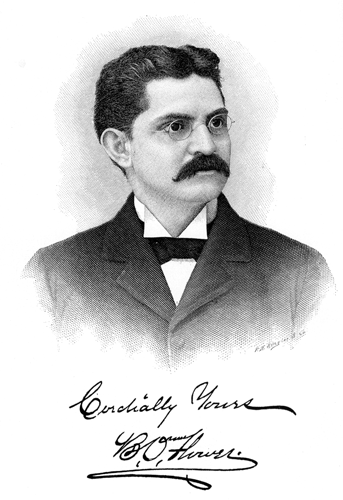
Gerald Massey: Poet, Prophet
and Mystic
By B. O. Flower.
(1895)
This book is inscribed to my wife,
HATTIE
C. FLOWER
whose noble life, and fine, inspiring
thought, have been a
constant aid in all I have
endeavoured to accomplish for
freedom, justice and truth.
Introductory Word.
________________
This little
work briefly discusses the life and work of one of England's poets of
the people, who deserves far more from the hands of those who love
justice, freedom and truth than he has received. I have purposely
quoted very freely from the writings of Mr. Massey, because I am
persuaded that, in order to know the true self or the spiritual ego of
an individual, we must see his soul in action, see him battling with
injustice or error, when the profound depths of his being are stirred by
some high and saving truth; for then is revealed the spirit, unconscious
for the moment of the fetters of environment or the trammels of
artificiality which surround us all. Then, the curtain is raised
and we catch a glimpse of the holiest of holies of the human soul.
This revelation of the higher self is very marked in the noblest lines
of a true poet. I have had a further purpose in view in thus
introducing the poet through his own words. I desired to bring the
high, fine thought of Gerald Massey to the attention of men and women of
conviction, believing that his noble ideals, his passionate appeals for
justice, his prophetic glimpse of the coming day, would serve to awaken
some sleeping souls, while they would strengthen others in their purpose
to consecrate life's best endeavours to the cause of earth's miserables
and to the diffusion of light.
In the third
chapter I have indicated some striking points of resemblance between the
writings of Massey and Whittier. The former is passionately in
love with the beauty in common life. He is a tireless reformer,
hating injustice more than he loves life, and he possesses a spiritual
insight equalled by few modern poets. These also are marked
characteristics of our New England Quaker poet. The titles poet,
prophet and seer are as applicable to the one as to the other, although
Mr. Massey possesses less intuitional perception than Whittier.
What he lacks here, however, is balanced by his passion for truth, which
has led him to search profoundly for hints and facts that demonstrate
the reality of another life.
Mr. Massey has
been too fearless and too persistent a reformer to be appreciated in his
time, but his words and worth will be treasured in the brighter day,
when we shall see dawning a social order which shall end enforced
"slavery for man, prostitution for woman, and ignorance for the child."
As a poet of the common life who has revealed new beauties within and
without the homes of the humble, I admire him; as a fearless
truth-seeker who has dared to incur the scoffs and sneers of
conventionalism and the savage hate of ignorance, bigotry and
fanaticism, in the cause of truth, I honour him; and because he has been
a true prophet of freedom, fraternity and justice, ever loyal to the
interest of the oppressed, I love him. Mr. Massey's face has been
steadfastly set toward the morning; his thoughts are luminous with the
light of the coming age; hence it is not surprising that he has
disturbed the bats and owls, or enraged the serpents and tigers in
society, who instinctively shrink from the holy candour of truth or the
sweet reasonableness of justice.
B. O. Flower.
Boston, January, 1895.
________________
I. The Poet and the Man.
THERE are in our midst many poets who attract small
attention from conventional critics, as they have studiously avoided the
praise of conservatism, choosing the byways of duty in preference to the
highway of popularity, and always living up to their highest conviction
of right. The poor, the oppressed, and the sorrowing have been
their special charge. Their lives have been characterized by
simplicity, and their words and deeds have inspired unnumbered
struggling souls with lofty ideals and nobler conceptions of life.
While the wreath of fame has been placed by conservatism on the brows of
many whose empty rhymes have conformed to the
dilettante standard of "art for art's sake," these poets have
quietly sung courage, hope and love into the hearts of the people,
luring them unconsciously to higher altitudes of spirituality.
They have at all times proclaimed the noble altruism of living for
others—the song of the to-morrow of civilization. Amid the
ambitions and jealousies of life, the strife for fame and gold, they are
not found; but where tyranny mocks freedom and the poor cry for justice,
their words ring clear and strong. They are the people's saviours,
for they help the multitudes into the light of truth and up the path of
noble endeavour.
Among this coterie of chosen sons of God, whose unpurchasable love
of justice and holy candour of soul have rendered it impossible for them
to yield to the siren voices of conventionalism, no name is entitled to
a more honoured place than that of Gerald Massey—the poet-prophet of our
day, who has stood for truth and right, while less royal souls have sold
their heaven-given birthright for earth's pottage. Had Mr. Massey
chosen to devote his rare talent to the humours and dictates of
conventionalism, instead of offending the dilettante by boldly
pleading the cause of the oppressed; had he devoted his gifts to the
creation of popular lyrics, instead of compelling his readers to think
upon the wrongs of those who suffer through man's inhumanity to man, he
would not have remained comparatively obscure and been compelled to eat
the bread of poverty. For few men of our century have received
higher praise from leading literary critics than this poet of the
people. And had wealth been able to flatter him into a fawning
sycophant he would have become the idol of a gay, frivolous and
amusement-loving class who imagine they are cultured.
But Gerald Massey was a man before he was a poet. His love for
justice was greater than his desire for the eiderdown of luxury or the
chaplet of fame. He was the son of a poor man. He himself
had tasted the bitterness of want. He possessed the courage of an
Elijah and the spirit of an Isaiah. He preferred to reflect the
best in his soul and devote his divine gift to the service of justice,
rather than conform to the vicious standards which conventionalism
demands as the price of popularity and preferment. He championed
the cause of the weak, the poor and those whose lives are made bitter by
having to bear heavier burdens than rightfully belong to them.
Now, because of this magnificent loyalty to
justice and human rights, because he dared to assail the injustice of
entrenched plutocracy and the hypocrisy of creedal religion, he has been
denied the justice due to his fine poetic talent and his superb manhood.
But though ignored, in the main, by conservatism, he has won the hearts
of millions who love, suffer and wait. And I believe the future
will place him high in the pantheon of England's poets, because he has
voiced the real spirit of the on-coming civilization in a truer and
braver way than many contemporaries who are basking in popular favour.
The following extracts from his writings reflect the dream ever present
in the poet's mind. They may be said to contain the keynote of his
creed:—
"The first duty of men who have to die is to learn
how to live, so as to leave the world, or something in it, a little
better than they found it. Our future life must be the
natural outcome of this: the root of the whole matter is in this life."
|
We hear the cry for bread with plenty smiling
all around;
Hill and valley in their bounty blush for man with fruitage crowned,
What a merry world it might be, opulent for all and aye,
With its lands that ask for labour, and its wealth that wastes away!
This world is full of beauty, as other worlds above;
And, if we did our duty, it might be full of love.
The leaf-tongues of the forest, and the flower-lips of the sod,
The happy birds that hymn their raptures in the ear of God,
The summer wind that bringeth music over land and sea,
Have each a voice that singeth this sweet song of songs to me--
"This world is full of beauty, as other worlds above;
And, if we did our duty, it might be full of love."
If faith, and hope, and kindness passed, as coin, ’twixt heart and
heart,
Up through the eye’s tear-blindness, how the sudden soul should
start!
The dreary, dim and desolate should wear a sunny bloom,
And love should spring from buried hate, like flowers from winter’s
tomb.
This world is full of beauty, as other worlds above;
And, if we did our duty, it might be full of love.
Were truth our uttered language, spirits might talk with men,
And God-illumined earth should see the Golden Age again;
The burthened heart should soar in mirth like morn’s young
prophet-lark,
And misery’s last tear wept on earth quench hell’s last cunning
spark!
This world is full of beauty, as other worlds above;
And, if we did our duty, it might be full of love. |
Gerald Massey was born in Hertfordshire, England, in 1828.
His father was extremely poor, and Gerald was compelled at an early age
to enter a factory, and thus help support a family which knew all the
bitterness of biting poverty. Many years of his early life were
spent in straw plaiting. At eight he was working twelve hours a
day in a silk manufactory, and receiving from nine pence to one shilling
and sixpence a week. Very pathetic is the poet's description of
the bitter struggle with poverty which marked his early boyhood.
Still, without this experience it is doubtful if the world would have
been enriched by his clarion cries for justice or the inspiring songs of
hope and courage which will be sung and re-sung until the wealth
producer is emancipated and civilization learns her supreme lesson—that
Humanity is one.
John Ruskin, who has ever seemed to take
a special interest in Gerald Massey, on one occasion wrote the
poet—"Your education was a terrible one, but mine was far worse;" the
one having suffered the bitterness of poverty, the other having been the
pampered child of wealth. Very few books came into the possession
of the poor poet boy, and his time was so taken up that he had few
moments for the luxury of reading. He received no instruction save
that obtained in a penny school, but his passionate longing for
knowledge led him to many fountains of truth which duller minds would
never have discerned. The book of nature attracted his eye, her
smile wooed him, her voice charmed his ear; his mind unconsciously drank
deeply of her truths. Like many another poor boy, Mr. Massey
learned the value of knowledge. His mind became a storehouse for
truth, rather than a sieve, and his passion for the acquisition of
facts, which was awakened before necessity compelled him to enter the
rank of the child slaves of factory life, grew stronger as he advanced
in years. At a later period he became a deep student along several
lines of thought. An overmastering determination to possess the
truth and an unflinching loyalty to what he conceived to be right, have
been marked characteristics of the poet's life. In him we have a
curious combination. He is one of the most graceful and charming
lyric poets England has given the world. He is also a seer and
philosopher, a mystic and scientific student, a prophet and reformer,
while all his work reflects simplicity and purity of life inspired by
his high ethical code and lofty faith. For years he has
experienced remarkable psychic phenomena within his own home circle.
To him have been given test and evidences which have convinced him
beyond all peradventure of doubt that his loved ones who have passed
from view are neither in the ground nor in some far-off Heavenly City of
the Christian, nor yet in the state of Devachan of the Buddhist, but are
around about him, in his daily life.
He has had proof palpable and of such a
reason-compelling character as to leave no doubt in his mind that his
dear ones live, love and move onward. On this point Mr. Massey
thus clearly and forcibly expresses his convictions:—
"My faith in our future
life is founded upon facts in nature, and realities of my own personal
experience; not upon any falsification of natural fact. These
facts have been more or less known to me personally during forty years
of familiar face-to-face acquaintanceship, therefore my certitude is not
premature; they have given me the proof palpable that our very own human
identity and intelligence do persist after the blind of darkness has
been drawn down in death. He who has plumbed the void of death as
I have, and touched this solid ground of fact, has established a faith
that can never be undermined nor over-thrown. He had done with the
poetry of desolation and despair, the sighs of unavailing regret, and
all the passionate wailing of unfruitful pain. He cannot be bereaved
in soul! And I have had ample testimony that my poems have done
welcome work, if only in helping to destroy the tyranny of death, which
has made so many mental slaves afraid to live.
"The false faiths are
fading; but it is in the light of a truer knowledge. The half Gods
are going in order that the whole Gods may come. There is finer
fish in the unfathomed sea of the future than any we have yet landed.
It is only in our time that the data have been collected for rightly
interpreting the past of man, and for portraying the long and vast
procession of his slow but never-ceasing progress through the sandy
wilderness of an uncultivated earth into the world of work, with the
ever-quickening consciousness of a higher, worthier life to come.
And without this measure of the human past, we could have no true gauge
of the growth that is possible in the future!
"Indeed it seems to me
that we are only just beginning to lay hold of this life in earnest:
only just standing on the very threshold of true thought; only just now
attaining a right mental method of thinking, through a knowledge of
evolution; only just getting in line with natural law, and seeking
earnestly to stand level-footed on that ground of reality which must
ever and everywhere be the one lasting foundation of all that is
permanently true."
On the vital social problems which intimately affect the
progress of the race, Mr. Massey evinces the clear perceptions of a
broad-visioned philosopher. He observes:—
"It is only of late that
the tree of knowledge has begun to lose its evil character, to be
planted anew, and spread its roots in the fresh ground of every
board-school, with its fruits no longer accursed, but made free to all.
"We are beginning to see
that the worst of the evils now afflicting the human race are man made,
and do not come into the world by decree of fate or fiat of God; and
that which is man made is also remediable by man. Not by man
alone! For woman is about to take her place by his side as true
helpmate and ally in carrying on the work of the world, so that we may
look upon the fall of man as being gradually superseded by the ascent of
woman. And here let me say, parenthetically, that I consider it to
be the first necessity for women to obtain the parliamentary franchise
before they can hope to stand upon a business footing of practical
equality with men; and therefore I have no sympathy with these would-be
abortionists, who have been somewhat too "previously" trying to take the
life of woman suffrage in embryo before it should have the chance of
being brought to birth."
With the keen penetration of a highly intuitive mind, Mr.
Massey long ago perceived that wisdom as well as justice demands that
woman be accorded a far more exalted place than she has been permitted
to occupy in the past, and he has been an untiring advocate of absolute
justice and the same wholesome freedom for her as is good for man.
I know of no writer of any age who has taken higher grounds for true
morality, both within and without the marriage relation, than Mr.
Massey. He is one of the few men of our time who have evinced
superb courage in demanding that women be protected from involuntary
prostitution within the marriage relation. On this important theme
he observes:—
"The truth is, that woman at her best and
noblest must be monarch of the marriage-bed. We must begin in the
creatory if we are to benefit the race, and the woman has got to rescue
and take possession of herself, and consciously assume all the
responsibilities of maternity, on behalf of the children. No woman
has any right to part with the absolute ownership of her own body, but
she has the right to be protected against all forms of brute force.
No woman has any business to marry anything that is less than a man.
No woman has any right to marry any man who will sow the seeds of
hereditary disease in her darlings. Not for all the money in the
world! No woman has any right, according to the highest law, to
bear a child to a man she does not love."
Our poet's high ideal of woman and her true position is
beautifully expressed in the following lines:—
|
My fellow-men, as yet we have but seen
Wife, sister, mother, and daughter--not the queen
Upon her throne, with all her jewels crowned!
Unknowing how to seek, we have not found
Our goddess, waiting her Pygmalion
To woo her into woman from the stone!
Our husbandry hath lacked essential power
To fructify the promise of the flower;
We have not known her nature ripe all round.
We have but seen her beauty on one side
That leaned in love to us with blush of bride:
The pure white lily of all womanhood,
With heart all golden, still is in the bud.
We have but glimpsed a moment in her face
The glory she will give the future race;
The strong, heroic spirit knit beyond
All induration of the diamond.
She is the natural bringer from above,
The earthly mirror of immortal love;
The chosen mouthpiece for the mystic word
Of life divine to speak through, and be heard
With human voice, that makes its heavenward call
Not in one virgin motherhood, but all.
Unworthy of the gift, how have men trod
Her pearls of pureness, swine-like, in the sod!
How often have they offered her the dust
And ashes of the fanned-out fires of lust,
Or, devilishly inflamed with the divine,
Waxed drunken with the sacramental wine!
How have men captured her with savage grips,
To stamp the kiss of conquest on her lips;
As feather in their crest have worn her grace,
Or brush of fox that crowns the hunter’s chase;
Wooed her with passions that but wed to fire
With Hymen’s torch their own funereal pyre;
Stripped her as slave and temptress of desire;
Embraced the body when her soul was far
Beyond possession as the loftiest star!
Her whiteness hath been tarnished by their touch;
Her promise hath been broken in their clutch;
The woman hath reflected man too much,
And made the bread of life with earthiest leaven.
Our coming queen must be the bride of heaven--
The wife who will not wear her bonds with pride
As adult doll with fripperies glorified;
The mother fashioned on a nobler plan
Than woman who was merely made from man. |
On the proper rearing of children he has words to say which
should appeal to every loving parent:—
"The life we live with them every day is the
teaching that tells, and not the precepts uttered weekly that are
continually belied by our own daily practices. Give the children
knowledge of natural law, especially in that domain of physical nature
which has hitherto been tabooed. If we break a natural law we
suffer pain in consequence, no matter whether we know the law or not.
This result is not an accident, because it always happens, and is
obviously intended to happen. Punishments are not to be avoided by
ignorance of effects; they can only be warded off by a knowledge of
causes. Therefore nothing but knowledge can help them. Teach
the children to become the soldiers of duty instead of the slaves of
selfish desire. Show them how the sins against self reappear in
the lives of others. Teach them to think of those others as the
means of getting out of self. Teach them how the laws of nature
work by heredity. . . Children have ears like the very spies of nature
herself; eyes that penetrate all subterfuge and pretence. . . Let them
be well grounded in the doctrine of development, without which we cannot
begin to think coherently. Give them the best material, the
soundest method; let the spirit world have a chance as a living
influence on them, and then let them do the rest. Never forget
that the faculty for seeing is worth all that is to be seen. It is
good to set before them the loftiest ideals—not those that are mythical
and non-natural, but those that have been lived in human reality.
The best ideal of all has to be portrayed by the parents in the
realities of life at home. The teaching that goes deepest will be
indirect, and the truth will tell most on them when it is overheard.
When you are not watching, and the children are—that is when the
lessons are learned for life."
These are twentieth-century thoughts, and they are pregnant
with the truth which will yet make the world glad. One thing which
impresses the reader, in all Mr. Massey's works, is his sincerity and
his abhorrence of hypocrisy or shams of any kind. This thought,
which is present in all his writings, is emphasized in the following
passage from his "Devil of
Darkness":—
"The devil and hell of my creed consist in
that natural Nemesis which follows on broken laws, and dogs the law
breaker, in spite of any belief of his that his sins and their
inevitable results can be so cheaply sponged out, as he has been misled
to think, through the shedding of innocent blood. Nature knows
nothing of the forgiveness for sin. She has no rewards or
punishments—nothing but causes and consequences. For example, if
you should contract a certain disease and pass it on to your children,
all the alleged forgiveness of God will be of no avail if you cannot
forgive yourself. Ours is the devil of heredity, working in two
worlds at once. Ours is a far more terrible way of realizing the
hereafter, when it is brought home to us in concrete fact, whether in
this life or the life to come, than any abstract idea of hell or devil
can afford. We have to face the facts beforehand—no use to whine
over them impotently afterwards, when it is too late. For
example:—
|
In the olden days when immortals
To earth came visibly down,
There went a youth with an angel
Through the gate of an Eastern town.
They passed a dog by the roadside,
Where dead and rotting it lay,
And the youth, at the ghastly odour,
Sickened and turned away.
He gathered his robes around him,
And hastily hurried thence;
But nought annoyed the angel’s
Clear, pure, immortal sense.
By came a lady, lip-luscious,
On delicate, mincing feet;
All the place grew glad with her presence,
All the air about her sweet,
For she came in fragrance floating,
And her voice most silvery rang;
And the youth, to embrace her beauty,
With all his being sprang.
A sweet, delightsome lady:
And yet, the legend saith,
The angel, while he passed her,
Shuddered and held his breath! |
"Only think of a fine lady who, in this life,
had been wooed and flattered, sumptuously clad and delicately fed; for
whom the pure, sweet air of heaven had to be perfumed as incense, and
the red rose of health had to fade from many young human faces to
blossom in the robes she wore, whose every sense had been most daintily
feasted, and her whole life summed up in one long thought of self,—think
of finding herself in the next life a spiritual leper, a walking
pestilence, personified disease, a sloughing sore of this life which the
spirit has to get rid of, an excrement of this life's selfishness at
which all good spirits stop their noses and shudder when she comes near!
Don't you think if she realized that as a fact in time, it would work
more effectually than much preaching? The hell of the drunkard,
the libidinous, the blood-thirsty, or gold-greedy soul, they tell us, is
the burning of the old, devouring passion which was not quenched
by the chills of death. The crossing of the cold, dark river,
even, was only as the untasted water to the consuming thirst of
Tantalus! In support of this, evolution shows the continuity of
ourselves, our desires, passions and characters. As the Egyptians
said, "Whoso is intelligent here will be intelligence there!" And
if we haven't mastered and disciplined our lower passions here, they
will be masters of us, for the time being, hereafter."
In lyric verse Gerald Massey ranks among
the first English poets. His descriptions of humble life,
portrayal of profoundly human sentiments, and exquisitely delicate
reflections of those subtle emotions which are the common heritage of
every true man and woman, have rarely been equalled. They reveal
the power of the true poet. Take, for example, the following
stanzas selected from "Babe
Christabel," and note the purity, wealth of feeling and beauty of
expression which clothe the simple story of dawn and night in the human
heart:—
|
Babe Christabel was royally born!
For when the earth was flushed with
flowers,
And drenched with beauty in
sunshowers,
She came through golden gates of morn.
No chamber arras-pictured round,
Where sunbeams make a gorgeous gloom,
And touch its glories into bloom,
And footsteps fall withouten sound,
Was her birth-place that merry May morn;
No gifts were heaped, no bells were
rung,
No healths were drunk, no songs were
sung,
When dear Babe Christabel was born;
But nature on the darling smiled,
And with her beauty’s blessings
crowned:
Love brooded o’er the hallowed
ground,
And there were angels with the child.
*
*
*
*
*
* |
|
The father, down in toil’s mirk mine,
Turns to his wealthier world above,
Its radiance, and its home of love;
And lights his life like sun-struck wine.
The mother moves with queenlier tread:
Proud swell the globes of ripe
delight
Above her heart, so warm and white
A pillow for the baby-head!
*
*
*
*
*
* |
|
She grew a sweet and sinless child,
In shine and shower, calm and strife;
A rainbow on our dark of life,
From love’s own radiant heaven down-smiled!
In lonely loveliness she grew,--
A shape all music, light, and love,
With startling looks, so eloquent of
The spirit whitening into view.
*
*
*
*
*
* |
|
And still her cheek grew pale as pearl,--
It took no tint of summer’s wealth
Of colour, warmth, and wine of
health:
Death’s hand so whitely pressed the girl!
No blush grew ripe to sun or kiss
Where violet veins ran purple light,
So tenderly through Parian white,
Touching you into tenderness.
*
*
*
*
*
* |
|
She came--as comes the light of smiles
O’er earth, and every budding thing
Makes quick with beauty, alive with
spring;
Then goeth to the golden isles.
She came--like music in the night
Floating as heaven in the brain,
A moment oped, and shut again,
And all is dark where all was light.
She thought our good-night kiss was given,
And like a flower her life did close.
Angels uncurtained that repose,
And the next waking dawned in heaven.
They snatched our little tenderling,
So shyly opening into view,
Delighted, as the children do
The primrose that is first in spring
*
*
*
*
*
* |
The lines quoted above are taken from various parts of the
poem, and therefore do not present the unity of thought which
characterizes the exquisite creation as a whole. "My
Cousin Winnie" is another very charming poem, in which the author
describes the child love which throbbed in his heart, when, as a boy, he
basked in the smiles of "Cousin Winnie." I have space for a few
stanzas only. They will be sufficient, however, to call up many
long-vanished images to the mind of the reader. For the chambers
of the human brain are stored with springtime treasures, which are
forgotten until some magic word is spoken, some picture flashed upon the
mental retina, or a sound of long ago is heard, and straightway the
sealed door flies open, and forth come trooping, as children from a
country school, the dreams and hopes which gilded life's young day:—
|
THE glad
spring-green grows luminous
With coming Summer's golden glow;
Merry Birds sing as they sang to us
In far-off seasons, long ago:
The old place brings the young Dawn back,
That moist eyes mirror in their dew;
My heart goes forth along the track
Where oft it danced, dear Winnie, with you.
A world of Time, a sea of change,
Have rolled between the paths we tread,
Since you were my "Cousin Winnie," and I
Was your "own little, good little Ned."
*
*
*
*
*
* |
|
My Being in your presence basked,
And kitten-like for pleasure purred;
A higher heaven I never asked
Than watching, wistful as a bird,
To hear that voice so rich and low;
Or sun me in the rosy rise
Of some soul-ripening smile, and know
The thrill of opening paradise.
The Boy might look too tenderly,
All lightly 'twas interpreted:
You were my "Cousin Winnie," and I
Was your "own little, good little Ned."
*
*
*
*
*
* |
|
And then that other voice came
in!
There my Life's music suddenly stopped.
Silence and darkness fell between
Us, and my Star from heaven dropped.
I led Him by the hand to you—
He was my Friend—whose name you bear:
I had prayed for some great task to do,
To prove my love. I did it, Dear!
He was not jealous of poor me;
Nor saw my life bleed under his tread:
You were my "Cousin Winnie," and I
Was your "own little, good little Ned."
I smiled, Dear, at your happiness—
So Martyrs smile upon the spears—
The smile of your reflected bliss
Flashed from my heart's dark tarn of tears!
In love, that made the suffering sweet,
My blessing with the rest was given—
"God's softest flowers kiss her feet
On Earth, and crown Her head in Heaven!"
And lest the heart should leap to tell
Its tale i' the eyes, I bowed the head:
You were my "Cousin Winnie," and I
Was your "own little, good little Ned."
*
*
*
*
*
* |
|
Alone, unwearying, year by year,
I go on laying up my love.
I think God makes no promise here
But it shall be fulfilled above;
I think my wild weed of the waste
Will one day prove a flower most sweet;
My love shall bear its fruit at last—
'Twill all be righted when we meet;
And I shall find them gathered up
In pearls for you—the tears I've shed
Since you were my "Cousin Winnie," and I
Was your "own little,
good little Ned."
*
*
*
*
*
* |
Here again in "The
Mother's Idol Broken"—which, in my judgment, is the finest work of
this character written by Mr. Massey—we find a depth of emotion, a
beauty of imagery, and a wealth of pure poetic power which would have
done honour to Tennyson in the best moods of the late poet laureate.
After describing the mother's joy over the advent of the
babe in the household, our poet continues:—
|
And proud ere her eyes as she rose with the
prize,
A pearl in her palms, my peerless!
Oh, found you a little sea siren,
In some perilous palace left?
Or is it a little child angel,
Of her high-born kin bereft?
Or came she out of the elfin land,
By earthly love beguiled?
Or hath the sweet spirit of beauty
Taken shape as our starry child?
*
*
*
*
*
* |
|
With mystical faint fragrance,
Our house of life she filled—
Revealed each hour some fairy tower,
Where wingèd hopes might build.
We saw—though none like us might see—
Such precious promise pearled
Upon the petals of our wee
White Rose of all the world!
*
*
*
*
*
* |
|
Our Rose was but in blossom;
Our life was but in spring;
When down the solemn midnight
We heard the spirits sing:
"Another bud of infancy,
With holy dews impearled,"
And in their hands they bore our wee
White Rose of all the world.
*
*
*
*
*
* |
|
She came like April, who with tender grace
Smiles in earth's face, and sets upon her breast
The bud of all her glory yet to come,
Then bursts in tears, and takes her sorrowful leave.
She brought heaven to us just within the space
Of the dear depths of her large, dream-like eyes,
Then o'er the vista fell the death-veil dark.
She only caught three words of human speech:
One for her mother, one for me, and one
She crowed with, for the fields and open air.
That last she sighed with a sharp farewell pathos
A minute ere she left the house of life,
To come for kisses never any more.
Pale Blossom! how she leaned in love to us!
And how we feared a hand might reach from heaven
To pluck our sweetest flower, our loveliest flower
Of life, that sprang from lowliest root of love!
Some tender trouble in her eyes complained
Of Life's rude stream, as meek forget-me-nots
Make sweet appeal when winds and waters fret.
And oft she looked beyond us with sad eyes,
As for the coming of the Unseen Hand.
We saw, but feared to speak of, her strange beauty,
As some hushed bird that dares not sing i' the night,
Lest lurking foe should find its secret place,
And seize it through the dark. With twin-love's strength
All crowded in the softest nestling-touch,
We fenced her round,—exchanging silent looks.
We went about the house with listening hearts,
That kept the watch for danger's stealthiest step.
Our spirits felt the shadow ere it fell.
*
*
*
*
*
* |
|
The mornings came with all their glory on;
Birds, brooks, and bees were singing in the sun,
Earth's blithe heart breathing bloom into her face,
The flowers all crowding up like memories
Of lovelier life in some forgotten world,
Or dreams of peace and beauty yet to come.
The soft south-breezes rocked the baby-buds
In fondling arms upon a balmy breast;
And all was gay as universal life
Swam down the stream that glads the City of God.
But we lay dark where Death had struck us down
With that stern blow which made us bleed within,
And bow while the Inevitable went by.
*
*
*
*
*
* |
|
This is a curl of little Marian's hair!
A ring of sinless gold that weds two worlds!
*
*
*
*
*
* |
Poetic genius of a high order is displayed in this
remarkable production, and though the extracts given above carry with
them the spirit of the poem, they are only threads in what, when taken
as a whole, is a cloth of many tints, rich in colour and fine in
texture.
Seldom do we find anything so pure and sweet as the
following lines taken from "Wedded
Love," in which the poet gives us a glimpse of his own deep and rich
experiences:—
|
My life ran like a river in rocky ways,
And seaward dashed, a sounding cataract!
But thine was like a quiet lake of beauty,
Soft-shadowed round by gracious influences,
That gathers silently its wealth of earth,
And woos heaven till it melts down into it.
They mingled : and the glory and the calm
Closed round me, brooding into perfect rest.
Oh, blessings on thy true and tender heart!
How it hath gone forth like the dove of old,
To bring some leaf of promise in life's deluge!
Thou hast a strong up-soaring tendency,
That bears me Godward, as the stalwart oak
Uplifts the clinging vine, and gives it growth.
Thy reverent heart familiarly doth take
Unconscious clasp of high and holy things,
And trusteth where it may not understand.
We have had sorrows, love! and wept the tears
That run the rose-hue from the cheeks of life;
But grief hath jewels as night hath her stars,
And she revealeth what we ne'er had known,
With joy's wreath tumbled o'er our blinded eyes.
The heart is like an instrument whose strings
Steal nobler music from life's many frets;
The golden threads are spun through suffering's fire,
Wherewith the marriage robes for heaven are woven;
And all the rarest hues of human life
Take radiance, and are rainbowed out in tears.
Thou'rt little changed, dear love! since we were wed.
Thy beauty hath climaxed like a crescent moon,
With glory greatening to the golden full.
Thy flowers of spring are crowned with summer fruits,
And thou hast put a queenlier presence on
With thy regality of womanhood!
Yet time but toucheth thee with mellowing shades
That set thy graces in a wealthier light.
Thy soul still looks with its rare smile of love,
From the gate beautiful of its palace home,
Fair as the spirit of the evening star,
That lights its glory as a radiant porch
To beacon earth with brighter glimpse of heaven.
We are poor in this world's wealth, but rich in love;
And they who love feel rich in everything.
*
*
*
*
*
* |
|
Oh, let us walk the world, so that our love
Burn like a blessed beacon, beautiful
Upon the walls of life's surrounding dark.
Ah! what a world 'twould be if love like ours
Made heaven in human hearts, and clothed with smiles
The sweet, sad face of our humanity!
*
*
*
*
*
* |
In "The
Young Poet to His Wife" are many fine lines, perhaps none more
beautiful than the following:—
|
O, Love will make the killing crown of thorn
Burst into blossom on the Martyr’s brow!
Upon Love’s bosom Earth floats like an Ark
Through all the o’erwhelming deluge of the night.
Love rays us round as glory swathes a star,
And from the mystic touch of lips and palms,
Streams rosy warmth enough to light a world. |
Among Mr. Massey's personal poems his
tribute to the author of "The Song of the Shirt," is by far the finest [ED.--"Hood"].
Indeed, this poem is a superb production. The melancholy spectacle
of Hood battling with disease, bravely editing his magazine and
composing immortal lines while confined to his bed and racked with pain
was enough to appeal to the imagination and sympathy of a large-hearted
nature like Gerald Massey's. And then these two champions of the
poor were kindred souls. He who wrote "The Bridge of Sighs" was
naturally endeared to the poet who penned "The Cry of the Unemployed."
Hood was worthy of the following tribute, which I regard as among the
finest specimens of Massey's work:—
|
'Twas the old story!—ever the blind world
Knows not its Angels of Deliverance
Till they stand glorified 'twixt earth and heaven.
It stones the Martyr; then, with praying hands,
Sees the God mount his chariot of fire,
And calls sweet names, and worships what it spurned.
It slays the Man to deify the Christ:
And then how lovingly 'twill bind the brows
Where late its thorn-crown laughed with cruel lips—
Red, and rejoicing from the killing kiss!
To those who walk beside them, great men seem
Mere common earth; but distance makes them stars.
As dying limbs do lengthen out in death,
So grows the stature of their after-fame;
And then we gather up their glorious words,
And treasure up their names with loving care.
So Hood, our Poet, lived his martyr-life;
With a swift soul that travelled at such speed,
And struck such flashes from its flinty road,
That by its trail of radiance through the dark,
We almost see the unfeatured Future's face,—
And went uncrowned to his untimely tomb.
'Tis true, the world did praise his glorious wit—
The merry Jester with his cap and bells!
And sooth, his wit was like Ithuriel's spear;
But 'twas mere lightening from the cloud of his life,
Which held at heart most rich and blessed rain
Of tear's melodious, that are worlds of love;
And Rainbows that would bridge from earth to heaven;
And Light, that should have shone like Joshua's sun
After our long death-grapple with the Wrong;
And thunder-voices, with their Words of fire,
To melt the slaves chain, and the Tyrant's crown.
His wit?—a kind of smile just to hearten us!—
Rich foam-wreaths on the waves of lavish life,
That flashed o'er precious pearls and golden sands.
But, there was that beneath surpassing wit!
The starry soul, that shines when all is dark!—
Endurance, that can suffer and grow strong—
Walk through the world with bleeding feet, and smile!—
Love's inner light, that kindles Life's rare colours,
Bright wine of Beauty for the longing soul;
And thoughts that swathe Humanity with such glory
As lines the outline of the coming God.
In him were gleams of such heroic splendour
As light this cold, dark world up like a star
Arrayed in glory for the eyes of heaven:
And a great heart that beat according music
With theirs of old,—God-likest kings of men!
A conquering heart! with Circumstance, that frights
The many down from Love's transfiguring height,
Aye mettled into martial attitude.
He might have clutched the palm of Victory
In the world's wrestling-ring of noble deeds;
But he went down a precious Argosy
At sea, just glimmering into sight of shore,
With its rare freightage from diviner climes.
While friends were crowding at the Harbour mouth
To meet and welcome the brave Sailor back,
He saw, and sank in sight of them at home!
The world may never know the wealth it lost,
When Hood went darkling to his tearful tomb,
So mighty in his undeveloped force!
With all his crowding unaccomplished hopes—
Th' unuttered wealth and glory of his soul—
And all the music ringing round his life,
And poems stirring in his dying brain.
But blessings on him for the songs he sang—
Which yearned about the world till then for birth!
How like a bonny bird of God he came,
And poured his heart in music for the Poor;
Who sit in gloom while sunshine floods the land,
And grope through darkness, for the hand of Help.
And trampled Manhood heard, and claimed its crown;
And trampled Womanhood sprang up ennobled!
The human soul looked radiantly through rags!
And there was melting of cold hearts, as when
The ripening sunlight fingers frozen flowers.
O! blessings on him for the songs he sang!
When all the stars of happy thought had set
In many a mind, his spirit walked the gloom
Clothed on with beauty, as the regal Moon
Walks her night-kingdom, turning clouds to light.
Our Champion! with his heart too big to beat
In bonds,—our Poet in his pride of power!
Aye, we'll remember him who fought our fight,
And chose the Martyr's robe of flame, and spurned
The gold and purple of the glistering slave.
His Mausoleum is the People's heart,
There he lies crowned and glorified,—in state. |
Many of Europe's most competent and conscientious critics
have expressed their appreciation of the high order of much of Mr.
Massey's poetical work. "I rejoice," wrote John Ruskin to the
poet, "in acknowledging my own debt of gratitude to you for many an
encouraging and noble thought, and expression of thought. Few
national services can be greater than that you have rendered."
Thomas Aird, in a critical review, observed: "Gerald Massey belongs to
the new choir. Pathos and love and a purple flush of beauty steep
the colour of all his songs." The eminent essayist, Walter
Bagehot, in criticising Mr. Massey's work, said: "His descriptions of
nature show a close observer of her ways, and a delicate appreciation of
her beauties. His images, however subtle and delicately woven, are
never false."
Here are some melodious stanzas which tell us of the poet's
hope for a brighter tomorrow, a hope which he entertained before his
long and careful psychical investigation, led to the positive conviction
expressed in his later prose and poetical works:
|
Although its features fade in light of
unimagined bliss,
We have shadowy revealings of the Better World in this.
A little glimpse, when Spring unveils her face and opes her eyes,
Of the Sleeping Beauty in the soul that wakes in Paradise.
A little drop of Heaven in each diamond of the shower,
A breath of the Eternal in the fragrance of each flower!
A little low vibration in the warble of Night’s bird,
Of the praises and the music that shall be hereafter heard!
A little whisper in the leaves that clap their hands and try
To glad the heart of man, and lift to Heaven his grateful eye.
A little semblance mirrored in old Ocean’s smile or frown
Of His vast glory who doth bow the Heavens and come down!
A little symbol shining through the worlds that move at rest
On invisible foundations of the broad Almighty breast!
A little hint that stirs and thrills the wings we fold within,
And tells of that full heaven yonder which must here begin!
A little springlet welling from the fountain head above,
That takes its earthly way to find the ocean of all love!
A little silver shiver in the ripple of the river
Caught from the light that knows no night forever and forever!
A little hidden likeness, often faded or defiled,
Of the great, the good All-father, in His poorest human child!
Although the best be lost in light of unimagined bliss,
We have shadowy revealings of the Better World in this. |
As I have said before, there is little doubt but that Gerald
Massey would have become one of England's most famous lyric poets, had
he chosen to confine his gifts to subjects pleasing to wealth and
conventionalism; but, like other royal souls, who throughout the past
have persistently held to the path of duty, he chose to be loyal to
truth and faithful to earth's oppressed, ever preferring the bread of
poverty with the approval of his higher self, to the applause of the
dilettanti with a life of comparative ease. Such spirits are
rarely appreciated until they have passed from earth. They belong
to the Royalty of Nature; they are in truth the Sons of God.
II. The Prophet.
THE
reformer is always the possible prophet. He whose nature is so
finely strung and whose conscience so sensitive to the eternal verities
as they relate to right and wrong that he feels injuries inflicted upon
the unfortunate and injustice practised upon the defenceless as though
the evil fell upon himself, sustains an intimate relationship to the
highest as well as the humblest expressions of life. If the cry of
the wretch under the wheel wrings his heart, he is also soothed by
divine symphonies, which those of duller sensibilities are unconscious
of; and upon his spiritual perception there frequently flash the lights
and shadows of the coming morrow. It was thus with the great
prophets of Israel. It was thus with John Huss and Savonarola.
It was thus with Whittier and Wendell Phillips. And it is thus, in
a very marked degree, with Gerald Massey.
It is something more than an unconquerable faith in the
ultimate triumph of good, learned from the slow ascent of man, that
inspires the following thrilling lines, which are peculiarly appropriate
to our present social conditions, when a new-born sense of right and a
quickened intelligence are leading millions throughout civilization to
demand a fairer share in the bounties of life:—
|
Immortal liberty! we see thee stand
Like morn just stepped from heaven upon a mountain
With beautiful feet, and blessing-laden hand,
And heart that welleth love's most living fountain!
Oh, when wilt thou draw from the people's lyre
Joy's broken cord? and on the people's brow
Set empire's crown? light up thine altar-fire
Within their hearts, with an undying glow;
Nor give us blood for milk, as men are drunk with now?
Old legends tell us of a golden age,
When earth was guiltless—gods the guests of men,
Ere sin had dimmed the heart's illumined page,—
And prophet-voices say 'twill come again,
O happy age! when love shall rule the heart,
And time to live shall be the poor man's dower,
When martyrs bleed no more, nor exiles smart—
Mind is the only diadem of power.
People, it ripens now! Awake, and strike the hour!
Hearts, high and mighty, gather in our cause;
Bless, bless, O God, and crown their earnest labour,
Who dauntless fight to win us equal laws,
With mental armour and with spirit sabre!
Bless, bless, O God! the proud intelligence,
That now is dawning on the people's forehead,—
Humanity springs from them like incense,
The future bursts upon them, boundless, starried—
They weep repentant tears, that they so long have tarried. |
The spiritual intuition or perception of the true prophet
soul was beautifully expressed in the legend of the despairing sage.
The story comes from that far-away time when types and symbols were used
by the children of earth, and when man was so near to nature that at
times he seemed to hear the voice of the Creator.
The sage, so runs the story, had toiled for his fellow-men
through years of suffering and privation. He had closed his eyes
against the temptations of luxury and ease which were held out to lure
him from the service of his race. He had dwelt with poverty and
had nursed the plague-stricken, had fed the starving, always striving to
fix the eyes of his fellow-men upon that which was enduring and divine.
He reasoned with scholars on the higher philosophy of life, and strove
to impress upon them the kinship of mankind. He appealed to the
rich to be just, and boldly assailed tyranny and oppression. Often
he had to fly from city to city, and sometimes he was offered great
bribes to hold his peace. But neither the threat of power nor the
bribe of wealth swerved him from his course. His all-consuming
desire was to bring about the realization of the dream which haunted his
soul. He longed to behold justice, peace and love blossom among
the children of men.
At length he became a very old man; his hair was silvered,
his face bronzed and furrowed, his step halting and feeble. Many
who had followed him when he had been able to minister to their physical
needs now fell away, and the seeds he had planted seemed to have rotted
and died. One day he sought the solitude of the mountains and in
bitterness of soul prayed that he might die; in his depression of spirit
it seemed to him that he had lived in vain, and the future appeared to
be in the possession of the powers of darkness. Virtue, love and peace
seemed routed all along the line of human endeavour.
While lost in prayer, so runs this legend, the sage became
overcome with a sense of peace known only to the victor in a glorious
cause. Then the heaviness of earth fell away; his soul entered an
ecstatic condition; his spirit was born aloft in a chariot of luminous
clouds upheld and guided by invisible hands. At length his eyes
were opened, when lo! he was encompassed by a multitude of radiant
souls. Then his ears caught the symphony of nature; he was
bewildered. The multitudes around him were incarnations of light,
of purity, of love and wisdom. They were victors, and the music
which swelled upon the ear was an anthem of triumph. An angel of
lofty mien appeared, saying: "Because of the failing power of the
physical form, the truth has become veiled to thy vision. Now
behold the work of thy life."
Then to him was given the power of the Universal Eye.
He beheld a home where now dwelt a father, once a plague-stricken boy
nursed by the sage. The father sang to his son the songs of love,
courage and brotherhood which he had learned from the prophet long years
ago. In another cottage he beheld a mother telling the story of
the great man whose life made all men better, and through whose loving
care the mother was then alive. And he noted the radiance of the
faces of the eager children as they exclaimed, "We want to be like him!"
Then he beheld one whom he had taught in years gone by
discoursing to a vast multitude upon the truths which the prophet had in
former days impressed upon his brain. He saw thousands of eager
ears strained to hear the evangel which fell from the eloquent lips of
one he had known as a ragged boy, who had followed him from village to
village with other poor people. And then the panorama broadened,
until he beheld that he had all unconsciously kindled fires for truth
which should yet illuminate his people.
Then the angel said, "Look once more," and he beheld the
tumult of battle, he heard the screams of the multitude, who sank on
every hand. After the battle came injustice and oppression; he
heard the cry of those under the oppressor and beheld the sufferings of
the world; and as in horror he sought the angel's face, a light dawned.
It came from the hearts and homes of the multitudes. Then the
light grew brighter; it spread from hut to cottage, from cottage to
palace. A new conflict was in progress. Man met man in a
struggle on a higher plane; ideas were weapons more often than swords,
and in the dim future the sage saw the whole world bathed in the light
of justice, mantled in peace and prosperity.
So it is with the reformers of all times. At moments
their souls, so sensitive and responsive to the suffering and misery of
life, also catch the strains of the higher music. Their eyes,
which see the suffering of the unfortunate and the poor as though every
trial was their own, also at intervals catch glimpses of the coming day.
In one of these great visions Gerald Massey breaks into the following
triumphant strain:—
|
'Tis coming up the steep of time,
And this old world is growing
brighter!
We may not see its dawn sublime,
Yet high hopes make
the heart throb lighter!
Our dust may slumber under ground
When it awakes the world in wonder;
But we have felt it gathering
round—
Have heard its voice of distant thunder!
'Tis coming!
yes, 'tis coming!
'Tis coming now, that glorious time
Foretold by seers and sung in story,
For which, when thinking was
a crime,
Souls leaped to heaven from scaffolds gory!
They
passed. But lo! the work they wrought!
Now the
crowned hopes of centuries blossom;
The lightning of their living
thought
Is flashing through us, brain and bosom:
'Tis coming!
yes, 'tis coming!
Creeds, empires, systems, rot with age,
But the great people's ever youthful!
And it shall write the
future's page
To our humanity more truthful;
There's a
divinity within
That makes men great if they but will it,
God
works with all who dare to win,
And the time cometh to reveal it.
'Tis coming! yes, 'tis coming!
Fraternity! Love's
other name!
Dear, heaven-connecting link of being;
Then shall
we grasp thy golden dream,
As souls, full-statured, grow
far-seeing:
Thou shalt unfold our better part,
And in our life
cup yield more honey;
Light up with joy the poor man's heart,
And love's own world with smiles more sunny!
'Tis coming! yes,
'tis coming!
|
Jesus, who was the supreme expression of love, was terrible in His
denunciations when confronted by the hypocrisy and selfishness of
slothful, self-indulgent conventionalism. Gerald Massey has penned
some of the sweetest lines ever written by a poet of the people, but
when he faces the plunderers of the toiling millions, when he looks upon
the hypocrite and oppressor, he becomes transformed. His words are
no longer soothing and peaceful; the limpid brook becomes a roaring
torrent. The voice which speaks in the following lines is not the
voice of one man, but the articulate cry of millions, thrown into speech
by the instrument of God, that the wise may be warned, and, being
warned, may be saved from the ruin which must and will overtake that
society which selfishly imagines it can eternally thwart the upward
march of humanity:—
|
Back, tramplers on the many! Death and danger ambushed
lie;
Beware ye, or the blood may run! The patient
people cry:
"Ah, shut not out the light of hope, or we may
blindly dash,
Like Samson with his strong death-grope, and whelm
ye in the crash.
Think how they spurred the people mad, that old
regime of France,
Whose heads, like poppies, from death's
scythe, fell in a bloody dance.
|
In the following stanzas we are reminded of some of the old prophets of
Israel, who championed the cause of God and the poor at the risk of
life, and uttered luminous truths which still light up man's pathway.
Mr. Massey is nothing if not a fearless reformer. He does not believe in
a half loaf when justice is the issue. The people have certain rights of
which they are deprived by the special privileges enjoyed by a favoured
few. Against these wrongs, which are day by day becoming more apparent
to thoughtful and truly enlightened men and women, our poet speaks with
that courage and sincerity which is as refreshing as it is rare in our
age of sycophancy:—
Thus saith the Lord: You weary me
With
prayers, and waste your own short years;
Eternal truth you cannot
see
Who weep, and shed your sight in tears!
In vain you wait
and watch the skies—
No better fortune thus will fall;
Up from
your knees I bid you rise,
And claim the earth for all.
Behold
in bonds your mother earth,
The rich man's prostitute and slave!
Your mother earth, that gave you birth,
You only own her
for a grave!
And will you die like slaves, and see
You mother
left a fettered thrall!
Nay live like men and set her free
As
heritage for all. |
In the same
strain, and speaking not as an individual but as the articulate voice of
eternal justice, Mr. Massey elsewhere utters these words to the toiling
millions:—
|
Lift up your faces from the sod;
Frown with each furrowed brow;
Gold apes a mightier power than God,
And wealth is worshipped
now!
In all these toil-ennobled lands
You have no heritage;
They snatch the fruit of youthful hands,
The staff from weary
age.
Oh, tell them in their palaces,
These lords of land and
money,
They shall not kill the poor like bees,
To rob them of
life's honey.
Through long, dark years of blood and tears,
You've toiled like branded slaves
Till wrong's red hand hath made
a land
Of paupers, prisons, graves!
But our long sufferance
endeth now;
Within the souls of men
The fruitful buds of
promise blow,
And freedom lives again!
Oh, tell them in their
palaces,
These lords of land and money,
They shall not kill
the poor like bees,
To rob them of life's honey.
|
In his prose works he takes the same radical and uncompromising stand
for absolute justice for the lowliest. In one place he says:—
"We mean to
have a day of reckoning with the unjust stewards of the earth. We
mean to have the national property restored to the people. We mean
that the land, with its inalienable right of living, its mineral wealth
below the soil and its waters above, shall be open to all. We mean
to have our banking done by the state, and our railways worked for the
benefit of the whole people. We mean to temper the terror of
rampart individualism with the principles of co-operation. We mean
for woman to have perfect equality with man, social, religious and
political, and her fair share in that equity which is of no sex.
We mean also that the same standard of morality shall apply to the man
as to the woman. In short, we intend that the redress of wrongs
and the righting of inequalities, which can only be rectified in this
world, shall not be put off and postponed to any future stage of
existence."
In another place he asserts with emphasis:—
"Humanity is
one. The Eternal intends to show us that humanity is
one. And the family is more than the individual member, the
Nation is more than the family, and the human race is more than the
nation. And if we do not accept the revelation lovingly, do not
take to the fact kindly, why then 'tis flashed upon us terribly, by
lightning of hell, if we will not have it by light of heaven—and the
poor, neglected scum and canaille of the nations rise up mighty
in the strength of disease, and prove the oneness of humanity by killing
you with the same infection.
"It has recently been shown how the
poor of London do not live, but fester in the pestilential hovels called
their homes. To get into these you have to visit courts which the
sun never penetrates, which are never visited by a breath of fresh air,
and which never know the virtues of a drop of cleansing water.
Immorality is but the natural outcome of such a devil's spawning ground.
The poverty of many who strive to live honestly is appalling.
"And this disclosure is made with the customary moan that such people
attend neither church nor chapel, as if that were the panacea. I
should not wonder if these revelations result in the building of more
churches and chapels, and the consecration of at least one or two more
bishops.
"The Bishop of Bedford said the other day, ‘It was
highly necessary that in these times when the poor have so little
earthly enjoyment, the joys of heaven should be made known to them.'
It is not possible to caricature an utterance so grotesque as that."
In his songs of humanity, there is the calm assurance of the
philosopher, that right will ultimately prevail. He pleads for the
millions under the rod. He may not see the false falling away around
him, but far up the mountain slope he sees the purpling dawn growing
brighter. Looking backward he perceives that the present, with its
hideousness and wrong is not, so dark as the past, and with that trust
in the final triumph of right which makes him optimistic, he thus refers
to his songs for the oppressed:—
|
Let my songs be cited
As breakers of the peace,
Till the
wrongs are righted,
The man-made miseries cease;
Till earth's
disinherited
Beg no more to earn their bread;
Till the consuming
darts of burning day
Shall fire the midnight foxes; scare away
From labour's fruits the parasites of prey.
Let them die when all is
done,
Now victoriously begun!
Our visions have not come to naught,
Who saw by lightning in the night,
The deeds we dreamed are being
wrought
By those who work in clearer light;
In other ways our
fight is fought,
And other forms fulfill our thought
Made visible
to all men's sight. |
There is a certain thought-compelling power in many of his poems of
labour found only in the work of an enthusiast, mad with divine love for
his fellow-men. Often he outlines upon his canvas a splendid
dream, a big hope, a grand aspiration, and then in the foreground he
paints with a few bold strokes a frightful truth. The antithesis
is tremendous in its effects, as will be seen in the following stanza:—
|
When the heart of one-half the world doth beat
Akin to the brave and the true,
And the
tramp of democracy's earth-quaking feet
Goes thrilling the wide world through—
We
should not be crouching in darkness and dust,
And dying like slaves in the night;
But big
with the might of inward
"must"
We should battle for freedom and
right!
Our fathers are praying for pauper
pay,
Our mothers with death's kiss are
white;
Our sons are the rich man's serfs by
day,
And our daughters his slaves by night.
|
Many of Massey's poems are as applicable to the problems now confronting
us as if called forth by present-day conditions in our own land.
Take for example the following "Cry of the Unemployed," which reveals
the profound sympathy and appreciation felt by our poet for the
struggling unfortunates:—
|
'Tis hard to be a wanderer through this bright world of ours,
Beneath
the sky of smiling blue, on fragrant paths of flowers,
With music in
the woods, as there were nought but pleasure known,
Or Angels walked
Earth's solitudes, and yet with want to groan:
To see no beauty in
the stars, nor in Earth's welcome smile,
To wander cursed with
misery! willing, but cannot toil.
With burning sickness at my heart,
I sink down famished:
God of the Wretched, hear my prayer: I would
that I were dead!
Heaven droppeth down with manna still in many a
golden shower,
And feeds the leaves with fragrant breath, with silver
dew the flower.
Honey and fruit for Bee and Bird, with bloom laughs
out the tree,
And food for all God's happy things; but none gives
food to me.
Earth, wearing plenty for a crown, smiles on my aching
eye,
The purse-proud,—swathed in luxury,—disdainful pass me by:
I've willing hands, and eager heart—but may not work for bread!
God
of the Wretched, hear my prayer: I would that I were dead!
Gold,
art thou not a blessed thing, a charm above all other,
To shut up
hearts to Nature's cry, when brother pleads with brother?
Hast thou a
music sweeter than the voice of loving kindness?
No! curse thee,
thou'rt a mist 'twixt God and men in outer blindness.
"Father,
come back"! my Children cry; their voices, once so sweet,
Now
pierce and quiver in my heart! I cannot, dare not meet
The looks that make the brain go mad, for dear ones asking bread—
God
of the Wretched, hear my prayer: I would that I were dead!
Lord!
what right have the poor to wed? Love's for the gilded
great:
Are they not formed of nobler clay, who dine off golden plate?
'Tis the worst curse of Poverty to have a feeling heart:
Why can I
not, with iron grasp, choke out the tender part?
I cannot slave in
yon Bastille! I think 'twere bitterer pain,
To wear the
Pauper's iron within, than drag the Convict's chain.
I'd work but
cannot, starve I may, but will not beg for bread:
God of the
Wretched, hear my prayer: I would that I were dead!
|
The slow progress of justice frequently makes the faint-hearted waver,
and many who start out in youth brave and valiant reformers are lured
into the toils of slothful conventionalism, others become despondent and
give up even before the sun of life has crossed the meridian. To
such altering ones Gerald Massey speaks in these stirring lines:—
|
Never despair! O, my Comrades in sorrow!
I know that our
mourning is ended not. Yet,
Shall the vanquished today be the
Victors tomorrow.
Our star shall shine on in the Tyrant's Sunset.
Hold on! though they spurn thee, for whom thou art living
A life only
cheered by the lamp of its love.
Hold on! Freedom's hope
to the bounden ones giving;
Green spots in the waste wait the worn
spirit-dove.
Hold on,—still hold on,—in the world's despite,
Nurse
the faith in thy heart, keep the lamp of Truth bright,
And, my life
for thine! it shall end in the Right.
What, though the Martyrs
and Prophets have perished!
The Angel of Life rolls the stone from
their graves:
Immortal's the faith and the freedom they cherished,
Their lone Triumph-cry stirs the spirits of slaves!
They are
gone,—but a Glory is left in our life,
Like the day-god's last kiss
on the darkness of Even—
Gone down on the desolate seas of their
strife,
To climb as star-beacons up Liberty's heaven.
Hold
on,—still hold on,—in the world's despite,
Nurse the faith in thy
heart, keep the lamp of Truth bright,
And, my life for
thine! it shall end in the Right.
Think of the Wrongs that have
ground us for ages,
Think of the Wrongs we have still to endure!
Think of our blood, red on History's pages;
Then work that our
reck'ning be speedy and sure.
Slaves cry to their Gods! but be our
God revealed
In our lives, in our words, in our warfare for man;
And bearing—or borne upon—Victory's shield,
Let us fight
battle-harnessed, and fall in the van.
Hold on,—still hold on,—in the
world's despite,
Nurse the faith in thy heart, keep the lamp of Truth
bright,
And, my life for thine! it shall end in the Right.
|
And to the
faint heart who would turn aside because the multitude fail to
appreciate the single-hearted struggle made for them, our poet has this
message:—
|
Hope on, hope ever! though To-day be dark,
The sweet sunburst may
smile on thee Tomorrow;
Though thou art lonely, there's an eye will
mark
Thy loneliness, and guerdon all thy sorrow?
Though thou must
toil 'mong cold and sordid men,
With none to echo back thy thought,
or love thee,
Cheer up, poor heart! thou dost not beat in vain
While God is over all, and heaven above thee,
Hope on, hope ever.
The iron may enter in and pierce the soul,
But cannot kill the love
within thee burning,
The tears of misery, thy bitter dole,
Can
never quench thy true heart's eager yearning
For better things; nor
crush thy ardour's trust,
That Error from the mind shall be uprooted,
That Truth shall flower from all this tear-dewed dust,
And Love be
cherished where Hate was embruted!
Hope on, hope ever.
I know
'tis hard to bear the sneer and taunt,—
With the heart's honest pride
at midnight wrestle;
To feel the killing canker-worm of Want
While
rich rogues in their mocking luxury nestle;
For I have felt it.
Yet from Earth's cold Real
My soul looks out on coming things, and
cheerful
The warm Sunrise floods all the land Ideal,
And still it
whispers to the worn and tearful,
Hope on, hope ever.
Hope on,
hope ever! after darkest night
Comes full of loving life, the
laughing Morning;
Hope on, hope ever! Spring-tide,
flushed with light,
Aye crowns old Winter with her adorning.
Hope
on, hope ever! For the time shall come,
When man to man
shall be a friend and brother;
And this old world shall be a happy
home,
And all Earth's family love one another!
Hope on, hope ever.
|
In this little poem, entitled "The Kingliest Kings," the poet makes the
same stirring appeal to the conscience of the individual:—
|
Ho! ye who in noble work
Win scorn, as flames draw air,
And in the
way where Lions lurk,
God's image bravely bear;
Though
trouble-tried and torture-torn,
The kingliest Kings are crowned with
thorn.
Life's glory like the bow in heaven,
Still springeth
from the cloud;
Soul ne'er out-soared the starry Seven
But Pain's
fire-chariot rode:
They've battled best who've boldliest borne;
The kingliest Kings are crowned with thorn.
The martyr's
fire-crown on the brow
Doth into glory burn;
And tears that from
Love's torn heart flow,
To pearls of spirit turn,
Our dearest
hopes in pangs are born;
The kingliest Kings are crowned with thorn.
As beauty in Death's cerement shrouds,
And Stars bejewel Night,
Bright thoughts are born in dim heart-clouds,
And suffering worketh
might.
The mirkest hour is Mother o' Morn,
The kingliest Kings are
crowned with thorn.
|
Such work is very effective. It gives the glorious ideal to which
the noblest of earth's children aspire, and then it turns the
flash-light upon the heinous crimes which easy-going conventionalism
tolerates. The reformer beholds the wrong in all its enormity.
He utters a cry of horror. The slow-thinking people are aroused by
the cry, and they ask, Can such things be? They raise the
question, and an agitation is commenced which, sooner or later, ends in
victory for justice. The exclamation and interrogation points are
the staff and crook of progress. I shall choose my extracts from
Mr. Massey's inspiring songs of labour by giving two stanzas from "The
Awakening":—
|
Oh! earth has no sight half so glorious to see,
As a people
up-girding its might to be free.
To see men awake from the
slumber of ages,
Their brows grim from labour, their hands hard and
tan,
Start up living heroes, long dreamt-of by Sages!
And smite
with strong arm the oppressors of man:
To see them come dauntless
forth 'mid the world's warring,
Slaves of the midnight mine!
Serfs of the sod!
Show how the Eternal within them is stirring,
And never more bend to a crownèd clod:
Dear God! 'tis a sight for
Immortals to see,—
A People up-girding its might to be free.
Battle on bravely, O sons of Humanity!
Dash down the cup from your
lips, O ye Toilers!
Too long hath the world bled for Tyrant's
insanity—
Too long our weakness been strength to our spoilers!
The
heart that through danger and death will be dutiful,
Soul that with
Cranmer in fire would shake hands,
And a life like a palace home
built for the beautiful,
Freedom of all her belovèd demands—
And
earth has no sight half so glorious to see,
As People up-girding its
might to be free!
|
Mr. Massey has laboured throughout his life for the oppressed in every
condition of ignorance and superstition. Wherever man, woman, or
child has suffered through injustice, his voice has leaped forth in
defence of the wronged, and against the wrong-doer he has waged an
incessant warfare. He has boldly championed the cause of woman,
steadfastly demanding for her that full-orbed justice which she must
receive before the higher civilization will be assured. And in the
nineteenth century no philosopher or reformer has pleaded more earnestly
for the rights of children, and that their lives be permitted to unfold
under the best possible conditions, than this pure-souled, earnest man.
We are entering a struggle which will prove the most momentous Western
civilization has ever known, because the conflict is along every line of
advance. Social and economic problems, or the theory of man's
relationship to man and to society as a whole; the problem of religion,
the realm of psychical science, the rights of woman, the requirements
and possibilities of childhood—these are some of the questions around
which the forces of conservatism and progress are already rallying for a
sanguinary conflict. Upon all these questions Mr. Massey has
spoken, and spoken in no uncertain voice. And, what is more
important, he has always placed himself squarely on the side of progress
and the dawn. Therefore I believe that the generation of the
future, who will enjoy, in a measure, the fruits of the higher and truer
life for which the prophet worked, will appreciate his splendid
services, and enshrine his name among the immortal coterie who
placed truth and the good of their fellow-men above the comforts of life
or the applause of the world.
III. The
Mystic.
The prophet and mystic must not be confused with the priest, for,
speaking broadly, the two represent widely divergent spheres of thought.
The prophet is the herald of progress. He assails outgrown
beliefs, entrenched wrongs, and conventional injustice. He points
from the half truths which were once helpful stepping stones, but which
now retard man's onward march, to the broader vision which the future
presents. His eye rests on the luminous peaks which lie before.
He has unbounded faith in freedom. He is often a destroyer of the
old, but it is that the new may rise in fairer forms and be of more
enduring character. If he tears down the log cabin, it is that he
may erect the marble palace.
The priest, on
the other hand, is the defender of conservatism. He distrusts the
new. To him the prophet is a destructionist who ignores that which
age has sanctified and time made venerable. He fears that wider
liberty and greater knowledge will prove dangerous. He worships at
the shrine of the past. What is written, or what other ages have
believed, is, in a certain way, sacred to him. The question, Is
it true? breaks powerless as waves before the precipice, when it
beats against his prejudice and the veneration with which he views the
established order which has been sanctified by time. The priest is
the bulwark of conventionalism.
This contrast
is strikingly illustrated in the history of Israel's prophets. But
nowhere does it find so impressive an illustration as in the life of
Jesus. Here we see the relative attitude of the two great spheres
of thought represented by these classes. On the one side was
Jesus, the prophet and mystic; on the other, the priesthood, upholding
the past and defending conditions as they existed. Jesus cried,
"Ye have heard it said, ‘An eye for an eye,‘ but I say, Love your
enemies." Jesus disregarded the ceremonials, the dogmas, and the
forms held sacred by the church. He was a Sabbath breaker.
He mingled with publicans and sinners. He healed the sick in a way
entirely irregular. His teachings were regarded as sacrilegious
and essentially dangerous to the established order. The great
prophet and mystic pointed to the higher altitudes of spiritual
attainment. He drew inspiration from the lily of the field.
The gold of morning and the flaming scarlet of the evening, the stars
and blue Galilee, spoke more eloquently to him of his Father than did
the stories of bloody strife in which the God of love was represented as
ordering defenceless woman and innocent babes to be mercilessly slain.
The priesthood then, as has been ever the case, worshipped at the tomb
of yesterday's thought and drew inspiration from the ideals of earlier
ages, which time had made first venerable and then sacred in the eyes of
man. It naturally regarded him at first with apprehension, later
with alarm, and finally the fear of its members expressed itself in a
deadly hate which ended in his martyrdom. It was repetition of
history. The reputation and life of the prophet are always in
danger. He will be misrepresented, slandered and misjudged, if he
escape the penalty of the death sentence. At rare intervals the
soul of the prophet and mystic has been found under the robes of a
priest, but here usually the priesthood has been arrayed against the
iconoclast. Savonarola was a conspicuous example of this class.
In the sphere of religion the prophet is ever the advance courier of
truth. He blazes the way for the groping multitude. He is
impelled onward by the divine afflatus. He is always disquieting.
He stimulates reason. He awakes the soul life. He points to
the lily and says, Consider. He turns to the sky, glorious
in the splendour of dawn or spangled with the silver of night, and
exclaims, Behold! He takes up the record of the past, and,
in a word, warns against unlimited scepticism and blind credulity.
Do not, he urges, reject as wholly worthless, or accept as entirely
divine, the accumulated wisdom and follies of ancient days, but search
for the truth. He looks into the faces of the thoughtful and says,
Come, let us reason together. Consider—behold—search—reason!
Thus does the prophet awaken the soul of man. He calls to the
sleeping ego to be something more than an animal. He arouses the
divine life, calls into action the higher potentialities of the man's
being, and in this way is a saviour to the individual as well as a torch
bearer to civilization.
I speak of the prophet
and mystic as one; for in truth the distinction is rather of degree than
of nature; or, to be more accurate, they are different manifestations of
the divine in man. The prophet is an engine in action. He is
an aggressive power for righteousness now and here. He mingles
with the surging tide of good and evil, a warrior for justice and truth.
The mystic ascends the mountains of spirituality and drinks deeply from
the divine fountains. The truths of God steal into his soul
silently and with an all-pervading influence, as comes the evening dew
or the soft light of day. We are told that Jesus, on occasions,
doubtless when weary with battling against the powers of evil on every
side, and sick at heart for poor, suffering humanity, withdrew into the
mountains to pray—that is, to commune with the Infinite.
The mystic craves the inspiration of solitude when torn by the discord
of human strife. He possesses a strong intuitional nature.
His interior vision is preternaturally developed. He hears, sees,
and within his soul knows many things which elude the grasp of
the self-seeking, business-enthralled struggler upon earth's restless
highways. Some time ago I visited a friend who is a scientist and
a deep student of the vibratory law. Taking down an instrument
somewhat resembling a horn, he handed it to me. I put it to my ear
and instantly I heard a great roaring in the room—a noise suggestive of
a coming storm. I had merely been able to gather some of the
noises present, which without the instrument, had escaped my hearing.
Doubtless the reader has often tried the same experiment with a shell.
Now, the interior nature of the mystic is so thoroughly awake that his
vision penetrates farther than those in whom the spiritual nature is
less sensitive, and in moments of exaltation he beholds humanity with
face set toward the sky—humanity moving slowly, and often with halting
step, but ever moving God-ward. He hears the voice of the Infinite
and knows that the ultimate end of all is Good. He speaks
the words he hears unto those whose eyes are fixed upon the stars.
Sometimes he descends to the seething, struggling world below, where,
tiger-like, man devours his fellow-men. Then the mystic not
infrequently becomes the prophet and reformer. In Jesus, we see
the perfect blending—the mystic, prophet and reformer; and in our own
time we have frequently seen this trinity in unity.
The poet Whittier affords a striking illustration in point. When
confronting injustice and inhumanity the sweet-souled Quaker poet became
a veritable Isaiah. His anti-slavery verses reveal a soul lost to
self and fear, a brain on fire with holy indignation. His words
burn into the heart; they fire but do not sear the conscience.
They reveal to us a man whose love of justice and freedom has consumed
all baser thought. Hear this heart-cry for the honour of the Old
Bay State:—
|
O my God!—for that free spirit, which of old in Boston town
Smote the
Province House with terror, struck the crest of Andros down!—
For
another strong-voiced Adams in the city's streets to cry:
"Up for God
and Massachusetts! Set your feet on Mammon's lie!
Perish banks and
perish traffic, spin your cottons' latest pound,
But in Heaven's name
keep your honor,—keep the heart o' the Bay State sound!"
|
So also, in this stanza from "The Crisis," we are reminded of the
prophet, who speaks with an authority from within, in bold contrast to
the diffident, retiring and mild-mannered Quaker:—
|
The crisis presses on us; face to face with us it stands,
With solemn
lips of question, like the Sphinx in Egypt's sands!
This day
we fashion destiny, our web of fate we spin;
This day for all
hereafter choose we holiness or sin;
Even now from starry Gerizim, or
Ebal's cloudy crown,
We call the dews of blessing or the bolts of
cursing down!
|
From the heart and turmoil of the great moral battles which so
profoundly aroused the prophet soul, we turn to the poet after he has
withdrawn from the forum of public contention—after he has ascended the
mountain, if you will—and hear the calm-voiced mystic utter thoughts
which flood his soul as the moonlight floods the snow-crowned mountain
peaks:—
|
Yet sometimes glimpses on my sight,
Through present wrong, the eternal
right;
And step by step, since time began,
I see the steady gain
of man;
That all of good the past hath had
Remains to make our
own time glad,
Our common, daily life divine,
And every land a
Palestine.
Through the harsh noises of our day
A low sweet
prelude finds it way;
Through clouds of doubt and creeds of fear,
A light is breaking, calm and clear.
That song of love, now low
and far,
Ere long shall swell from star to star!
That light, the
breaking day which tips
The golden-spired apocalypse!
O
friend! we need nor rock nor sand,
Nor storied stream of
morning-land;
The heavens are glassed in Merrimac—
What more could
Jordan render back?
We lack but open eye and ear
To find the Orient's marvels here—
The
still small voice in autumn's hush
You maple wood the burning bush.
Henceforth my heart shall sigh no more
For olden time and holier shore;
God's love and blessing, then and there,
Are now and here and
everywhere.
|
And again
he asserts with that all-sustaining faith which characterizes the true
mystic:—
|
There are, who like the seer of old,
Can see the helpers God has
sent,
And how life's rugged mountain side
Is white with many an
angel tent!
They hear the heralds whom our Lord
Sends down His
pathway to prepare;
And light, from others hidden, shines
On their
high places of faith and prayer.
Unheard no burdened heart's
appeal
Moans up to God's inclining ear;
Unheeded by His tender
eye,
Falls to the earth no sufferer's tear.
|
In Gerald Massey, as in Whittier, we find the union of the prophet,
reformer and mystic. I am aware that Mr. Massey does not like the
term "mystic," holding that he advances nothing which has not been
proven to him. Perhaps he would prefer the term "Seer." I
use it here in its larger sense of seer—a see-er of things
wrapped in mystery and obscurity for the mass of men. This gives
the word "Mystic" its truest, noblest sense; and in this sense I know of
no word which so well expresses the meaning I desire to convey.
We have seen with what superb courage he has assailed entrenched wrongs
and popular injustice. We have noted his lofty faith, and caught
glimpses of the future triumph of right through the mirror of his soul.
We now pass to notice the poet as a mystic. In the following lines
we have a great thought beautifully expressed:—
|
God hath been gradually forming man
In His own image since the world
began,
And is forever working on the soul,
Like sculptor on his
statue, till the whole
Expression of the upward life be wrought
Into some semblance of the Eternal thought.
Race after race hath
caught its likeness of
The Maker as the eyes grew larger with love.
|
Here is a
companion thought:—
|
What you call matter is but as the sheath,
Shaped, even as bubbles
are, by the spirit-breath.
The mountains are but firmer clouds of
earth,
Still changing to the breath that gave them birth.
Spirit
aye shapeth matter into view,
As music wears the form it passes
through.
Spirit is lord of substance, matter's sole
First cause,
formative power, and final goal.
|
It will be seen that the poet, while discarding the crude ideas and
conceptions of creation which were born in the childhood of the human
race, opposes the views popular among certain thinkers, who hold that
the human brain is merely an expression of physical evolution, and that
the law-governed universe, with art, design and intelligence visible in
its every phenomenon, is merely the result of force, working blindly and
without intelligence. The wonderful facts demonstrated through
hypnotism, and the results which have crowned the painstaking and
careful research of leading scientists in the fields of psychical
phenomena, have by external evidence and incontrovertible facts greatly
strengthened the position arrived at by the mystic through the
intuitional power and acute interior perception.
Mr. Massey believes that the tree is to be judged by its fruit; that,
according as you have performed the will of the Infinite One, or
expressed the best and truest in your life, you shall be rewarded—or,
rather, that every good deed bears the doer upward, every real sin
lowers the soul. He teaches the high and wholesome morality that,
precisely as we help lift and benefit our fellow-men, our souls blossom
into the likeness of divinity; that it is by deeds of service that
the spirit is made royal. His teaching touching the future of
the soul is thus clearly set forth:—
|
Both heaven and hell are from the human race,
And every soul projects
its future place:
Long shadows of ourselves are thrown before,
To
wait our coming on the eternal shore.
These either cloth us with
eclipse and night,
Or, as we enter them, are lost in light.
|
There is a
striking similarity of thought between the above and these lines of
Whittier, although the imagery is entirely different:—
|
We shape ourselves the joy or fear
Of which the coming life is made,
And fill our future's atmosphere
With sunshine or with shade.
The tissue of the life to be
We weave with colours all our own,
And in the fields of destiny
We reap as we have sown.
|
Mr. Massey, while holding that law runs through the universe and that
sin brings its own punishment, does not hold to the frightful old-time
doctrine that man, environed by sin and surrounded by temptation, having
only a few fleeting years in which to obtain wisdom, is nevertheless
doomed to be lost for eternity if he falls by the wayside. Such a
belief is abhorrent to so broad, tender and noble a nature as his.
On this point he says:—
|
I think heaven will not shut forevermore,
Without a knocker left
upon the door,
Lest some belated traveller should come
Heart-broken, asking just to die at home,
So that the Father will
at last forgive,
And looking on His face that soul shall live.
I think there will be watchmen through the night,
Lest any, far
off, turn them to the light;
That He who loved us into life must
be
A Father infinitely fatherly,
And, groping for Him, these
shall find their way
From outer dark, through twilight, into day.
I could not sing the song of harvest home,
Thinking of those poor
souls that never come;
I could not joy for harvest gathered in,
If any souls, like tares and twitch of sin,
Were flung out by the
farmer to the fire,
Whose smoke of torment, rising higher and
higher,
Should fill the universe forevermore.
Our science
grasps with its transforming hand,
Makes real half the tales of
wonderland.
We turn the deathliest fetter to perfume;
We give
decay new life and rosy bloom;
Change filthy rags to paper,
virgin white,
Make pure in spirit what was foul to sight.
Even
dead, recoiling force, to a fairy gift
Of help is turned, and
taught to deftly lift.
How can we think God hath no crucible
Save some black country of a burning hell?
Or the great ocean of
Almighty power,
No scoop to take the life stream from our shore,
Muddy and dark, and make it pure once more?
Dear God, it seems to
me that love must be
The missionary of eternity!
Must still
find work, in worlds beyond the grave,
So long as there's a
single soul to save;
Gather the jewels that flash Godward in
The dark, down-trodden, toad-like head of sin
That all divergent
lines at length will meet,
To make the clasping round of love
complete;
The rift 'twixt sense and spirit will be healed,
Before creation's work is crowned and sealed;
The discords cease,
and all their strife shall be
Resolved in one vast, peaceful
harmony.
|
Another truth which Mr. Massey frequently expresses is the presence of
the Infinite One here and now, in opposition to the narrow view that God
spake to His children only in ancient times. Like Whittier, he
ever teaches that God is with us now and here, and that none of the
glory of other days is absent from our own. In one notable poem he
thus sings:—
|
There is no gleam of glory gone,
For those who read in nature's book;
No lack of triumph in their look
Who stand in her eternal dawn.
|
And again,
with the calm assurance of the mystic, he says:—
|
Not only in old days He bowed
The heavens and came down;
We, too,
were shadowed by the cloud,
We saw the glory shown!
The nations
that seemed dead have felt
His coming through them thrill:
Beneath
His tread the mountains melt:
Our God is living still!
He who
is secret hears the sigh,
Interprets every tear,
Hath lightened on
us from on high,
Made known His presence near!
The Word takes
flesh, the Spirit form,
His purpose to fulfil;
He comes in person
of the storm—
Our God who governs still!
We saw—all of us
saw—how He
Drew sword and struck the blow,
And up and free through
their Red Sea
He bade the captives go:
Yea, we have seen Him,
clearly seen
Him work the miracle:
We know, whate'er may
intervene,
Our God is with us still!
The veil of time a moment
falls
From off the Eternal's face:
Recede the old horizon walls
To give fresh breathing space:
And all who lift their eyes may learn
It is our Father's will,
This world to Him shall freely turn,
A
world of freedom still!
|
The traveller in the valley sees little of what is around him. He
journeys for a day up the mountain slope, and his vision is marvellously
broadened. Another day's journey toward the peak reveals a still
more glorious panorama, and when he reaches the highest crest an almost
infinite expanse stretches on every side. So the barbarian caught
a contracted and very partial view of God's love and beauty—his own
limitation of vision and the animal passions which overmastered him
dulled spiritual perception. But as the race rose through
countless ages, the conception of the Infinite became expanded, and as
the spirit grew more and more sublimated, the real character of the
Deity, uncoloured by human prejudice and passion, became apparent to the
most royal natures. A hint of this thought is given in the last
stanza of the above lines.
Few poets have ever
thrown into simple words a more beautiful conception of man's relation
to God, or God's broad love and sympathy for his children, who through
past ages have been struggling upward toward the light, than is found in
these lines of Mr. Massey's:—
|
This human life is no mere looking-glass,
In which God sees His
shadows as you pass.
He did not start the pendulum of time,
To go
by law with one great swing sublime,
Resting himself in lonely joy
apart:
But to each pulse of life his beating heart.
And, as a
parent sensitive, is stirred
By falling sparrow, or heart-wingèd
word.
As the babe's life within the mother's dim
And deaf, you
dwell in God, a dream of Him.
Ye stir, and put forth feelers which
are clasped
By airy hands, and higher life is grasped
As yet but
darkly. Life is in the root,
And looking heavenward, from the
ladder-foot,
Wingless as worms, with earthiness fast bound,
Up
which ye mount but slowly, round on round,
Long climbing brings ye to
the Father's knee;
Ye open gladsome eyes at last to see
That face
of love ye felt so inwardly.
In this vast universe of worlds no
waif,
No spirit, looks to Him but floateth safe;
No prayer so
lowly but is heard on high;
And if a soul should sigh, and lift an
eye,
That soul is kept from sinking with a sigh.
All life, down to
the worm beneath the sod,
Hath spiritual relationship to God—
The
Life of Life, the love of all, in all;
Lord of the large and
infinitely small.
|
In these verses our poet gives expression to the new religion which is
taking possession of the most exalted minds of our day. It is all
very well to say that God is so much more than the finest expression of
the divine in man that we cannot comprehend Him: but we cannot use this
reasonable assumption to bolster up the unreasonable and impossible one
that God's attributes are not in alignment with the most perfect ideal
which haunts the noblest brains of the best civilization. There
are certain eternal verities, the highest and most splendid of which is
love. These verities are immutable and unchanging; they form a
constellation upon which the eyes of the noblest and most truly divine
in all ages have rested. And as humanity in her slow ascent rises
to higher altitudes of civilization, a greater number come to appreciate
the supreme truth that it is only that which is divine in essence which
can yield enduring happiness and spiritual peace. The Golden Rule
is not peculiar to any one religion. It has been taught in spirit
by philosophers, poets and sages throughout the ages. There are
certain fundamental principles in ethics which, by common consent, the
highest and purest souls of all lands and periods have regarded as
divine; and in proportion as man has given expression to the godlike
attributes in his life he has approached earth's highest dream of
divinity. The lofty ideal which this dream embodies runs like a
thread of gold through every civilization. It was taught by
Zoroaster and Confucius, by Gautama and Pythagoras, by the prophets of
Israel, and the Stoics of Greece and Rome; it found glorious expression
in the life and teaching of Jesus. God, compared with earth's
noblest man, may be as the ocean to the rivulet, as the Himalayas to the
ant mound; but His nature, if He is the incarnation of what humanity
holds as highest, sweetest and truest, must be all that the most divine
expression of manhood is, and inconceivably more than this, in the
expression of the divine attributes. He must be the infinite
reservoir of all those virtues which make manhood divine; and being
this, He could not do things which would be abhorrent to the noblest
man. If at any point throughout the cycle of eternity, He should
draw the dead line across which even the weakest of the children He has
called into an eternal existence might not fly from darkness and pain
into the light, purity and love of a better life, He would be guilty of
a crime so abhorrent to an exalted and humane earthly parent that the
parent himself would rather die than condemn his offspring to such a
fate.
The supreme truth, that God must be
better than the best man instead of worse than the most cruel savage, is
the keynote of the new evangel which our nineteenth-century prophets and
mystics have given the children of men. That is the thought which
Whittier, who, in the truest sense, was a mystic, so forcibly put in the
following lines:—
|
I dare not fix with mete and bound
The love and power of God.
* *
* *
* *
I see the wrong that round me
lies,
I feel the guilt within;
I hear, with groan and
travail-cries,
The world confess its sin.
Yet, in the maddening
maze of things,
And tossed by storm and flood,
To one fixed trust
my spirit clings:
I know that God is good!
* *
* *
* *
I know not where His islands
lift
Their fronded palms in air;
I only know I cannot drift
Beyond His love and care.
|
This same thought is further impressively taught in the exquisite
little allegorical poem, "The Two Angels," in which Whittier gives voice
to the conception of God which is the burden of the song of the great
poets of our time:—
|
God
called the nearest angels who dwell with Him above;
The tenderest one
was Pity, the dearest one was Love.
"Arise," He said, "my angels!
A wail of woe and sin
Steals through the gates of heaven, and saddens
all within.
"My harps take up the mournful strain that from a
lost world swells,
The smoke of torment clouds the light, and blights
the asphopels.
"Fly downward to that under world, and on its
souls of pain
Let Love drop smiles like sunshine, and Pity tears like
rain!"
Two faces bowed before the throne, veiled in their golden
hair;
Four white wings lessened swiftly down the dark abyss of air.
The way was strange, the flight was long; at last the angels came
Where swung the lost and nether world, red-wrapped in rayless flame.
There Pity, shuddering, wept; but Love, with faith too strong for fear,
Took heart from God's almightiness, and smiled a smile of cheer.
And lo! that tear of Pity quenched the flame whereon it fell,
And,
with the sunshine of that smile, hope entered into hell!
Two
unveiled faces full of joy looked upward to the throne,
Four white
wings folded at the feet of Him who sat thereon!
And deeper than
the sounds of seas, more soft than falling flake,
Amidst the hush of
wing and song the Voice Eternal spake:
"Welcome, my angels! ye
have brought a holier joy to heaven;
Henceforth its sweetest song
shall be the song of sin forgiven!"
|
In one of his last poems, Tennyson, while the
light of the other world was silvering his brow, thus expressed this
same conception:—
|
Doubt no longer that the Highest is the wisest and the best,
Let
not all that saddens nature blight thy hope or break thy rest,
*
*
*
*
*
*
*
Neither mourn if human creeds be lower than the heart's desire!
Through the gates that bar the distance comes a gleam of what is
higher.
Wait till death has flung them open, when the man will
make the Maker
Dark no more with human hatreds in the glare of
deathless fire!
|
The idea of the Eternal Goodness, in varying phraseology, has been
presented by almost all the great poets and prophets of our own time.
Gerald Massey, in one of his terse sentences, says:
"Any God who demands the worship of fear is unworthy the service of love."
The new religion goes out in love to all life. It binds up the
bruises of him who has fallen by the wayside. It extends the hand
to the sinking. It calls aloud for justice for the weak and
oppressed. It denounces tyranny, injustice and whatsoever lowers
manhood or degrades womanhood. It demands that the rights of the
child and those of the mother be sacredly and inviolably kept. It
whispers hope and love to the despairing. It gives voice to the
words which come from above in the most exalted songs of our time.
It teaches the kinship of man to God in such a way that the old-time
nightmare disappears. And as the child, with open arms and joyous
cry, rushes to meet the loved parent, so do earth's children go to the
Father above for that sustaining power and holy peace which through all
past time sages have drawn from the Infinite. This thought is
beautifully set forth by Mr. Massey in the following lines:—
|
There is no pathway Man hath ever trod,
By faith or seeking sight,
but ends in God,
Yet 'tis in vain ye look Without to find
The
inner secrets of the Eternal mind,
Or meet the King on His external
throne.
But when ye kneel at heart, and feel so lone,
Perchance
behind the veil you get the grip
And spirit-sign of secret
fellowship;
Silently as the gathering of a tear
The human want
will bring the Helper near:
The very weakness that is utterest need
Of God, will draw Him down with strength indeed.
|
In the province of religious thought, Mr. Massey has been a herald of
the new day. His utterances are deeply spiritual, yet charmingly
rational. While recognizing the interior self as the true ego, and
fully appreciating the spiritual forces underlying creation, he abhors
superstition, and is filled with a holy passion for a more complete
knowledge of life. He cannot understand why men should place
prejudice above truth, and believes it to be the sacred duty of every
man, woman and child, to use the divine torch of reason to guide his
steps. He is a thorough believer in evolution, and hails modern
science as the handmaid of progress. In a word, Gerald Massey is a
child of the dawn.
THE END.
_____________________
|
CHRISTABEL BAXENDALE
Composer of Massey's "Merry May"

Christabel Baxendale (1886-1950) was an English violinist and
composer. She was active in the early 1900s and gave concerts
in the London area, sometimes assisted by her sister who was a
singer. Grant McLachlan, Christabel's great nephew and himself
a noted composer, writes . . . .
"My great-aunt was Christabel Baxendale who set 'Merry
May' to music. . . . Her sister Constance married my
grandfather, Arthur Ronald McLachlan, a well known Surgeon in Cape
Town. Funnily enough, his sister Nell Roy (nee McLachlan) was also a
composer, and set some of Kipling's words to music. Kipling was in
South Africa around that time, but I am not sure whether they met."
The photograph is of Christabel Baxendale at the age of 10, dressed
as a brides maid, with her older sister Kathleen, who was an opera
singer.
――――♦――――
|
|