|
WHILE
the Tories, the Whigs, the Peelites—in fact, all the parties we have
hitherto commented upon—belong more or less to the past, the Free
Traders (the men of the Manchester School, the Parliamentary and
financial reformers) are the official representatives of modern
English society, the representatives of that England which rules the
market of the world. They represent the party of the
self-conscious bourgeoisie, of industrial capital striving to make
available its social power as a political power as well, and to
eradicate the last arrogant remnants of feudal society. This party
is led on by the most active and most energetic portion of the English
bourgeoisie—the manufacturers.
|
 |
|
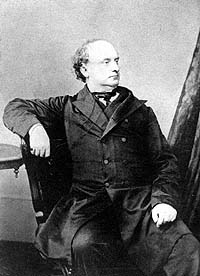
Karl Marx
(1818-63) |
What they demand is the complete and undisguised ascendancy
of the bourgeoisie, the open, official subjection of society at large
under the laws of modern bourgeois production, and under the rule of
those men who are the directors of that production. By Free Trade
they mean the unfettered movement of capital, freed from all political,
national and religious shackles. The soil is to be a marketable
commodity, and the exploitation of the soil is to be carried on
according to the common commercial laws. There are to be
manufactures of food as well as manufactures of twist and cottons, but
no longer any lords of the land.
There are, in short, not to be tolerated any political or
social restrictions, regulations or monopolies, unless they proceed from
"the eternal laws of political economy," that is, from the conditions
under which capital produces and distributes. The struggle of this
party against the old English institutions, products of a superannuated,
an evanescent stage of social development, is resumed in the watchword:
Produce as cheap as you can, and do away with all the faux frais of
production (with all superfluous, unnecessary expenses in
production). And this watchword is addressed not only to the
private individual, but to the nation at large
principally.
Royalty, with its "barbarous splendours," its court, its
Civil List and its flunkeys—what else does it belong to but to the
faux frais of production? The nation can produce and exchange
without royalty; away with the crown. The sinecures of the
nobility, the House of Lords? faux frais of production. The
large standing army? faux frais of production. The
Colonies?
faux frais of production. The State church, with its riches, the
spoils of plunder or of mendicity? faux frais of production.
Let parsons compete freely with each other, and everyone pay them
according to his own wants. The whole circumstantial routine of
English law, with its Court of Chancery? faux frais of
production. National wars? faux frais of production.
England can exploit foreign nations more cheaply while at peace with
them.
You see, to these champions of the British bourgeoisie, to
the men of the Manchester School, every institution of old England
appears in the light of a piece of machinery as costly as it is useless,
and which fulfils no other purpose but to prevent the nation from
producing the greatest possible quantity at the least possible expense
and to exchange its products in freedom. Necessarily their last
word is the bourgeois republic, in which free competition rules
supreme in all spheres of life; in which there remains altogether that
minimum
only of government which is indispensable for the administration,
internally and externally, of the common class-interest and business of
the bourgeoisie, and where this minimum of government is as
soberly, as economically, organised as possible. Such a party in
other countries would be called democratic. But it is
necessarily revolutionary, and the complete annihilation of Old England
as an aristocratic country is the end which it follows up with more or
less consciousness. Its nearest object, however, is the attainment
of a Parliamentary reform which should transfer to its hands the
legislative power necessary for such a revolution.
But the British bourgeois are not excitable Frenchmen.
When they intend to carry a Parliamentary reform they will not make a
Revolution of February. On the contrary. Having obtained, in
1846, a grand victory over the landed aristocracy by the repeal of the
Corn Laws, they were satisfied with following up the material advantages
of this victory, while they neglected to draw the necessary political
and economical conclusions from it, and thus enabled the Whigs to
reinstate themselves into their hereditary monopoly of government.
During all the time from 1846 to 1852, they exposed
themselves to ridicule by their battle-cry—broad principles and
practical (read small) measures. And why all this?
Because in every violent movement they are obliged to appeal to the
working class. And if the aristocracy is their vanishing
opponent, the working class is their arising enemy. They prefer to
compromise with their vanishing opponent rather than to strengthen the
arising enemy, to whom the future belongs, by concessions of more than
apparent importance. Therefore, they strive to avoid every
forcible collision with the aristocracy; but historical necessity and
the Tories press them onwards. They cannot avoid fulfilling their
mission, battering to pieces Old England, the England of the past, and
the very moment when they will have conquered exclusive political
dominion, when political dominion and economical supremacy will be
united in the same hands, when, therefore, the struggle against capital
will no longer be distinct from the struggle against the existing
government—from that very moment will date the social revolution of
England.
We now come to the Chartists,
the politically active portion of the British working class.
The six points of the Charter which they contend for contain nothing but
the demand of universal suffrage and of the conditions without
which universal suffrage would be illusory for the working class: such
as the ballot, payment of members, annual general elections. But
universal suffrage is the equivalent for political power for the working
class of England, where the proletariat form the large majority of the
population, where, in a long, though underground civil war, it has
gained a clear consciousness of its position as a class, and where even
the rural districts know no longer any peasants, but landlords,
industrial capitalists (farmers) and hired labourers. The carrying
of universal suffrage in England would, therefore, be a far more
socialistic measure than anything which has been honoured with that name
on the Continent.
Its inevitable result here, is the political
supremacy of the working class.
I shall report, on another occasion, on the revival and
reorganisation of the Chartist Party. For the present I have only
to treat of the recent election.
To be a voter for the British Parliament,
a man must occupy, in the Boroughs, a house rated at £10 to the poor's
rate, and, in the counties he must be a freeholder to the annual amount
of 40 shillings or a leaseholder to the amount of £50. From this
statement alone it follows that the Chartists could take, officially,
but little part in the electoral battle just concluded. In order
to explain the actual part they took in it, I must recall to mind a
peculiarity of the British electoral system: Nomination day and
Declaration day! Show of hands and Poll!
When the candidates have made their appearance on the
day of election, and have publicly harangued the people, they are
elected, in the first instance, by the show of hands, and every hand has
the right to be raised, the hand of the non-elector as well as that of
the elector. For whomsoever the majority of the hands are raised,
that person is declared by the returning officer to be (provisionally)
elected by show of hands. But now the medal shows its reverse.
The election by show of hands was a mere ceremony, an
act of formal politeness toward the "sovereign people," and the
politeness ceases as soon as privilege is menaced. For if the show
of hands does not return the candidates of the privileged electors,
these candidates demand a poll; only the privileged electors can take
part in the poll, and whosoever has there the majority of votes is
declared duly elected. The first election, by show of hands, is a
show satisfaction allowed, for a moment, to public opinion, in order to
convince it, the next moment, the more strikingly of its impotency.
It might appear that this election by show of hands,
this dangerous formality, had been invented in order to ridicule
universal suffrage, and to enjoy some little aristocratic fun at the
expense of the "rabble" (expression of Major Beresford, Secretary of
War). But this would be a delusion, and the old usage, common
originally to all Teutonic nations, could drag itself traditionally down
to the nineteenth century, because it gave to the British class
Parliament, cheaply and without danger, an appearance of popularity.
The ruling classes drew from this usage the
satisfaction that the mass of the people took part, with more or less
passion, in their sectional interests as its national interests.
And it was only since the bourgeoisie took an independent station at the
side of the two official parties, the Whigs and the Tories, that the
working masses stood up, on the nomination days in their own name.
But in no former year has the contrast of show of hands and poll, of
Nomination day and Declaration day, been so serious, so well-defined by
opposed principles, so threatening, so general, upon the whole surface
of the country as in this last election of 18 52.
And what a contrast! It was sufficient to be
named by show of hands in order to be beaten at the poll. It was
sufficient to have had the majority at a poll, in order to be saluted,
by the people, with rotten apples and brick-bats.
The duly elected members of Parliament, before all, had
a great deal to do, in order to keep their own parliamentary
bodily-selves in safety. On one side the majority of the people,
on the other the twelfth-part of the whole population, and the
fifth-part of the sum total of the male adult inhabitants of the
country. On one side enthusiasm, on the other side bribery.
On one side parties disowning their own distinctive signs, Liberals
pleading the conservatism, Conservatives proclaiming the liberalism of
their views; on the other, the people, proclaiming their presence and
pleading their own cause. On one side a warn-out engine which,
turning incessantly in its vicious circle, is never able to move a
single step forward, and the impotent process of friction by which all
the official parties gradually grind each other into dust; on the other,
the advancing mass of the nation, threatening to blow up the vicious
circle and to destroy the official engine.
I shall not follow up, over all the surface of the
country, this contrast between nomination and poll, of the threatening
electoral demonstration of the working class, and the timid
electioneering manœvures of the ruling classes. I take one borough
from the mass, where the contrast is concentrated in a focus: the
Halifax Election. Here the opposing candidates were: Edwards
(Tory), Sir Charles Wood (late Whig Chancellor of the Exchequer,
brother-in-law to Earl Grey), Frank Crossley (Manchester man), and
finally Ernest Jones, the most talented, consistent and energetic
representative of Chartism.
Halifax being a
manufacturing town, the Tory had little chance. The Manchester
man, Crossley, was leagued with the Whigs. The serious struggle,
then, lay only between Wood and Jones; between the Whig and the
Chartist.
Sir Charles Wood made a speech about half-an-hour,
perfectly inaudible at the commencement, and during its latter half, to
the disapprobation of the immense multitude. His speech, as
reported by the reporter, who sat close to him, was merely a
recapitulation of the Free Trade measures passed, and an attack on Lord
Derby's government, and a laudation of "the unexampled prosperity of the
country and the people"! ("Hear, hear.") He did not propound
one single new measure of reform, and but faintly, in very few words,
hinted at Lord John Russell's bill for the franchise.
I give a more extensive abstract of Ernest Jones's
speech, as you will not find it in any of the great London ruling-class
papers. Ernest Jones, who was received with immense enthusiasm,
then spoke as follows:—
"Electors and non-electors, you have met upon a great and solemn
festival. To-day the Constitution recognises universal suffrage in
theory that it may, perhaps, deny it in practice on the morrow.
To-day the representatives of two systems stand before you, and you have
to decide beneath which you shall be ruled for seven years. Seven
years—a little life! I summon you to pause upon the threshold of
those seven years; to-day they shall pass slowly and calmly in review
before you; to-day decide, you 20,000 men! that perhaps five hundred may
undo your will to-morrow. ("Hear, hear.")
"I say the representatives of two systems stand before
you. Whig, Tory and moneymongers are on my left, it is true; but
they are all as one. The moneymonger says, buy cheap and sell
dear. The Tory says, buy dear, sell dearer. Both are the
same for labour. But the former system is in the ascendant, and
pauperism rankles at its root. That system is based on foreign
competition. Now, I assert, that under the buy cheap and sell dear
principle, brought to bear on foreign competition, the ruin of the
working and small trading classes must go on. Why? Labour is
the creator of all wealth. A man must work before a grain is
grown, or a yard is woven. But there is no self-employment for the
working man in this country. Labour is a hired commodity—labour is
a thing in the market that is bought and sold; consequently, as labour
creates all wealth, labour is the first thing bought—'Buy cheap, buy
cheap! Labour is bought in the cheapest market.
But now comes the next: 'Sell dear, sell dear!' Sell what?
Labour's produce. To whom?—to the foreigner—aye! and to the
labourer himself—for labour, not being self-employed, the labourer
is NOT the partaker of the first-fruits of his toil.
"'Buy cheap, sell dear.' How do you like it? 'Buy cheap, sell
dear.' Buy the working man's labour cheaply and sell back to that
very working man the produce of his own labour dear! The principle
of inherent loss is in the bargain. The employer buys the labour
cheap—he sells, and on the sale he must make a profit; he sells to the
working man himself—and thus every bargain between employer and the
employed is a deliberate cheat on the part of the employer. Thus
labour has to sink through eternal loss, that capital may rise through
lasting fraud.
"But the system stops not here. This is brought to
bear on foreign competition—which means, we must ruin the trade of other
countries, as we have ruined the labour of our own. How does
it work? The high-taxed country has to undersell the low-taxed.
Competition abroad is constantly increasing—consequently cheapness must
increase constantly also. Therefore, wages in England must keep
constantly falling. And how do they effect the fall? By
surplus labour. And how do they obtain the surplus labour?
By monopoly of the land which drives more hands than are wanted into the
factory. By monopoly of machinery which drives those hands into
the street—by woman labour which drives the man from the shuttle—by
child labour which drives the women from the loom. Then planting
their foot upon that living base of surplus they press its aching heart
beneath their heel and cry—'Starvation. Who will work?
A half-loaf is better than no bread at all'—and the writhing mass grasps
greedily at their terms. (Loud cries of "Hear, hear.")
"Such is the system for the working man. But,
electors! how does it operate on you? How does it affect home
trade, the shopkeeper, poor's rate and taxation? For every
increase of competition abroad, there must be an increase of cheapness
at home. Every increase of cheapness in labour is based on
increase of labour surplus, and this surplus is obtained by an increase
of machinery. I repeat, how does this operate on you? The
Manchester Liberal on my left establishes a new patent and throws three
hundred men as a surplus in the streets. Shopkeepers! Three
hundred customers less. Ratepayers! Three hundred paupers
more! (Loud cheers.)
"But, mark me. The evil stops not there.
These three hundred men operate first to bring down the wages of those
who remain at work in their own trade. The employer says: 'Now I
reduce your wages.' The men demur. Then he adds: 'Do you see
these three hundred men who have just walked out you may change
places if you like, they are sighing to come in on any terms, for
they are starving.' The men feel it, and are crushed. Oh!
you Manchester Liberal! Pharisee of politics! Those men are
listening—have I got you now?
"But the evil stops not yet. Those men, driven
from their own trade, seek employment in others when they swell the
surplus and bring wages down. The low-paid trades of to-day were
the high paid once—and the high-paid of to-day will be the low-paid
soon. Thus the purchasing power of the working classes is
diminished every day, and with it dies home trade. Mark it,
shopkeepers, your customers grow poorer and your profits less, while
your paupers grow more numerous and your poor's rates and your taxes
rise. Your receipts are smaller, your expenditure is more large.
You get less and pay more. How do you like the system? On
you the rich manufacturer and landlord throws the weight of poor's rate
and taxation. Men of the middle class! You are the
tax-paying machine of the rich. They create the poverty that
creates their riches, and they make you pay for the poverty they have
created. The landlord escapes it by privilege, the manufacturer by
repaying himself out of the wages of his men, and that reacts on you.
How do you like the system?
"Well, that is the system upheld by the gentlemen on my
left. What then do I propose? I have shown the wrong. That is something.
But I do more. I stand here to show the right, and prove it so." (Loud
cheers.)
Ernest Jones then went
on to expose his own views on political and economical reform, and
continued as follows:—
"Electors and non-electors! I have now brought before you some of
the social and political measures, the immediate adoption of which I
advocate now, as I did in 1847. But, because I tried to extend
YOUR liberties,
MINE
were curtailed. ('Hear, hear:') Because I tried to rear the
temple of freedom for you all, I was thrown into the cell of a felon's
jail; and there, on my left, sits one of my chief jailers. (Loud
and continued groans, directed towards the left.) Because I tried
to give voice to truth, I was condemned to silence. For two years
and one week he cast me into a prison in solitary confinement on the
silent system, without pen, ink or paper, but oakum picking as a
substitute. Ah! (turning to Sir Charles Wood), it was your turn
for two years and one week; it is mine this day. I summon the
angel of retribution from the heart of every Englishman here present.
(An immense burst of applause.) Hark! You feel the fanning
of his wings in the breath of this vast multitude. (Renewed
cheering, long continued.) You may say this is not a public
question. But it is. ("Hear, hear.") It is a public
question, for the man who cannot feel for the wife of the prisoner, will
not feel for the wife of the working man. He who will not feel for
the children of the captive, will not feel for the children of the
labour slave. ("Hear, hear," and cheers.) His past life
proves it, his promise of to-day does not contradict it. Who voted
for Irish coercion, the gagging bill and tampering with the Irish Press?
The Whig—there he sits; turn him out! Who voted fifteen times
against Hume's motion for the franchise; Locke King's on the counties;
Ewart's for short Parliaments; and Berkeley's for the ballot? The
Whig—there he sits; turn him out! Who voted against the release of
Frost, Williams and Jones? The Whig—there he sits; turn him out!
Who voted against reducing the Duke of Cambridge's salary of £12,000,
against all reductions in the army and navy; against the repeal of the
window tax, and forty-eight times against every other reduction of
taxation, his own salary included? The Whig—there he sits; turn
him out! Who voted against the repeal of the paper duty, the
advertisement duty, and the taxes on knowledge? The Whig—there he
sits; turn him out! Who voted for the batches of new
bishops, vicar rare, the Maynooth grant, against its reduction and
against absolving dissenters from paying Church rates? The
Whig—there he sits; turn him out! Who voted against all inquiry
into the adulteration of food? The Whig—there he sits; turn him
out! Who voted against lowering the duty on sugar, and repealing
the tax on malt? The Whig—there he sits; turn him out! Who
voted against shortening the nightwork of bakers, against inquiry into
the condition of frame-work knitters, against medical inspectors of
workhouses, against preventing little children from working before six
in the morning, against parish relief for pregnant women of the poor and
against the Ten Hours Bill? The Whig—there he sits; turn him out!
Turn him out in the name of humanity and of God! Men of Halifax!
Men of England! The two systems are before you. Now judge
and choose!"
It is impossible to
describe the enthusiasm kindled by this speech, and especially at the
close; the voice of the vast multitude, held in breathless suspense
during each paragraph, came at each pause like the thunder of a
returning wave, in execration of the representative of Whiggery and
class-rule. Altogether it was a scene that will long be
unforgotten. On the show of hands being taken, very few and those
chiefly of the hired or intimidated, were held up for Sir C. Wood; but
almost everyone present raised both hands for Ernest Jones, amidst
cheering and enthusiasm it would be impossible to describe.
The Mayor declared Mr. Ernest Jones and Mr. Henry
Edwards to be elected by show of hands. Sir. C. Wood and Mr.
Crossley then demanded a poll.
What Jones had predicted took place; he was nominated
by 20,000 votes; but the Whig (Sir Charles Wood) and the Manchester man
(Crossley) were elected by 500 votes. |